I stood in a weedy field a decade ago, binoculars glued to my face, utterly defeated. I was looking at a small, streaky brown bird. Was it a Song Sparrow? A Savannah? Maybe a juvenile something-or-other? They all just looked like... little brown jobs. If you've been there, you know the feeling. The good news? Sparrow identification isn't about having superhuman vision. It's about knowing where to look. Once you learn the key markers—the uniform of each species, if you will—the confusion melts away. This guide is the field method I wish I'd had back then.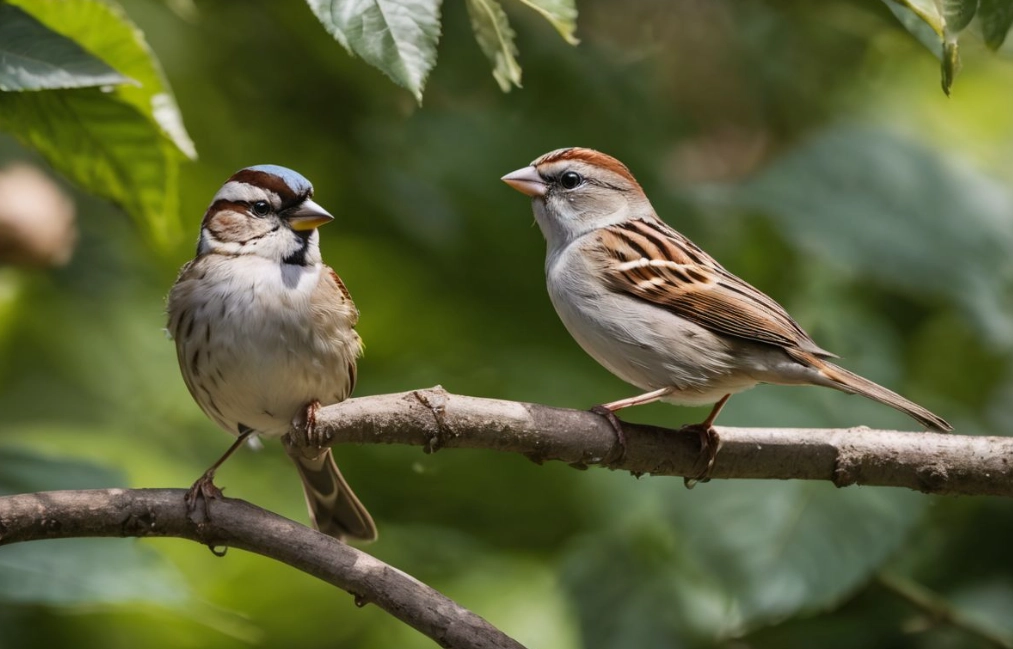
Your Quick Sparrow Spotting Cheat Sheet
Why Sparrow Identification Is Trickier Than You Think
Let's be honest. Most sparrows aren't handing you a rainbow-colored business card. Their beauty is subtle, evolved for camouflage in grasslands, thickets, and forest floors. The biggest mistake beginners make? They focus on color. "It's brown, so it's a sparrow." That's like identifying cars only by whether they're silver. You need to look at the shape, the trim, the logos.
For sparrows, the "logos" are all about pattern and contrast. The real action is on the head and chest. Is the breast clean or streaked? Is there a central spot? Does the head have stripes? A distinct eye-ring? These features are remarkably consistent within a species and hold up even in lousy light or when the bird is partially hidden. I've found that ignoring the overall "brownness" and zeroing in on these specific zones is the single fastest way to improve your ID game.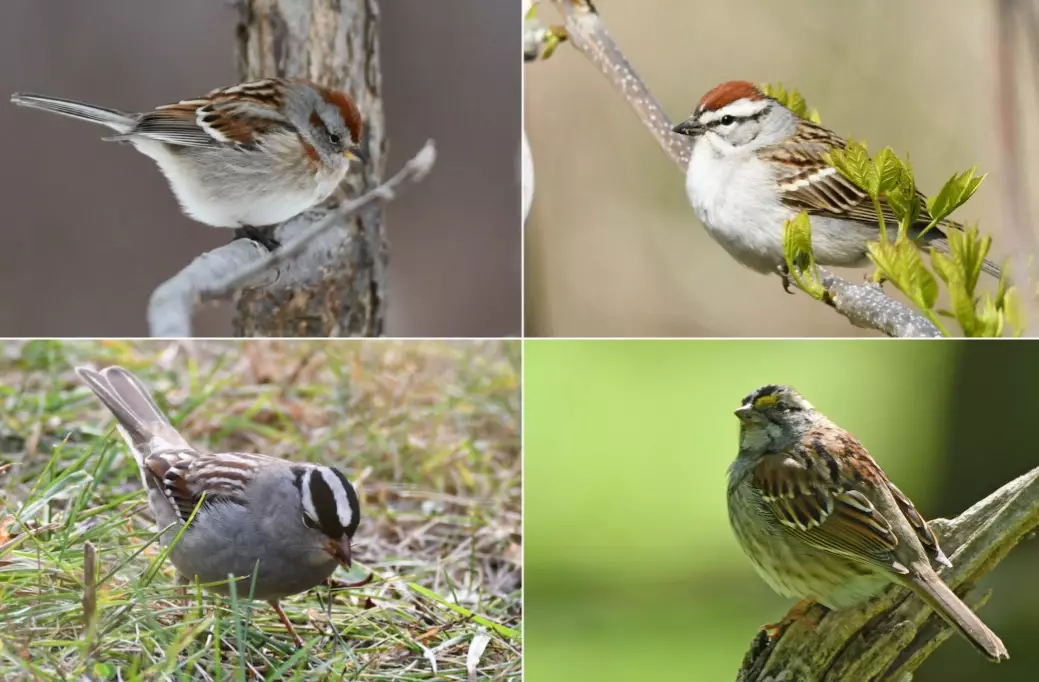
How to Identify Sparrows: A Step-by-Step Field Guide
Forget memorizing pictures. Follow this sequence in the field. It forces you to observe systematically.
1. Lock Onto the Head First
This is non-negotiable. The head holds 80% of the clues. Ask these questions in order:
- Crown: Is there a distinct central stripe (like a White-throated Sparrow) or is it uniformly streaked?
- Eyebrow/Supercilium: Is there a pale stripe over the eye? Is it bold or faint, yellow or white?
- Eye-Line: Is there a dark line through the eye? Does it extend behind it?
- Cheek/Malar: Look at the area between the beak and the throat. Is it a plain gray, or does it have a distinct dark border or spot?
I tell people to look for the bird's "side profile." Imagine you're checking its ID badge.
2. Scan the Chest and Flanks
After the head, drop your gaze down.
- Breast: Is it clean white or gray, or heavily streaked? If streaked, do the streaks run down the center in a single spot (like a Fox Sparrow) or are they distributed across the whole breast?
- Flanks: The sides of the bird. Are they plain, streaked, or a different color? A Chipping Sparrow has plain grayish flanks, while a Song Sparrow has blurry, brown streaking here.
3. Note the Bill and Overall Structure
This is the fine print. Is the bill conical and thick (for crushing seeds) or more slender? Is the bird plump or sleek? Tail length can be a clue—long tails often belong to birds that frequent dense brush.
4. Listen and Observe Behavior
Sound is often the first clue. That rich, musical warble from the thicket is almost certainly a Song Sparrow. That soft, insect-like "tsip" from the grass could be a Savannah. Behavior matters too. Does it scratch the ground like a chicken (common for Towhees and Fox Sparrows)? Does it cling to grass stems (Savannah Sparrow) or prefer deep shadow (White-throated Sparrow)?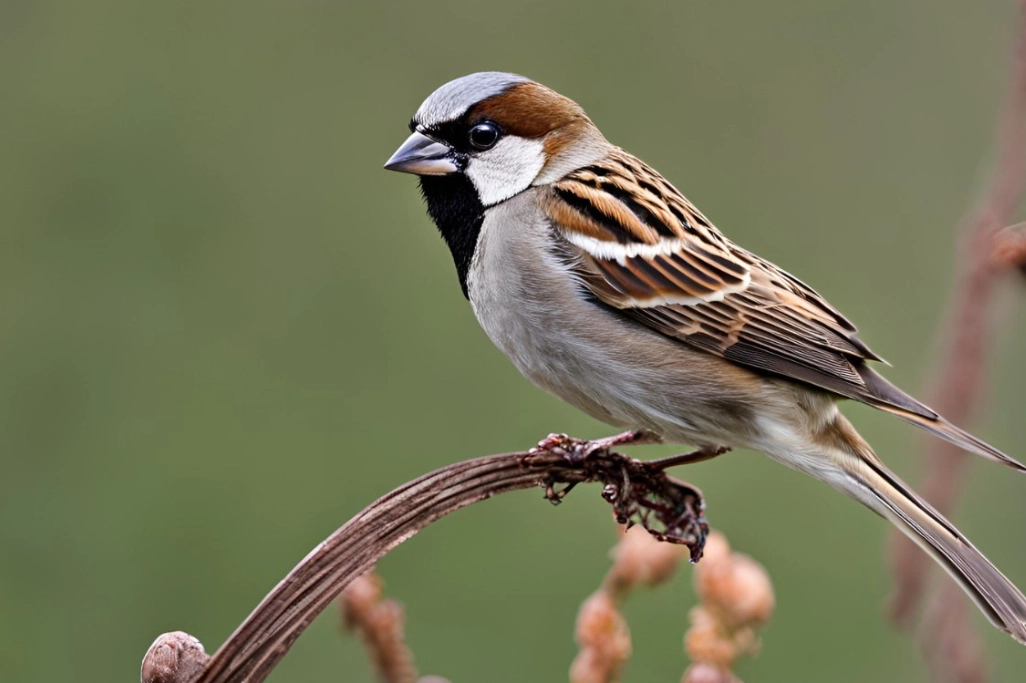
What Are the Most Common Sparrow Species?
Here’s a breakdown of the sparrows you're most likely to encounter across North America. Think of this as your core roster.
| Species | Key Identification Feature (The "Aha!" Marker) | Preferred Habitat | Behavior Note |
|---|---|---|---|
| Song Sparrow | A dark central breast spot surrounded by messy, coarse streaks that often blur together. Head is streaky with a gray eyebrow. | Almost anywhere with low, dense cover: marshes, brushy fields, suburban gardens, stream edges. | Often pumps its long, rounded tail in flight. The most ubiquitous and variable sparrow. |
| White-throated Sparrow | Crisp white throat patch bordered by a gray bill. Head has bold black-and-white or tan-and-brown stripes and a bright yellow spot between the eye and bill. | Woodland edges, forest understory, brush piles, backyard feeders in winter. | Classic ground-foraging scratcher. Its clear, whistled song ("Oh-sweet-Canada-Canada-Canada") is a signature sound of northern woods. |
| Chipping Sparrow | In breeding season, a bright rusty cap and a stark black line through the eye with a clean white eyebrow. In winter, the cap is brown and streaked, causing confusion. | Open woodlands, parks, golf courses, lawns with trees, suburban areas. | Often in small flocks. Has a dry, mechanical trill of a song that sounds like a sewing machine. |
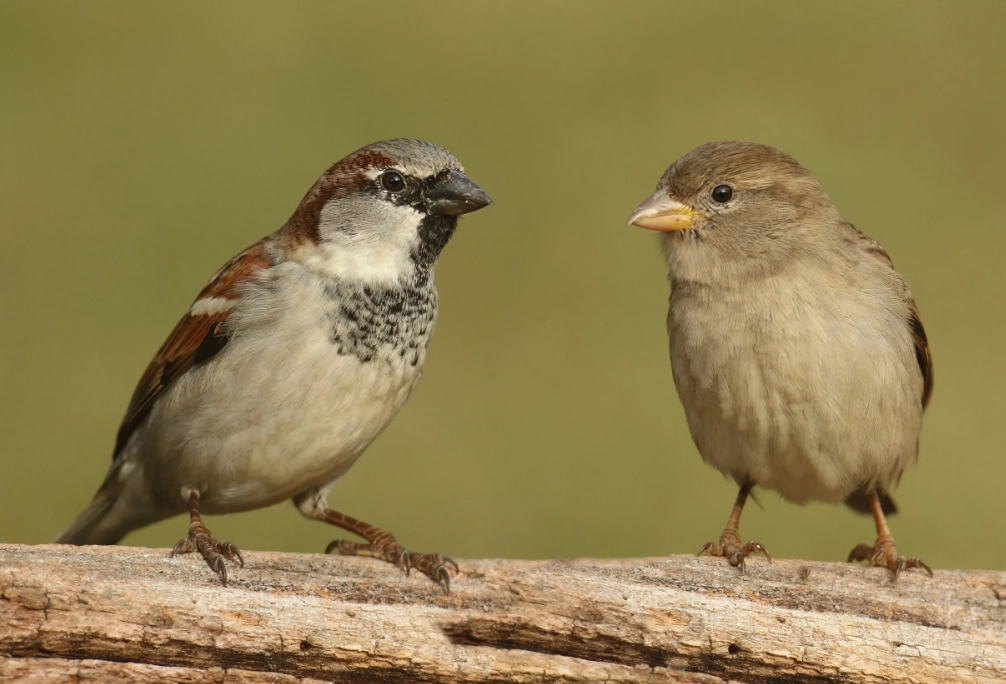
| House Sparrow | (Not a true New World sparrow, but always in the mix). Males have a gray crown, black bib, and chestnut nape. Females are plain buffy-brown with a pale eyebrow and a stubby bill. | Exclusively near human development: cities, farms, parking lots, eaves of buildings. | Bold, social, and noisy. A non-native species often seen at fast-food parking lots. |
| Savannah Sparrow | A short, notched tail and often a hint of yellow in front of the eye. Fine, crisp streaks on a white breast, with streaks continuing down the flanks. | Open grasslands, meadows, agricultural fields, marshes, sometimes beaches. | Often perches on fence posts or low weeds. Sings a thin, buzzy song that often ends in a couple of trills. |
Let's get specific about the Song Sparrow for a moment. I've seen birders mistake a streaky juvenile finch for one. The deal-breaker is that breast spot. It's not always a perfect dot—sometimes it's a smudge—but it's the focal point of the streaking. The streaks radiate out from it. No other common sparrow has this exact pattern. Remember that, and you've nailed one of the most frequent IDs you'll make.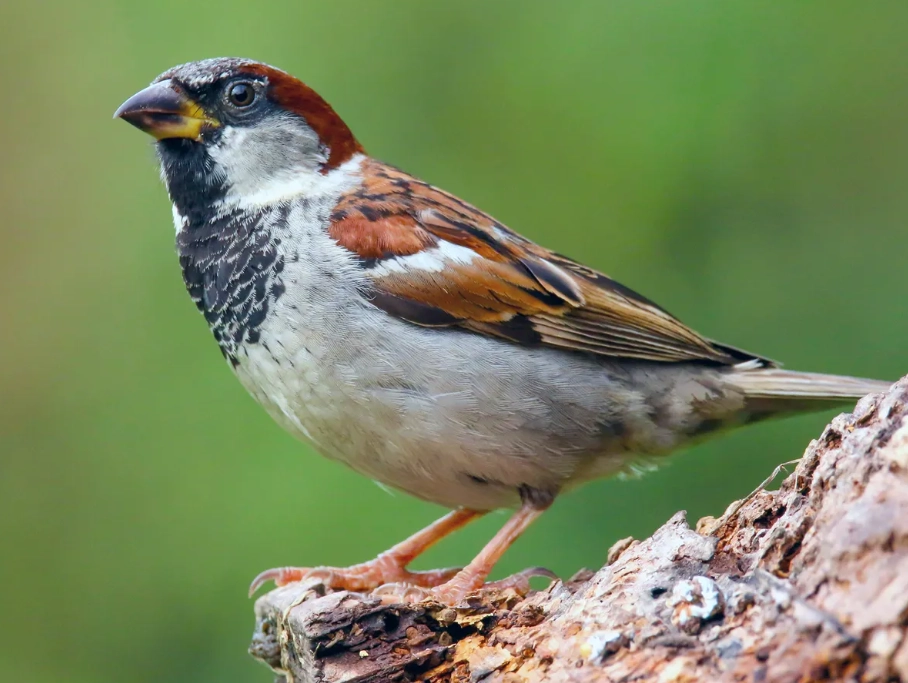
Advanced Tips: Sparrow Identification in Different Seasons and Habitats
Your location and the time of year change the game. In winter, your backyard feeder might host White-throated, White-crowned, and Fox Sparrows that spent the summer far north. You need to know the winter uniforms.
Fox Sparrows are a great example. In the west, they can be sooty, red, or slate-colored. But all of them share that massive central breast spot and a habit of vigorous, two-footed ground scratching that sends leaves flying. The behavior becomes a key identifier.
Habitat is a massive filter. If you're in a saltmarsh, you're not looking for a Chipping Sparrow. You're looking for sharp-tailed Sparrows (like the Saltmarsh or Nelson's). Their key feature? An orange wash on the face and a sharp, pointed tail. Knowing the habitat expectation narrows your options from 20 species to maybe 2 or 3. The Cornell Lab of Ornithology's All About Birds site is fantastic for checking range maps and habitat preferences in real-time on your phone.
FAQ: Your Sparrow ID Problems Solved
 What's the single best sparrow to practice on first?
Reader Comments