You're walking through a mixed forest in early May, maybe in upstate New York or the Great Lakes region. The air is cool, the leaves are just unfurling, and then you hear it: a clear, whistled phrase that seems to hang in the air – "Oh-sweet-Canada-Canada-Canada" or the classic "Old-Sam-Peabody-Peabody-Peabody". That's the unmistakable signature of the White-throated Sparrow (Zonotrichia albicollis). More than just a pretty song, this bird is a gateway species for many new birders. Its bold markings and confiding nature make it one of the easier sparrows to learn. But there's a lot more to this common bird than meets the eye (or ear). I've spent over a decade tracking them from their boreal breeding grounds to my own backyard feeder, and I'm still picking up new nuances.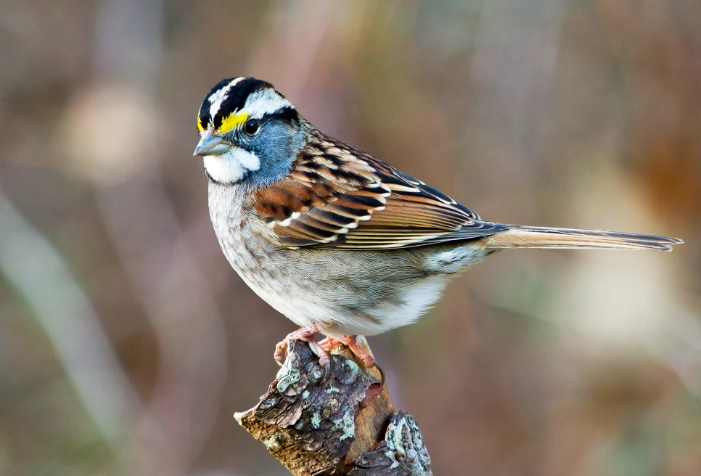
In This Article
How to Identify a White-throated Sparrow
Let's cut through the confusion. Many beginners see a streaky brown bird and call it a "sparrow," lumping a dozen species together. The White-throat gives you clear cheat codes.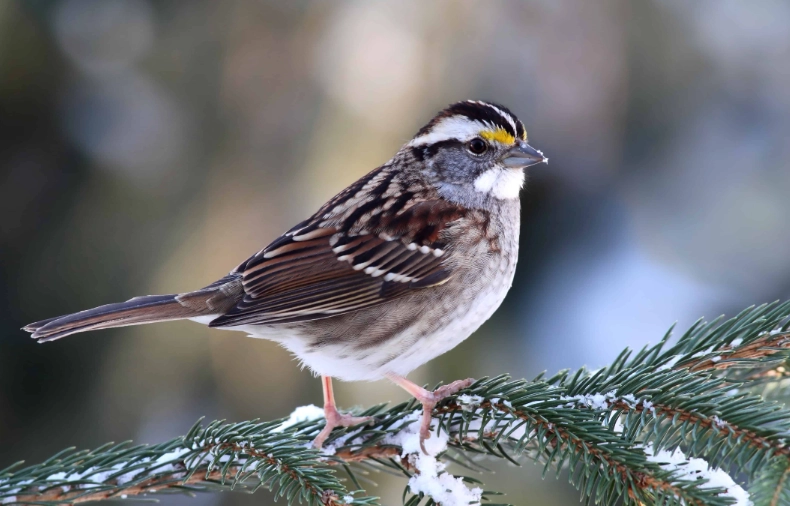
Appearance: More Than Just a White Throat
Yes, the bright white patch on its throat is the headline act. But look closer. You'll see a crisp black and white (or tan and brown) crown with a central yellow spot right between the eyes – the lore. That yellow spot is a dead giveaway. The face is gray, framed by a stark black eye line and a white stripe above it (the supercilium). The bill is small, dark, and perfect for cracking seeds. The breast is a clean, soft gray, transitioning to a streaky brown back and wings. They're plump, ground-loving birds, about the size of a Song Sparrow but stockier.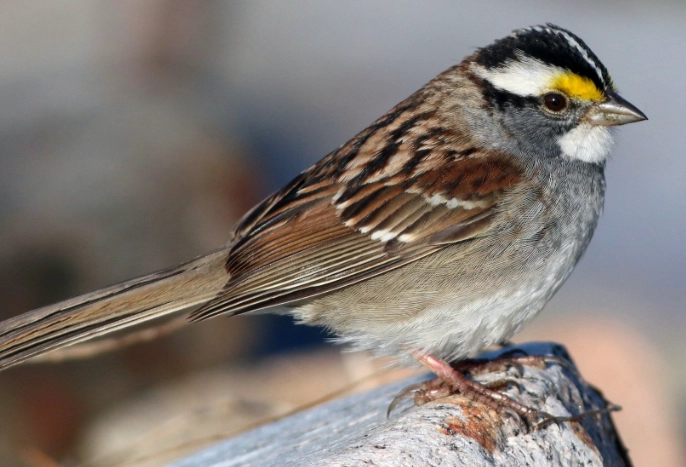
Here's the twist that trips people up: they come in two distinct color forms. It's not age or sex – it's a genetic polymorphism. This table breaks down the key differences:
Overall ContrastHigh contrast, strikingLow contrast, camouflaged| Feature | White-striped Morph | Tan-striped Morph |
|---|---|---|
| Crown Stripes | Bold, crisp black and white | Duller, more muted brown and tan/buff |
| Supercilium (Eyebrow) | Bright white | Tan or buff-colored |
| Throat Patch | Pure white, very conspicuous | White, but often less sharply defined |
I used to think the tan-striped birds were just dirty or juveniles. Nope. They're a completely valid, common form. In the field, the white-striped birds scream for attention, while the tan-striped ones can vanish into the leaf litter if you blink.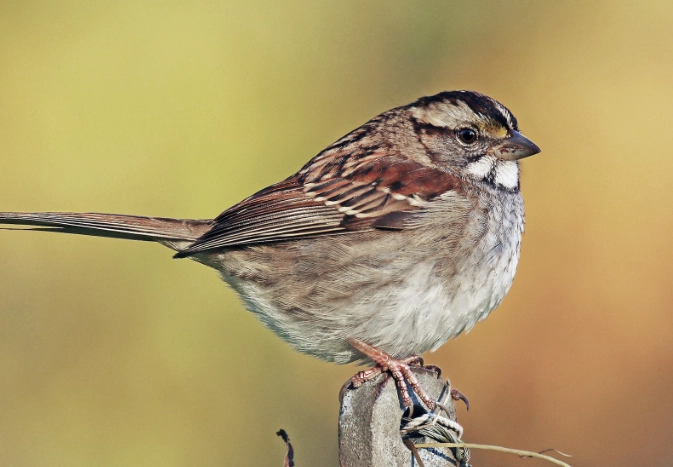
The Signature Song: Old Sam Peabody's Call
The song is their claim to fame. It's a slow, whistled series of clear notes, usually interpreted as "Oh-sweet-Canada-Canada-Canada" or "Old-Sam-Peabody-Peabody-Peabody." The pitch is pure and haunting. You'll hear it incessantly during breeding season, from dawn until dusk. But here's a pro tip most guides miss: listen for the dialect. Birds in the eastern part of the range often end with three repeated notes. Go west, into Minnesota or Manitoba, and you might hear a doublet at the end. It's a subtle geographic variation that's fascinating to track.
Don't confuse the song with the call. The call is a sharp, high-pitched "tseet" or a thin, metallic "link" note. It's the sound you'll hear year-round, especially from foraging flocks in winter. It's less musical, more utilitarian – a contact call. The Cornell Lab of Ornithology's All About Birds site has excellent recordings to train your ear.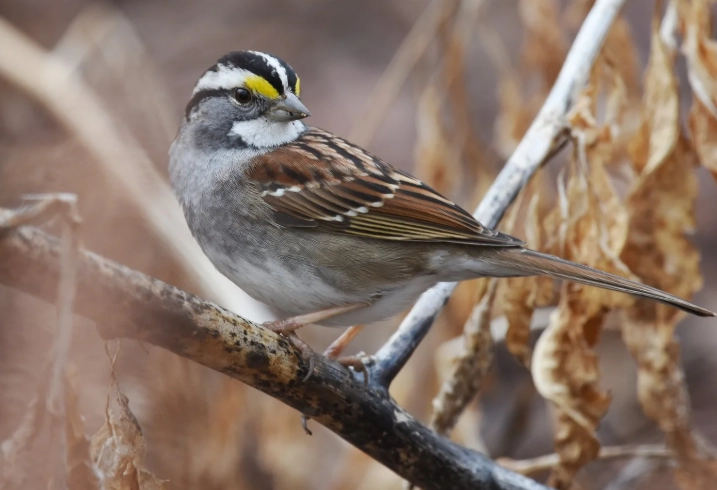
Behavior and Habits: The Ground Forager
White-throats are classic ground sparrows. You'll rarely see one perched high in a tree unless it's singing. They feed by scratching and hopping through leaf litter, often in small, loose flocks outside of breeding season. They use a characteristic double-scratch hop, kicking both feet back simultaneously to uncover seeds and insects. Watch for this – it's a great behavioral clue. At feeders, they're often on the ground below, picking up spilled millet and sunflower chips. They're not particularly aggressive, often yielding to juncos and other sparrows.
White-throated Sparrow Range and Habitat
This bird is a classic short- to medium-distance migrant. Its life is split between two very different worlds.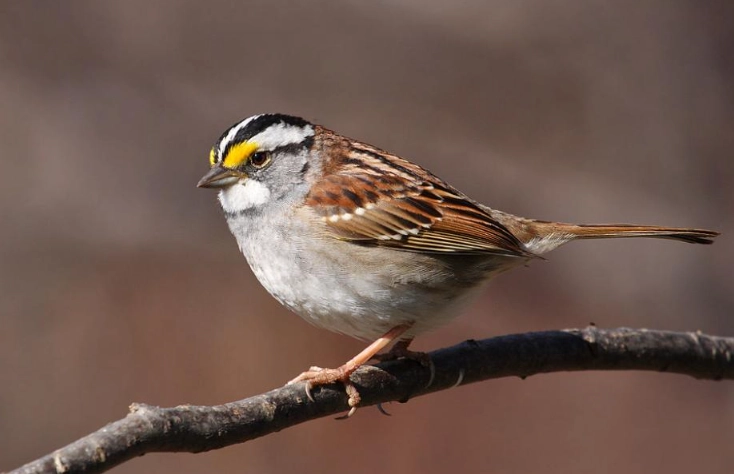
Breeding Grounds (Summer): They pack up and head north to the vast boreal forests of Canada and the northeastern United States. Think coniferous and mixed forests with dense understory – from Newfoundland to British Columbia, dipping down into the northern parts of the Great Lakes states and New England. They need thick brush for nesting. A study from the National Audubon Society notes their strong preference for regenerating clearcuts and shrubby edges within these forests.
Wintering Grounds (Winter): Come fall, they vacate the frozen north. Most of the population moves into the eastern United States, roughly from southern Pennsylvania and New Jersey down to the Gulf Coast, and west to Texas. You won't find them in the arid southwest or the high mountains. Their winter habitat is more open: woodland edges, overgrown fields, hedgerows, parks, and, crucially, suburban backyards with brush piles.
Migration Windows: Timing is everything. They pass through much of the U.S. during spring migration (April to early May) and fall migration (late September through October). In many areas, like the Mid-Atlantic, they are primarily seen as migrants – here today, gone in a week or two. Knowing your local timing is key. Check eBird's Status and Trends maps for hyper-local arrival and departure dates.
How to Attract White-throated Sparrows to Your Yard
Want to host these striped visitors? It's straightforward if you think like the bird. They need food, cover, and water. Let's get specific.
Food: They are seed specialists. At feeders, they adore white proso millet. I've watched them ignore black oil sunflower in a mix to meticulously pick out every last millet seed. Offer a ground feeder or a low platform feeder with a mix heavy in millet. They also eat cracked corn and sunflower chips (hearts). In the wild, they eat a ton of seeds from grasses and weeds, plus insects during breeding season. Don't bother with fancy suet blends – they're not interested.
Water: A ground-level bird bath or a shallow basin is a major draw. They are hesitant bathers, preferring water sources close to thick cover. Keep it clean and ice-free in winter.
Shelter: This is the most overlooked part. They are nervous birds. If your yard is a manicured lawn with a single feeder in the open, they might grab a seed and flee. You need a brush pile. Seriously. Take fallen branches, old Christmas trees, or trimmings and stack them loosely in a corner. This creates the dense, low cover they instinctively seek for protection from hawks and cats. Dense native shrubs like dogwood, spicebush, or juniper are even better long-term investments.
My own setup in Maryland is simple: a low platform feeder stocked with a cheap "sparrow mix" (mostly millet) placed about 15 feet from a large, messy brush pile. From October to April, I have a reliable squadron of White-throats scratching beneath the feeder and darting into the brush at the slightest disturbance. It works every time.
The Two Color Morphs: A Genetic Secret
We touched on the white-striped and tan-striped forms. But why does this exist? It's one of the coolest bits of ornithology, and it directly affects their behavior. This isn't just about color; it's linked to their entire life strategy.
The difference is controlled by a super-gene on the second chromosome. It's a package deal: stripe color is linked to mating behavior and aggression.
- White-striped birds (both males and females) are more aggressive, sing more frequently and loudly (yes, females sing too!), and are more likely to wander. They are the dispersers and the territory defenders.
- Tan-striped birds are more docile, provide better parental care, and are more sedentary.
Here's the kicker: they almost always mate with the opposite morph. A white-striped male pairs with a tan-striped female, and vice-versa. This is called disassortative mating. Evolutionary biologists think this maintains a balance in the population, ensuring both aggressive and nurturing traits are passed on. Next time you see a pair, check their heads. You'll likely see one bold and one muted bird working together.
Reader Comments