In This Guide
- The Head-to-Head Comparison: Your At-a-Glance Cheat Sheet
- Diving Deeper: Appearance, Behavior, and Habitat
- Where Do You Find Them? Range and Habitat Showdown
- The Dinner Table: Diet and Feeding Behaviors
- Answering Your Top Questions (FAQs)
- Conservation Status: How Are They Doing?
- Final Thoughts: Appreciating the Differences
Let's be honest. For most people, a vulture is just a big, black bird circling in the sky, probably waiting for something to die. I used to think that way too, until I spent a frustrating afternoon trying to figure out which kind I was looking at through my binoculars. Was it a Turkey Vulture or a Black Vulture? They looked so similar from a distance. That confusion is incredibly common, and it's exactly why I decided to put this guide together.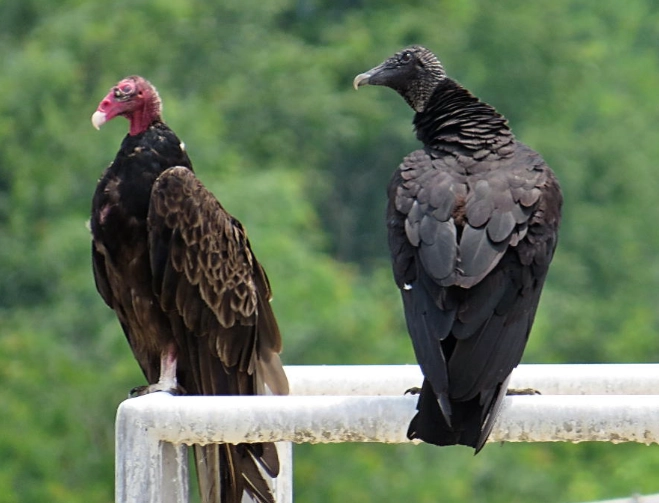
Getting the Turkey Vulture vs Black Vulture identification right isn't just for birding bragging rights. It tells you a story about the landscape you're in, the health of the ecosystem, and the fascinating adaptations of these hugely misunderstood birds. They're not morbid omens; they're nature's most efficient sanitation department, and they're brilliantly good at their jobs.
The Head-to-Head Comparison: Your At-a-Glance Cheat Sheet
When you're out in the field, you need quick, reliable clues. This table breaks down the most immediate differences between a Turkey Vulture and a Black Vulture. Keep these in mind, and you'll be identifying them confidently in no time.
| Feature | Turkey Vulture | Black Vulture |
|---|---|---|
| Head (Adult) | Small, bright red head with no feathers. Looks like a turkey's head (hence the name). | Dark gray to black head, often with wrinkly skin. Looks more "bald" and less colorful. |
| In Flight (Silhouette) | Long, broad wings held in a distinct V-shape (dihedral). Tail is long and rounded. | Shorter, broader wings with white patches at the wingtips. Tail is short and square. |
| In Flight (Behavior) | Graceful, teetering flight. Rarely flaps, rocks side-to-side. Masters of soaring. | More labored flight with rapid, stiff wingbeats (flap-flap-flap-glide). |
| Underwing | Two-toned! Dark leading edge, silvery-gray flight feathers. The most reliable ID mark from below. | Mostly dark with conspicuous white or silver "stars" at the very tips of the wings. |
| Size & Build | Larger, with a longer wingspan (up to 6 ft). Lankier, more buoyant appearance. | More compact and stocky with a shorter wingspan. Appears stronger and more powerful. |
| Key Sense | Unparalleled sense of smell. Can find hidden carcasses by scent alone. | Keen eyesight. Relies on sight and often follows Turkey Vultures to find food. |
See? Already, the differences start to pop. That V-shape in flight is a dead giveaway for the Turkey Vulture. If you see that rocking motion, you can almost call it before you even see the head. The Black Vulture's frantic flapping is equally distinctive once you know to look for it.
Diving Deeper: Appearance, Behavior, and Habitat
Okay, the table gives you the quick hits. But birds are more than a checklist. Let's get into the nitty-gritty of what makes each species tick. This is where the real fascination begins.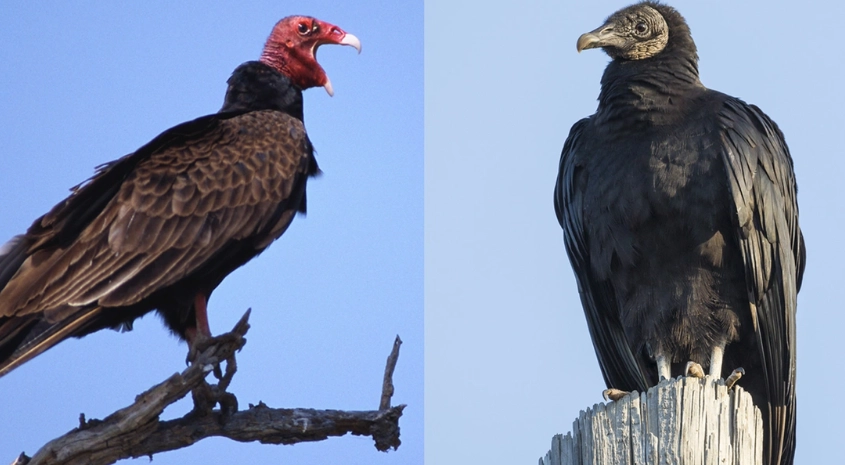
Meet the Turkey Vulture: The Sky Sailor
I have a soft spot for Turkey Vultures. There's something almost peaceful about watching one ride a thermal, barely moving a muscle. Their scientific name, Cathartes aura, literally means "cleansing breeze," which is pretty perfect.
Their most famous trick is their nose. They have an olfactory system that's virtually unique in the bird world, allowing them to detect the gasses produced by decaying flesh from astonishing distances. This means they can find animals that died in thick forests or under brush—places a visually-oriented scavenger would miss. Researchers have done amazing work on this, which you can read more about on the Cornell Lab of Ornithology's Turkey Vulture page.
Their featherless red head is a masterpiece of adaptation. Sticking your head inside a dead animal is messy business. A feathered head would get caked with blood and bacteria, becoming a breeding ground for disease. The bare skin is easy to keep clean by simply wiping it on the grass or in a puddle. Pretty clever, right?
Meet the Black Vulture: The Social Strategist
Black Vultures (Coragyps atratus) play a different game. They're the tough guys of the vulture world. Where the Turkey Vulture is a solitary hunter (of already-dead things), Black Vultures are social butterflies. You'll almost always see them in groups, sometimes large committees or even wakes (yes, that's the official term for a group of vultures on the ground).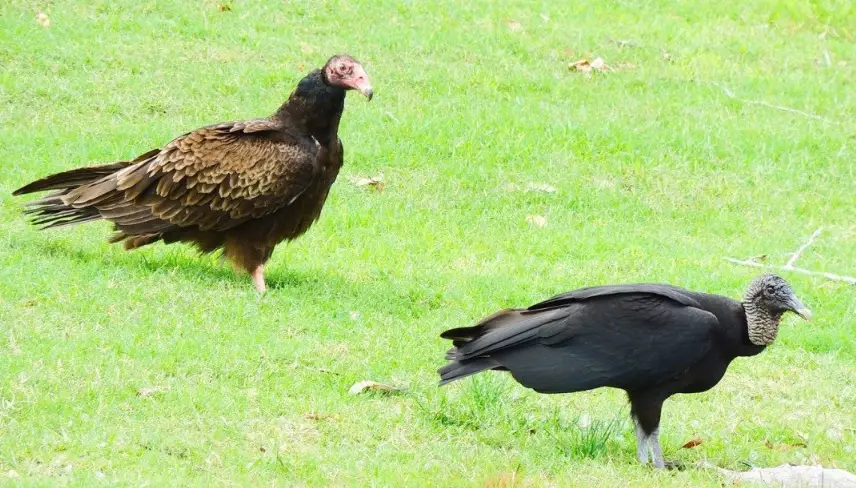
Their social nature is key to their survival strategy. Since their sense of smell is mediocre at best, they use their eyes and their social network. A single Black Vulture high in the sky will watch for the tell-tale descent of a Turkey Vulture that has found a meal. Then, it will signal its buddies, and they'll all descend on the feast, often muscling out the lone Turkey Vulture that did all the hard work of finding it. It sounds rude, but it's effective.
Their shorter, stronger beaks and more powerful build allow them to tackle tougher carcasses that a Turkey Vulture might struggle with. I've seen a group of Black Vultures make quick work of a deer hide that would have taken a Turkey Vulture ages.
They're bold, too.
While Turkey Vultures are shy and will typically flee human approach, Black Vultures can be downright defiant. I've had one stand its ground on a roadkill possum, giving me a look that clearly said, "I was here first, pal." This boldness has allowed them to adapt remarkably well to human landscapes.
Where Do You Find Them? Range and Habitat Showdown
This is a huge differentiator and often the first clue to which vulture you're dealing with. Their preferred living arrangements are almost opposites.
- Turkey Vulture Range: They are the true continent-spanners. You can find them from southern Canada all the way down to the southern tip of South America. In North America, they are widespread but have a strong preference for open or mixed habitats. Think farmlands, grasslands, deserts, rural highways, and the edges of forests. They need open spaces to use their soaring flight effectively and wooded areas for nesting.
- Black Vulture Range: Their range is more restricted and has been expanding northward in recent decades, likely due to milder winters and increased roadkill (a ready food source). They are year-round residents primarily in the southeastern and south-central United States, extending down through Central and South America. They are much more tied to forested landscapes and are now common in suburban and even urban areas. You're as likely to see them perched on a cell phone tower in a suburb as on a dead tree in a swamp.
So, if you're in open ranchland in Wyoming, that vulture is almost certainly a Turkey Vulture. If you're in a wooded suburb in Florida, it's more likely a Black Vulture. In the overlap zone in the eastern US, you need to use your identification skills.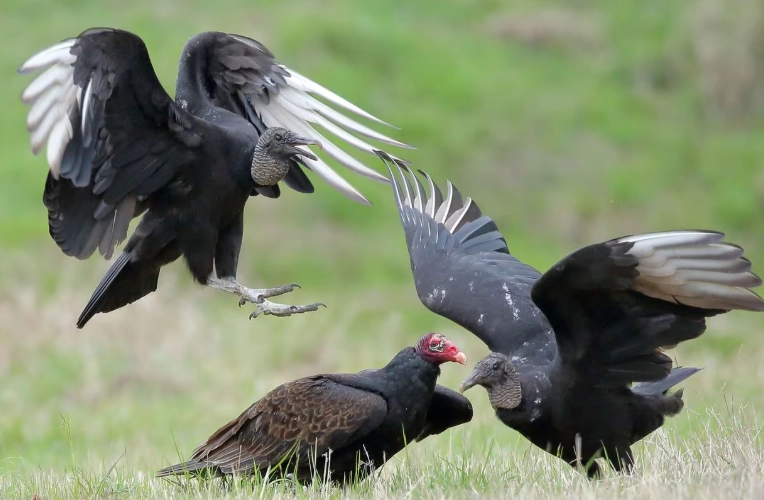
The Dinner Table: Diet and Feeding Behaviors
Both are obligate scavengers, meaning they almost exclusively eat dead animals (carrion). But *how* they do it reveals their different personalities.
Turkey Vulture Menu: They prefer fresh, recently deceased animals. Their superb smell leads them to softer carcasses that haven't bloated or become too tough. They're the first responders. They're also one of the few scavengers that can safely eat animals that died of diseases like botulism or anthrax, thanks to their incredibly corrosive stomach acid that neutralizes deadly pathogens. This is a critical ecosystem service.
Black Vulture Menu: They are the generalists. They'll eat whatever is available, from fresh roadkill to decaying, sun-baked carcasses that have been around for days. Their social behavior lets them take over kills from other animals or chase off smaller competitors. There are rare but documented cases of Black Vultures attacking very young, sick, or incapacitated live animals (like newborn livestock), which has given them a worse reputation with farmers than Turkey Vultures enjoy. It's a behavior worth being aware of, though it's not their primary food source.
At a carcass, the dynamic is clear. The Turkey Vulture is often the finder, using its delicate beak to access softer tissues. The Black Vultures are the bullies that show up later, using their numbers and strength to claim the prize. It's a harsh but balanced system.
Answering Your Top Questions (FAQs)
Answering Your Top Questions (FAQs)
Over the years, I've been asked the same things about the Turkey Vulture vs Black Vulture debate. Here are the answers I wish I'd had when I started.
Which one is more common?
It totally depends on location. In the deep southeastern US, Black Vultures can be more numerous and conspicuous, especially in towns. Across most of North America, the Turkey Vulture has a wider range and is more commonly seen overall. The National Audubon Society's Christmas Bird Count data is a great resource for seeing local population trends.
Do they ever hybridize?
No. They are in different genera (Cathartes vs. Coragyps), which is a significant taxonomic separation. They have different numbers of chromosomes and vastly different courtship behaviors. While they may share airspace and food sources, they do not interbreed.
Are they dangerous or a nuisance?
To humans? Almost never. They have no interest in you. Their primary defense is vomiting a foul-smelling concoction of semi-digested carrion to lighten their load for a quick escape—a disgusting but effective tactic. The main nuisance complaints come from Black Vultures roosting on buildings (their droppings are acidic and can damage structures) and the rare instances of them investigating rubber seals on vehicles or, as mentioned, very vulnerable livestock. Turkey Vultures are almost never a nuisance.
Which one has a better sense of smell?
This isn't even a contest. The Turkey Vulture wins by a landslide. Its olfactory bulb (the part of the brain that processes smell) is massive compared to other birds. The Black Vulture's sense of smell is poor to nonexistent; it's a visual and social hunter. This fundamental difference drives almost all of their other behaviors.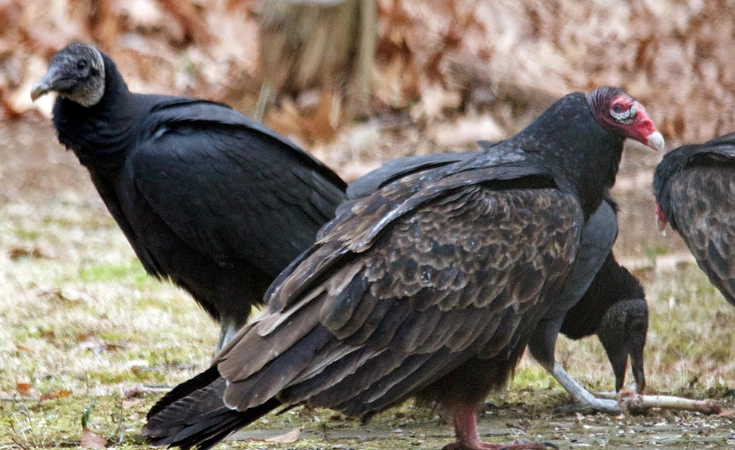
Conservation Status: How Are They Doing?
Here's some good news. Both species are currently doing quite well, which is a testament to their adaptability.
- Turkey Vulture: Listed as Least Concern by the IUCN. Populations appear stable or even increasing in many areas. They benefit from reduced persecution (people are learning they're helpful, not harmful) and, sadly, a steady supply of roadkill from our vast highway networks.
- Black Vulture: Also listed as Least Concern. Their range is actually expanding northward, as mentioned. They thrive in human-altered landscapes and are incredibly resilient.
That said, threats exist for both. Secondary poisoning from eating rodents that have consumed rodenticides is a silent killer. Lead poisoning from ingesting bullet fragments in hunter-shot carcasses is another major issue. Collisions with vehicles and wind turbines also take a toll. Protecting them means managing these human-caused threats. You can report sightings and contribute to citizen science through platforms like eBird, which helps scientists track their health and movements.
Final Thoughts: Appreciating the Differences
So, the next time you see those dark shapes circling, don't just dismiss them as "vultures." Take a moment. Look for the V-shape, the wingtips, the flight style. Is it a solitary, teetering sailor with a red head? Or a group of stocky, black-hooded birds with quick wingbeats?
Understanding the Turkey Vulture vs Black Vulture distinction opens a window into a complex and vital ecological partnership. One is a refined specialist, a master of the air and scent. The other is a tough, social opportunist, thriving at the edges of our world. They're not pretty in the traditional sense, but they are magnificent in their function. They keep our landscapes clean, prevent the spread of disease, and are a constant, soaring reminder of nature's relentless, efficient cycles.
I hope this guide takes the mystery out of it for you. Grab your binoculars, head outside, and put your new skills to the test. You might be surprised at how often you see both, once you know how to look.
Reader Comments