Your Flicker Migration Guide
- So, What Exactly is a Northern Flicker?
- The Annual Cycle: A Month-by-Month Look at Flicker Movement
- What Makes a Flicker Decide to Migrate?
- How to Track and Observe Northern Flicker Migration Yourself
- Common Questions About Northern Flicker Migration (Answered)
- Final Thoughts: Embracing the Messiness
I remember the first time I truly noticed a Northern Flicker. It wasn't just a fleeting glimpse of brown at the feeder. This one was hammering away at the ground in my vegetable patch in late October, long after most of the other woodpeckers seemed to have moved on. It got me wondering – where do these stunning, spotted birds go when the cold hits? Are they like the robins, here one day and gone the next? That curiosity sent me down a rabbit hole of research, chats with local birding groups, and a lot of early morning stakeouts. What I found out about Northern Flicker migration was far more interesting, and nuanced, than I ever expected.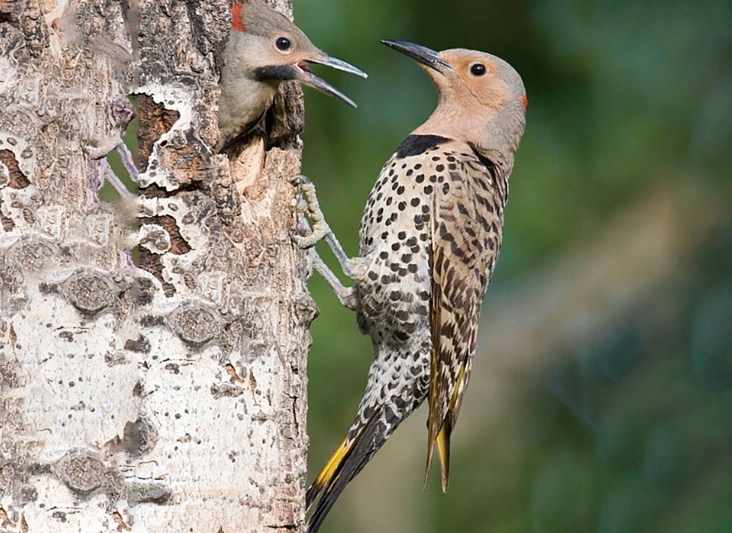
Turns out, flickers are kind of the rule-breakers of the woodpecker world. While your Downy or Hairy Woodpecker might stick around all winter, a lot of flickers feel the urge to travel. But it's not a simple "all go south" story. It's a messy, complicated, and fascinating tale that depends entirely on where they start, what subspecies they are, and frankly, how harsh the winter decides to be.
So, What Exactly is a Northern Flicker?
Before we dive into the journey, let's make sure we're all talking about the same bird. The Northern Flicker (*Colaptes auratus*) is one of the most widespread woodpeckers in North America, but it often acts more like a giant ground-feeding sparrow. You're less likely to see it clinging vertically to a tree trunk (though it can) and more likely to spot it hopping on the lawn, digging for ants with its specially adapted, slightly curved beak.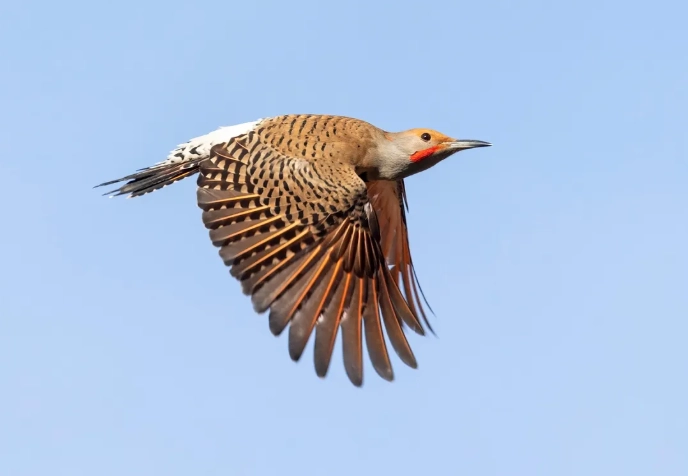
They're big, nearly crow-sized, with a graceful, undulating flight. The most striking features are the black polka-dots on their bellies and the bright flash of color under their wings and tail – a key identifier for the two main groups.
The Two Main Players: Eastern vs. Western Flickers
This east-west divide is the single biggest factor in understanding Northern Flicker migration patterns. They're considered the same species, but their habits differ.
| Feature | "Yellow-shafted" Flicker (East) | "Red-shafted" Flicker (West) |
|---|---|---|
| Underwing/Tail Color | Bright lemon yellow | Salmon-red or orange-red |
| Face Pattern | Gray face, red nape crescent (males) | Gray face, red malar (mustache) stripe (males) |
| Primary Range | East of the Rocky Mountains | West of the Great Plains |
| Migration Tendency | Stronger migratory urge. Most birds in northern parts of range (Canada, northern U.S.) migrate south. | More variable, often less migratory. Many are year-round residents, especially along the Pacific Coast. |
| Winter Grounds | Southern U.S., Mexico, rarely Central America. | Often remain in breeding range, or move to lower elevations/coastal areas. |
See the difference? If you live in Vermont or Manitoba, your flickers are very likely to book it south. If you're in Oregon or California, you might have the same flicker families in your yard year-round. This is why a one-size-fits-all Northern Flicker migration map can be misleading.
The Annual Cycle: A Month-by-Month Look at Flicker Movement
Let's break down what a typical year looks like for a migratory Northern Flicker. I say "typical," but weather can throw a wrench in this schedule any given year.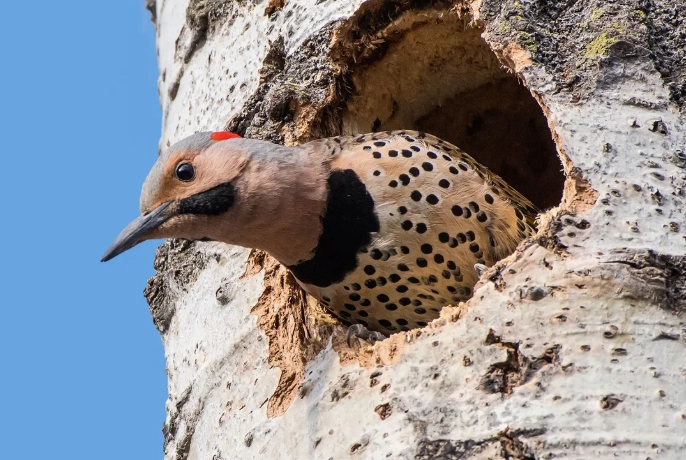
- Late Summer (August - September): The party's over. Breeding is done, families have split up. This is when you might see flickers start to become more restless. They're feeding heavily, building fat reserves for the journey. You'll notice less territorial drumming and more loose, wandering flocks.
I've seen groups of a dozen flickers in early September in a single park, which you'd never see during nesting season. They're socializing, maybe figuring out the travel plans.
- Fall Migration (September - November): This is the main exodus. Birds from Canada and the northern U.S. begin moving south. The peak often hits in October. They usually migrate during the day, which is great for us observers. It's not a non-stop flight; they'll travel in stages, stopping to feed for days at a time in good habitat.
- Winter (December - February): The migratory birds are settled in their wintering grounds, which could be your backyard in Texas, Georgia, or even Mexico. Resident birds (mostly in the west and south) are just trying to survive the cold. This is when flickers become incredibly reliant on backyard offerings like suet, as their natural ant prey is buried or dormant.
- Spring Migration (February - April): The return trip! It often starts surprisingly early. Males tend to head north first to stake out the best territories. By late March and April, they're arriving back on their breeding grounds, often to find snow still on the ground. That's why you'll see them hammering on metal gutters or satellite dishes – they're proclaiming ownership loud and clear, and frozen wood just doesn't make the same racket.
- Spring & Summer (May - July): The focus is entirely on breeding: drumming, nesting in tree cavities (they rarely excavate their own, often taking over old holes), and raising young. Movement is minimal and strictly local.
What Makes a Flicker Decide to Migrate?
It's not just a calendar. A complex mix of factors tells a flicker it's time to go or time to stay. Scientists call this "partial migration," where some individuals migrate and others don't, even within the same population.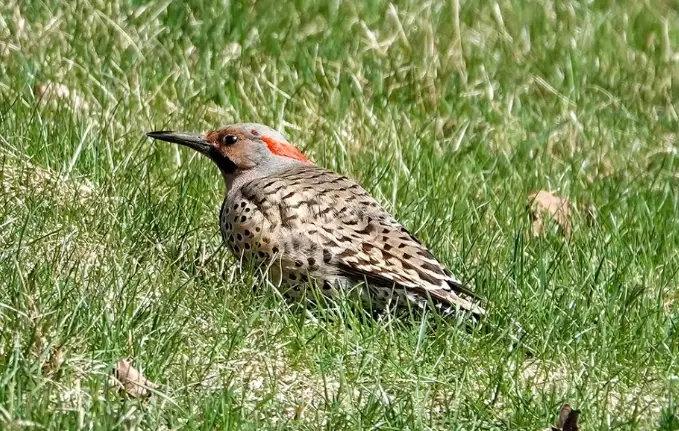
The Big Three Drivers
- Food Availability (The #1 Reason): Flickers are myrmecophagous – fancy word for "ant-eaters." Their diet is >45% ants. When the ground freezes solid and ants retreat deep underground, the buffet closes. If a flicker can't reliably get to ants or other insects, it must move to where it can, or switch to berries and seeds (which is harder for them).
- Weather and Latitude: This is straightforward. A flicker in Saskatchewan faces a much higher survival risk in January than one in South Carolina. The colder and snowier the normal winter, the stronger the migratory push in that population.
- Age and Sex: There's some evidence that younger birds and females are more likely to migrate, while adult males are more likely to try and tough it out to defend a prime territory. This isn't a hard rule, but a trend observed in many bird species.
So, a young female Yellow-shafted Flicker in Minnesota is almost guaranteed to migrate. An adult male Red-shafted Flicker in the mild valleys of Washington State? He'll probably stick around.
How to Track and Observe Northern Flicker Migration Yourself
This is the fun part. You don't need to be a scientist with a satellite tag to contribute to our understanding of Northern Flicker migration. Here’s how you can be a citizen scientist.
1. Know What to Look and Listen For
Migration isn't just about seeing a bird. It's about noticing changes in behavior.
- Increased numbers: A sudden influx of flickers in your yard in October or March is a dead giveaway. They're stopping over to fuel up.
- Unusual feeding behavior: Seeing them frantically eating berries from a dogwood or serviceberry tree in fall is a classic pre-migration fat-loading behavior.
- Flight calls: Learn that piercing "kleeer!" call. Hearing it overhead, especially in the morning or evening, often means migrants are passing through.
2. Use the Right Tools and Resources
Forget generic maps. Use dynamic tools that show real-time data.
The absolute best resource is eBird, run by the Cornell Lab of Ornithology. It's not just a checklist site. You can use their "Explore" tools to pull up Northern Flicker migration maps that are animated by week. You can see exactly when they show up and disappear in your county. It's based on millions of observations from people like you and me. I use it every season to predict when my first returnee might show up.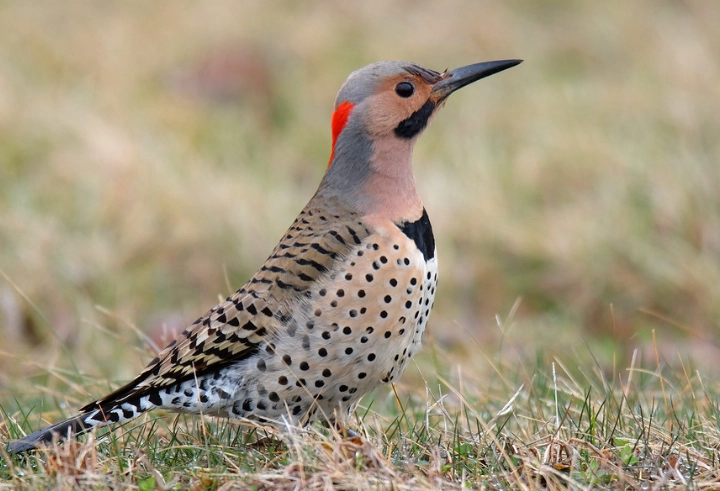
Another fantastic, science-backed resource is the All About Birds species guide, also from Cornell. It gives you detailed range maps that clearly show the year-round, summer-only, and winter-only zones for flickers. It visually confirms that western birds are more sedentary.
3. Make Your Yard a Migration Stopover Hotel
If you want to see migrating flickers, attract them.
- Food: Offer high-energy suet, especially in fall and spring. Peanut butter mixes are like crack for them. A ground feeder with mealworms will make you a flicker legend. Leave some areas of your lawn unmowed – they love digging for bugs in short grass.
- Water: A birdbath, especially one with a gentle drip or heater for winter, is a huge draw. They drink and bathe frequently.
- Shelter: They won't nest during migration, but they need trees or large shrubs to roost in safely at night. Dead trees (snags) are perfect – they offer both food and perch sites.
I started putting out a suet block specifically marketed for woodpeckers in late September, and my fall flicker sightings tripled. They'd come, gorge for a few days, and then move on. It was like running a busy restaurant for a very specific clientele.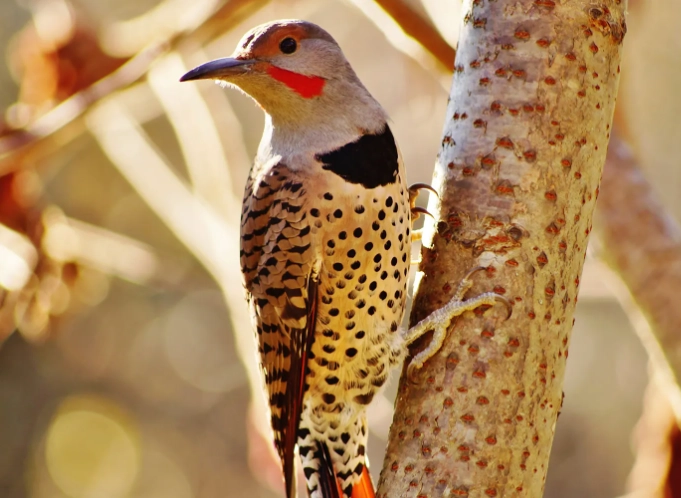
Common Questions About Northern Flicker Migration (Answered)
How far do they actually travel?
It's a huge range. A flicker from central Canada might travel 1,500 miles or more to the Gulf Coast. A flicker from Pennsylvania might only go as far as North Carolina – a trip of a few hundred miles. Many western birds simply move from high mountain elevations down into the valleys, a migration in altitude, not latitude.
Do they migrate at night like many songbirds?
Generally, no. Northern Flickers are primarily diurnal migrants. They travel during the day, which is why we have a better chance of seeing them on the move. They'll fly for a few hours, then stop to feed for the rest of the day.
Can I attract a flicker to stay for the winter?
If you're on the edge of their range, maybe. Consistent, high-quality food (suet, peanuts, mealworms) and liquid water can convince a flicker that's on the fence about migrating to risk staying. But you can't override a deep-seated instinct. If it's a bird programmed to go south, it will go. Don't feel bad – your feeder might just give it the extra boost it needs for the trip.
Why do I see flickers in the winter sometimes? I thought they migrated.
This is the partial migration puzzle! You're likely seeing either:
1) A resident bird from a non-migratory population (common in the West).
2) A bird that migrated from further north. Your winter flicker might be a Canadian tourist spending the season in your relatively milder area.
3) An irruptive individual. In years with huge acorn or berry crops (like certain dogwood years), more flickers might attempt to overwinter.
Are there any conservation concerns related to their migration?
Their migration isn't considered threatened like that of some long-distance shorebirds, but they face the same hazards any traveling bird does: window collisions, communication tower strikes, and habitat loss at both their breeding and wintering sites. The loss of open woodlands and savannas they love is a particular concern. Supporting organizations like the American Bird Conservancy, which works on habitat protection across the Americas, helps all migratory birds, flickers included.
Final Thoughts: Embracing the Messiness
After years of watching them, the main lesson I've learned about Northern Flicker migration is to expect the unexpected. One year they're gone by Halloween, the next you have one coming to your suet feeder all through a mild December. That inconsistency isn't a flaw in the system; it's the system itself. It's a flexible, responsive strategy that has served them well.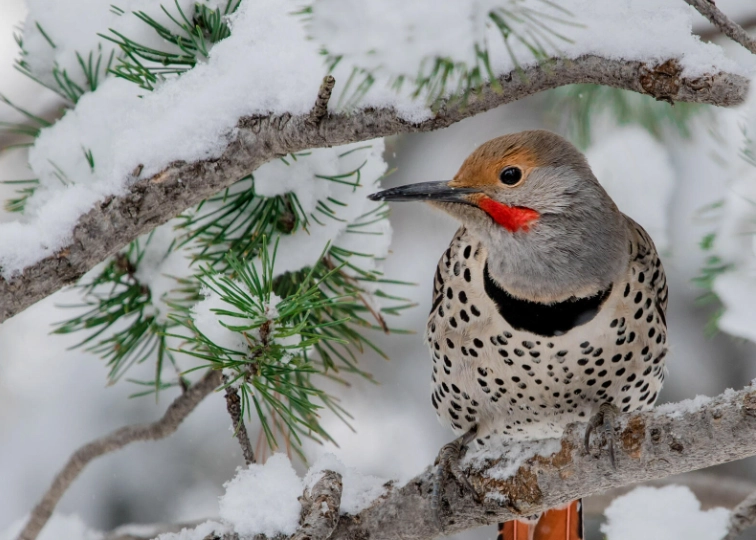
So this fall or spring, take a moment to look and listen. If you see that bold, spotted form on your lawn or hear that sharp "kleeer!" from the sky, you're witnessing a small part of a continent-spanning journey. It's a journey driven by ants and weather, guided by instinct, and full of individual variation. And understanding that complexity makes seeing a Northern Flicker – whether it's a hardy resident or a weary traveler – all the more special.
Grab a pair of binoculars, maybe check that eBird map, and see what the flickers in your neighborhood are up to. You might be surprised.
Reader Comments