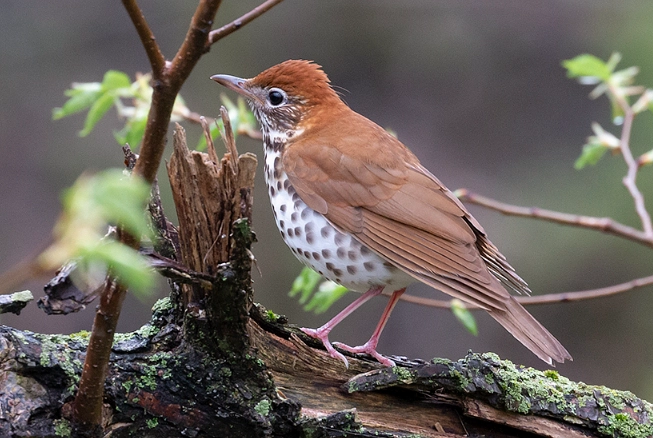
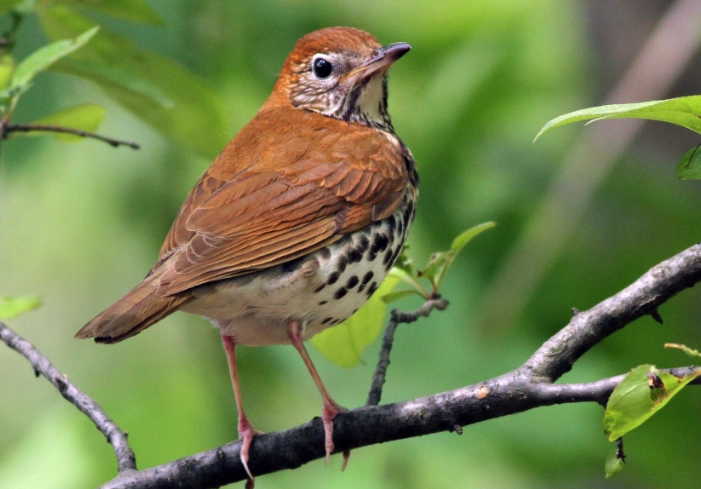
You're walking through a dense eastern forest in late spring, the air cool and damp. Then you hear it—a series of clear, flute-like notes, echoing as if from a cathedral ceiling. That haunting, ethereal sound isn't a magical pipe; it's the song of the Wood Thrush (Hylocichla mustelina). For many birders, hearing this song is the pinnacle of a spring walk. But actually seeing the shy, spotted singer? That's another challenge altogether.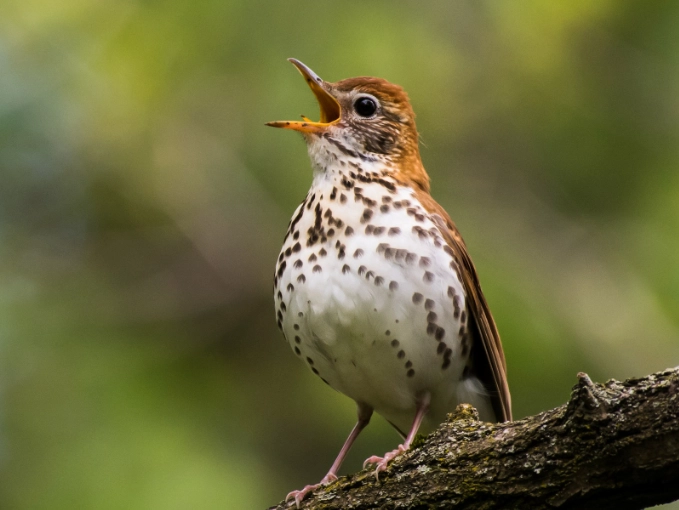
I've spent over a decade tracking this bird from the Smokies to New England. The thrill never fades, but I've also seen too many people walk right past them, or worse, give up on attracting them because of a few common mistakes.
What's in this guide?
The Unmistakable Song of the Wood Thrush
Let's start with the sound. If you remember one thing, remember this: ee-oh-lay. Birders often use this mnemonic. The song is a three-part phrase, with the middle note usually highest in pitch. But that's the textbook version.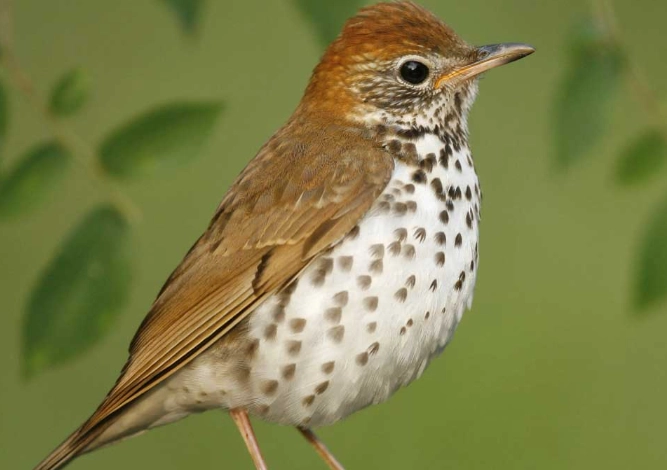
In reality, it's more complex. Each male has a repertoire of about 50 distinct song types. He combines and recombines them, creating a seemingly endless variation. The magic is in the double voice box, or syrinx. The Wood Thrush can sing two independent notes simultaneously, producing that rich, harmonic, almost watery quality. It doesn't just sound like a flute; it sounds like two flutes playing in perfect harmony.
Here's the subtle error most beginners make: they confuse it with the Hermit Thrush. The Hermit Thrush's song is also beautiful, but it starts with a single, long, clear introductory note, followed by a cascading, spiraling flourish. The Wood Thrush's phrase is more balanced, a complete musical statement in itself. Listen for that rounded, resonant quality unique to the Wood Thrush.
I was in the Blue Ridge Mountains last May, pre-dawn. The forest was silent, then one Wood Thrush started. Within minutes, it was a chorus—a dozen birds, each with a slightly different variation, weaving a tapestry of sound. It's an experience that goes beyond listing a species. It's auditory immersion.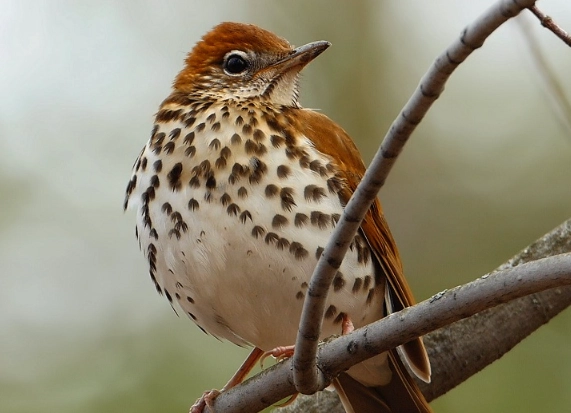
When and Where to Listen
They sing most vigorously at dawn and again at dusk. The best time is from their arrival in April/May through early July. After that, singing drops off as nesting concludes. You won't hear it in winter; they're in Central America.
Quick Sound ID Tip
If you're unsure, use the Cornell Lab of Ornithology's Merlin Bird ID app. Its sound ID feature is scarily accurate at picking out the Wood Thrush's song from a forest chorus. It's a game-changer for new birders. I still use it to confirm when I hear an unusual variation.
Where to Find Wood Thrush: Habitat and Range
Forget open fields or your typical suburban park with scattered trees. The Wood Thrush is a creature of the forest interior. We're talking about mature, deciduous, or mixed forests with a closed canopy and a relatively open understory. They need dense overhead cover and a messy floor.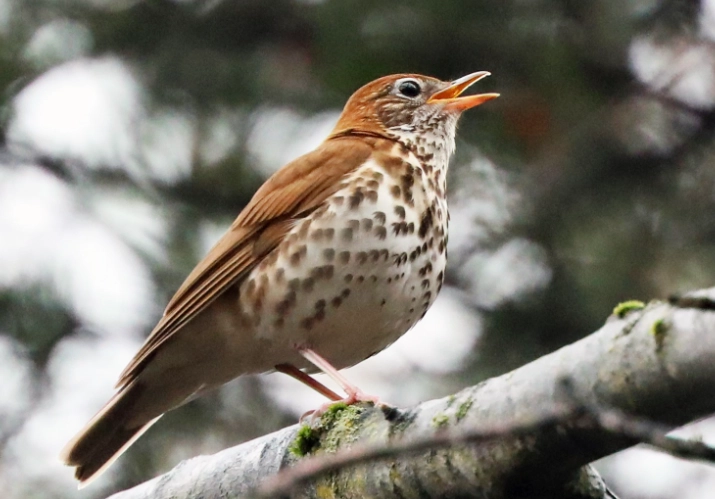
Why the messy floor? That's where they feed. They're ground foragers, hopping through the leaf litter, flipping leaves with their bills to uncover insects, spiders, and snails. A forest floor swept clean by deer overbrowsing or heavy human traffic is a desert to them.
Their breeding range covers the eastern United States and the southern edges of Canada. Look at a map: from eastern Texas and Florida north to Minnesota, southern Ontario, and Nova Scotia.
Finding them isn't just about geography; it's about micro-habitat.
I've had the best luck in these specific spots:
- Ravines and slopes near water: They love moist areas. A creek running through a forest is a magnet.
- Forests with a dense understory of spicebush or hobblebush: Provides cover for nesting and foraging.
- Large, unfragmented woodlots: Smaller than 100 acres? Your chances drop significantly. They are area-sensitive.
Paradoxically, sometimes the best way to see one is to stop walking. Find a quiet log, sit still for 20 minutes, and let the forest forget you're there. You'll hear the soft *pit pit pit* call note or the rustle of leaves long before you see the bird itself.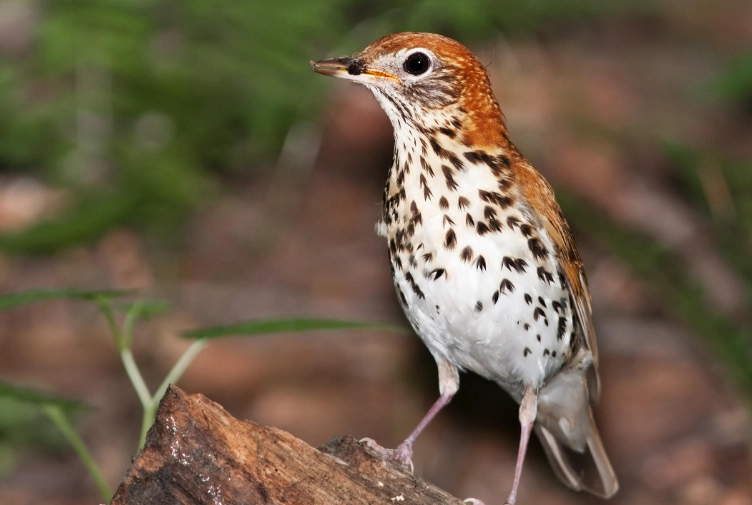
How to Attract Wood Thrush to Your Yard
This is the holy grail for many, and it's tough. If you live in a standard subdivision with a manicured lawn and a few young trees, it's probably not going to happen. Be honest about your starting point. But if you have a property adjacent to or within a sizeable woodland, you have a shot.
Attraction isn't about a single feeder. It's about replicating their ideal forest habitat. Think layers.
| Element | What to Provide | Common Mistake to Avoid |
|---|---|---|
| Food | They rarely eat seed. Focus on live mealworms in a shallow dish at ground level. In late summer/fall, plant native berry producers like spicebush, dogwood, and Virginia creeper. | Putting up a standard tube or hopper feeder filled with sunflower seeds. They'll ignore it. |
| Water | A ground-level birdbath or a shallow, dripping water feature is critical. It must be near dense cover so they feel safe flying down to it. | Using a tall, exposed pedestal bath. They are ground birds and view that as dangerous. |
| Shelter & Nesting | Create a brush pile in a shaded corner. Leave leaf litter intact. They nest in shrubs/small trees 5-15 feet high. They won't use a nest box. | Cleaning up every fallen branch and leaf. You're removing their foraging ground and shelter. |
The biggest non-consensus point I'll make: skip the commercial "thrush fruit blends." I've tested them for years. In my experience, they attract more robins, catbirds, and orioles, while the shy Wood Thrush often gets out-competed. The investment is better spent on planting a native dogwood.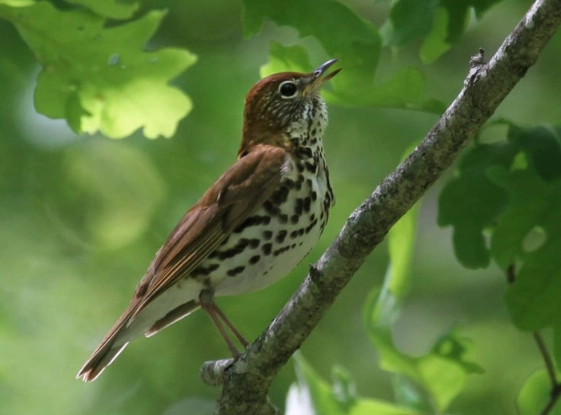
A personal case study: My own property borders a 200-acre wood in Pennsylvania. For three years, I heard them but never saw them in my yard. The breakthrough came when I stopped mowing a 20x20 foot area under some mature oaks, let the leaves accumulate, and installed a simple, shallow ceramic dish bath right at the edge of that zone. The first day I put out mealworms nearby, a pair appeared. It was about creating a seamless transition from their forest home to my space.
Wood Thrush Conservation Status and Threats
This is the sobering part. According to the North American Bird Conservation Initiative, the Wood Thrush is a "Common Bird in Steep Decline." Their population has dropped by over 60% since the 1960s.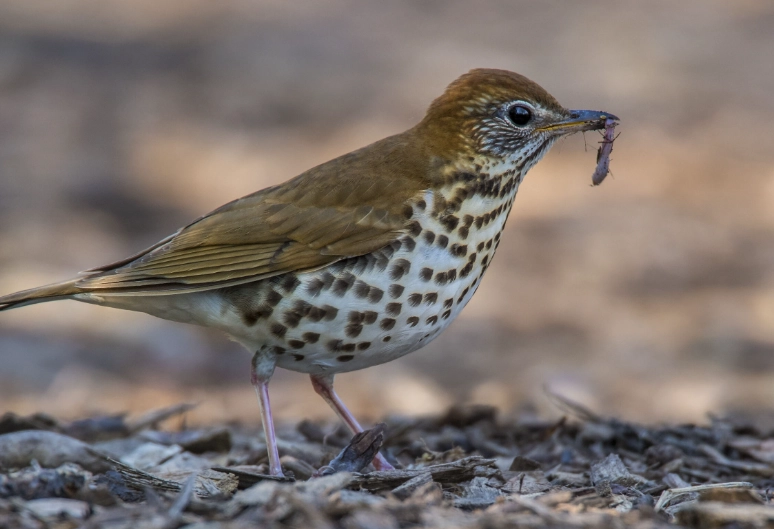
The causes aren't simple and happen across their entire life cycle:
- Habitat Loss in Breeding Grounds: Forest fragmentation is the killer. Smaller woodlots mean more edge, which means more nest predators like raccoons, jays, and cats, and more Brown-headed Cowbirds that parasitize their nests.
- Habitat Loss in Wintering Grounds: The forests of Central America are being cleared for agriculture.
- Climate Change: Shifts in insect emergence and migration timing can create mismatches.
What can you do? Support organizations like the American Bird Conservancy that work on hemispheric conservation. On a local level, advocate for preserving large forest tracts and creating wildlife corridors. Make your own yard a sanctuary if you can. Every patch of habitat helps.
FAQs: Your Wood Thrush Questions Answered
I hear a beautiful song in my woods but can't tell if it's a Wood Thrush or a Hermit Thrush. What's the fastest way to tell?
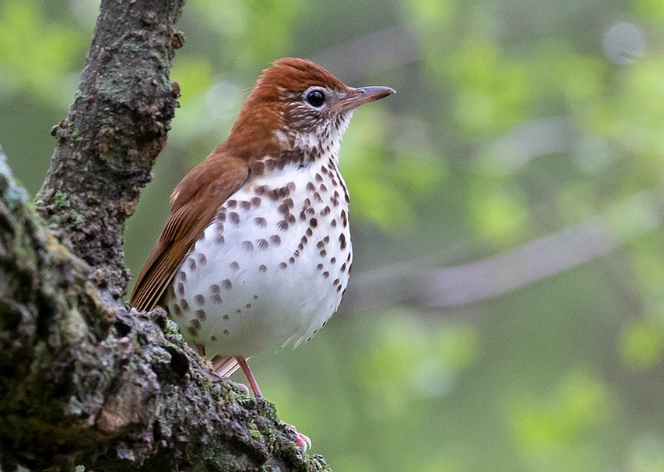
I live near a forest and have tried mealworms and a birdbath, but no Wood Thrushes come. What am I missing?
Are Wood Thrushes endangered? Should I report them if I see one?
What's the best time of day to actually see a Wood Thrush, not just hear it?
Reader Comments