Quick Guide
If you've ever seen a large, brownish woodpecker hop around on your lawn instead of clinging to a tree trunk, chances are you've met a Northern Flicker. It's a moment that throws a lot of first-time birders for a loop. We're used to woodpeckers being, well, on wood. But the flicker is different, and a big part of understanding this bird starts with one simple question: where does it live? The answer is far more interesting and complex than you might think.
The Two Faces of the Flicker: A Range Divided by Color
This is where it gets really cool. The sprawling Northern Flicker range is famously split by the Rocky Mountains, giving us two primary subspecies that look distinctly different. For a long time, birders considered them separate species—the "Yellow-shafted" and the "Red-shafted" Flicker. Today, science groups them under the single species Colaptes auratus, but the visual difference is still the most reliable field mark for any birder.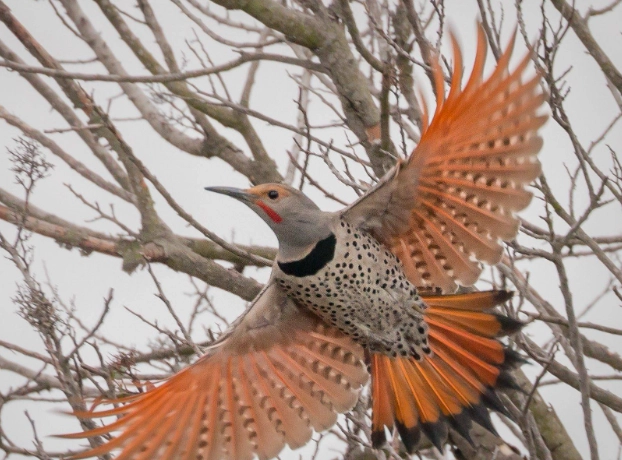
So, who lives where? The divide is a classic case of biogeography.
The Eastern Bird: The Yellow-shafted Flicker
Head east of the Rocky Mountains, and this is the flicker you'll find. Its name comes from the brilliant lemon-yellow color you see under its wings and tail feathers when it flies. Up close, it has a gray crown, a tan face, and a bold red crescent on the nape of its neck. Males sport a slick black "mustache" stripe by the beak.
The Yellow-shafted Flicker's range is immense. It breeds across almost all of Canada (except the far northern Arctic islands), throughout the entire eastern United States, and its territory pushes west, occupying a broad swath of the Great Plains. I've seen them in the deciduous forests of New England, the open parklands of the Midwest, and even in suburban neighborhoods where mature trees are nearby. Their adaptability is impressive.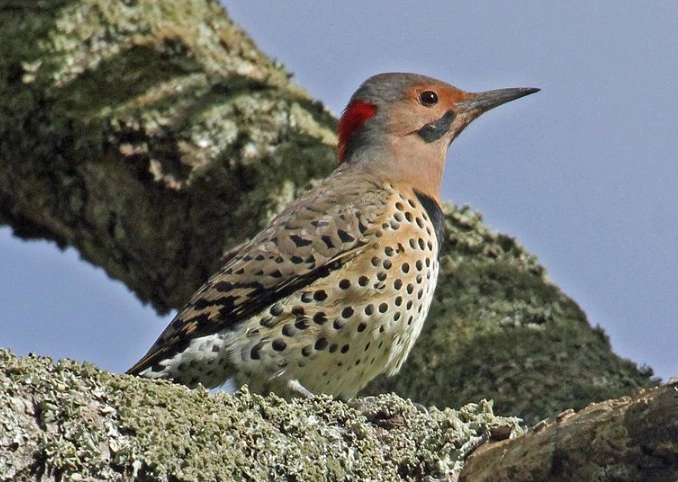
The Western Bird: The Red-shafted Flicker
Cross over to the western side of the Continental Divide, and the palette changes. Here, the underwing and tail feathers flash a stunning salmon-red or orange-red. Their face is more of a grayish-brown, and they lack the red nape crescent. The males here have a red "mustache" instead of a black one.
The Red-shafted Flicker's range covers the western third of North America. It breeds from southern Alaska down through British Columbia, across the mountainous and intermontane regions of the western U.S., and into the highlands of central Mexico. They thrive in open woodlands, forest edges, and even arid areas like sagebrush plains, as long as there are some trees or posts for nesting.
The boundary isn't a neat, clean line. Through the Great Plains, from Texas up to Alaska, there's a broad hybrid zone where the ranges of the Yellow-shafted and Red-shafted overlap and interbreed. In this zone, you can find flickers showing every possible combination of traits: yellow wings with a red mustache, orange wings with a gray face, you name it. It's a birder's puzzle and a fascinating example of evolution in action. The Cornell Lab of Ornithology's All About Birds guide has some great visuals of these hybrids, which really helps if you're birding in places like eastern Colorado or the Dakotas.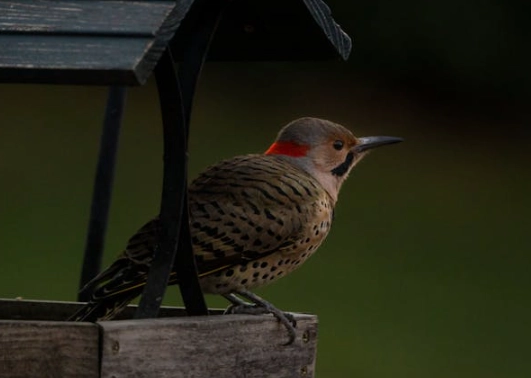
To make sense of it all, here's a breakdown of the two main players in the Northern Flicker range:
| Subspecies / Form | Key Identifying Feature | Core Breeding Range | Notes on Habitat |
|---|---|---|---|
| Yellow-shafted (C. a. auratus) | Bright yellow underwings/tail; black mustache (male); red nape crescent. | East of the Rockies, from central Alaska across Canada to Newfoundland, south throughout eastern U.S. to Gulf Coast. | Highly adaptable: deciduous/mixed forests, forest edges, swamps, suburban areas with trees. |
| Red-shafted (C. a. cafer) | Salmon-red underwings/tail; red mustache (male); no red nape crescent. | West of the Rockies, from southern Alaska through western Canada, entire western U.S. into central Mexican highlands. |
Living Large: How Flickers Use Their Expansive Territory
Having such a broad Northern Flicker range means these birds have learned to exploit a wide variety of habitats and food sources. They're not picky, and that's their strength.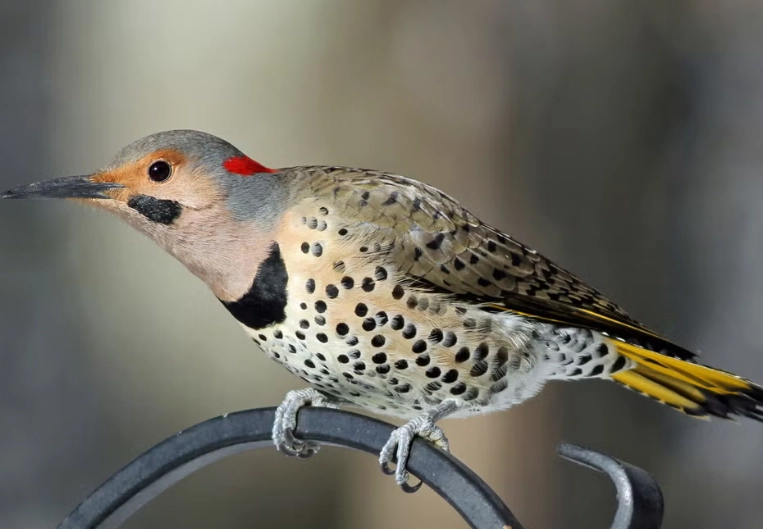
Not Your Average Woodpecker Diet
Their ground-foraging habit is the big giveaway. While they will eat tree-born insects like other woodpeckers, a huge portion of their diet is ants and beetles scooped right from the soil. This dietary quirk directly expands their viable habitat. They don't need dense, insect-rich forests. They can live in open woodlands, orchards, parks, and even your backyard lawn, as long as there are ant colonies around. The U.S. Forest Service notes their importance in controlling ant populations, which is a nice ecological bonus.
A Home for Every Season: Breeding vs. Wintering Grounds
The Northern Flicker range shifts with the seasons. They are migratory across much of their territory, but not in the dramatic, cross-hemisphere way of some warblers.
- Northern Birds: Flickers breeding in Canada and the northern U.S. are almost entirely migratory. When winter comes, they head south. This means the flicker population in, say, Alabama or Texas in January is a mix of local birds and visitors from far north.
- Southern Birds: Populations in the southern U.S., the Pacific Coast, and the Southwest are often year-round residents. The climate is mild enough, and food (ants!) is accessible even in winter.
This migration isn't always a clean north-south swap. There's also an altitudinal migration. Flickers that nest high in the mountains of the West (like in the Rockies or Sierras) will often move down to lower valleys for the winter. So, if you live in a western valley and suddenly see more flickers in October, you're likely seeing this downhill slide in action.
Finding Flickers: A Practical Guide Based on Their Range
Okay, so you want to see one. Or maybe you're wondering why the flickers that used to visit your feeder have disappeared. Understanding their range-driven behavior holds the answers.
Best Places to Look (Habitat Checklist)
Forget deep, dark forests. To find a flicker, look for these habitat features, which are common across their range:
- Edges: Forest edges, where trees meet a field or lawn, are prime real estate.
- Open Woodlands: Parks, oak savannas, and pine stands with sparse undergrowth.
- Areas with Bare Ground or Short Grass: This is where they forage. Golf courses (the roughs, not the greens!), pastures, and even well-mulched garden beds are attractive.
- Presence of Dead Trees (Snags): They need these for nesting. No dead trees nearby? They might use a nest box or even occasionally a burrow in an earthen bank.
Seasonal Timing is Everything
Your location within the Northern Flicker range dictates the best time to look.
- Spring (March-May): This is peak activity everywhere. Migrants are returning, pairs are establishing territories, and their loud, ringing calls and energetic drumming on metal gutters (they love the resonance!) make them very noticeable.
- Summer (June-August): They're quieter while raising young, but you'll see adults constantly foraging to feed hungry chicks.
- Fall (September-November): Another active period as families disperse and migrants move south. It's a great time to see flickers in unusual, more open places during their journey.
- Winter (December-February): In the northern parts of their range, they're gone. In the south and along the Pacific Coast, this is a reliable time to see them. They may also become more regular at suet feeders in winter when insects are scarce.
Common Questions About Northern Flicker Range and Behavior
Conservation Status: A Stable Bird, But With Local Challenges
Overall, the Northern Flicker is common and its population is considered stable across its wide range, thanks to its adaptability. However, that doesn't mean there aren't issues. Local declines can happen, often tied to two range-wide problems:
- Loss of Nest Sites: Our habit of cleaning up dead trees and snags from woods and neighborhoods removes crucial nesting cavities. This is a problem everywhere in the Northern Flicker range.
- Competition with Starlings: The introduced European Starling is a fierce competitor for nest cavities. Starlings often evict flickers from their holes, leading to failed nesting attempts.
The flicker's ground-feeding habit also makes it vulnerable to pesticides, which can poison them directly or kill off their ant prey. If you want to help flickers within your slice of their range, the best things you can do are put up a nest box (with a hole just big enough to keep starlings out) and avoid using insecticides on your lawn.
Wrapping this up, the story of the Northern Flicker range is a story of adaptation and division. It's about a bird that mastered the ground game to conquer a continent, only to be split into two colorful tribes by a mountain range. Whether you're marveling at a yellow flash in a New England forest or a red flash in an Oregon woodland, you're seeing two variations on a highly successful theme. Their presence—or absence—in your area is a direct map to the season, the habitat, and the health of your local ecosystem. So next time you see that big, spotted woodpecker on the ground, you'll know exactly where it fits into the grand scheme of things.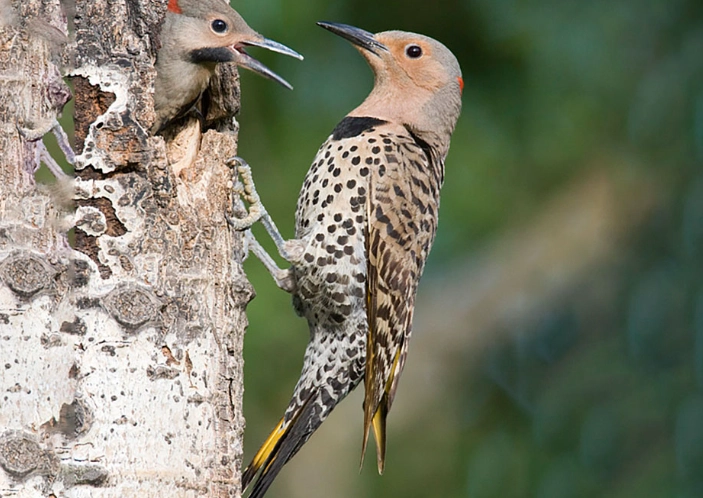
Reader Comments