Let's cut right to the chase. After over a decade of guiding birding trips and testing more spotting scopes than I can count, I can tell you the single biggest mistake beginners make is obsessing over the highest magnification number. The best magnification for bird watching isn't a single number; it's a versatile range, and for 95% of birders, that sweet spot is a 20-60x zoom eyepiece. Why? Because birding isn't done in a lab. It's done in the real world, where shaky hands, heat haze, and moving targets turn excessive magnification from an asset into a liability.
This article isn't just about a spec sheet. We'll dive into why that range works, what other numbers matter just as much (spoiler: the objective lens size is crucial), and how to choose a scope that feels like an extension of your eyes, not a frustrating piece of tech.
Your Quick Guide to Magnification
The Golden Rule: Why More Power Isn't Always Better
Imagine trying to read a book while someone is constantly jiggling your chair. That's what using a 80x telescope handheld feels like. Magnification amplifies everything—including your heartbeat, your breathing, and the slightest breeze. This "handshake" effect makes the image swim uncontrollably, rendering fine details useless.
Then there's atmospheric distortion. On a warm day, heat rises from the ground, creating shimmering waves of air. At high magnifications (above 45-50x), this haze becomes a blurry, wavy wall that obscures your view. I've seen people miss stunning details on a perched hawk because they cranked the zoom to max and turned the bird into a wobbly, heat-blurred mirage.
Understanding the Numbers: Magnification and Objective Lens
A spotting scope is described by two numbers, like 20-60x65. The first set (20-60x) is the magnification zoom range. The second number (65) is the diameter of the objective lens in millimeters. This lens is the light-gathering engine.
Think of it this way: magnification is how much you enlarge the picture, and the objective lens is the size of the window letting light in to create that picture. A bigger window on a cloudy day or at dawn/dusk makes a massive difference.
| Objective Lens Size | Best For | Trade-off |
|---|---|---|
| 50-65mm | Daytime birding, hiking, travel. Lighter weight and more portable. | Image dims slightly faster in low light compared to larger lenses. |
| 70-85mm | Serious birders, low-light conditions (dawn/dusk), waterfowl/wetland watching. Brighter image across all magnifications. | Heavier, bulkier, and usually more expensive. |
| 90mm+ | Astronomy crossover, extreme low-light observation, digiscoping with heavy cameras. | Significant weight and size; often requires a heavier-duty tripod. |
For a balanced, do-it-all birding scope, a 65mm or 80mm objective lens paired with a 20-60x zoom is the professional's standard. The 80mm gathers about 50% more light than a 65mm, which is noticeable in shadowy forests or on overcast days.
The Ideal Magnification Range for Bird Watching
So, why is 20-60x the recommended range? It covers all the bases without forcing compromises.
Low End (15x-25x): For Finding and Following
This is your search mode. The field of view is wide, making it easy to scan a lake for ducks or follow a flitting songbird in a tree. The image is incredibly bright and stable. I start every observation session at low power to locate my subject. Trying to find a small bird at 60x is like looking through a drinking straw.
Mid-Range (25x-40x): The Sweet Spot for Detail
Once you've found the bird, zoom in. This is where 90% of your critical observation happens. You have enough power to see feather patterns, eye rings, and bill shapes clearly, but the image remains relatively steady and resistant to atmospheric distortion. This is the power for identifying that fall warbler or appreciating the iridescence on a hummingbird's throat.
High End (45x-60x): For Stationary, Distant Subjects
Use this sparingly and strategically. It's perfect for a distant eagle on a nest, a perched owl across a canyon, or shorebirds far out on a mudflat—provided your tripod is solid and the air is calm. The field of view is narrow, and any instability is magnified.
Key Features Beyond Magnification
If you only look at magnification, you'll buy a bad scope. These factors are equally critical:
Optical Quality (Glass & Coatings): This is what you're really paying for. High-quality ED (Extra-low Dispersion) or Fluorite glass reduces chromatic aberration (color fringing). Fully multi-coated lenses maximize light transmission. A good 20-60x65 scope with premium glass will outperform a cheap 20-60x80 with poor glass every time.
Close Focus Distance: Can your scope focus on a butterfly 10 feet away? A good close focus (under 15 feet) turns your scope into a macro tool for insects, flowers, and very close birds.
Waterproof & Fogproof Construction (Nitrogen Purged): Birding happens in dew, rain, and humidity. If your scope fogs up internally, it's a paperweight.
Eyepiece Style: Angled (45°) vs. Straight. Angled eyepieces are easier for sharing, more comfortable for long sessions, and better for viewing birds at different heights. Straight eyepieces are slightly more intuitive for finding birds initially. Most seasoned birders prefer angled.
Choosing Your First Birding Scope: A Practical Walkthrough
Let's get specific. Don't just buy the first scope you see online. Think about your primary use case.
Scenario 1: The Casual Birder & Hiker
You want one tool for occasional birding and hiking. Portability is key.
Recommendation: A compact 20-60x65mm angled scope. Look at models like the Celestron Hummingbird ED or the Vortex Razor HD 11-33x50 (a lower-power, ultra-compact option). Pair it with a lightweight travel tripod. Total weight under 4 lbs for the whole kit.
Scenario 2: The Dedicated Backyard & Wildlife Watcher
Your scope lives on a tripod on your deck or by a window, observing feeders and a nearby pond.
Recommendation: An 80mm objective lens scope for the brightest image. The Celestron Regal M2 80ED or the Swarovski ATS/STS 80HD (if budget allows) are stellar. The extra light grasp makes dawn and dusk viewing spectacular. Get a solid, mid-weight tripod.
Scenario 3: The Serious Birder & Traveler
You join bird walks, travel to refuges, and want one scope to rule them all.
Recommendation: The workhorse: a 20-60x80mm angled scope with ED glass. The Kowa TSN-880/TSN-82SV series or the Nikon Monarch Fieldscope ED82 are industry benchmarks. This is the category where brands like Kowa, Nikon, and Swarovski shine. Invest in a robust tripod and head—it's as important as the scope.
Remember, your tripod is half the optical system. A $2000 scope on a $50 tripod will perform like a $300 scope.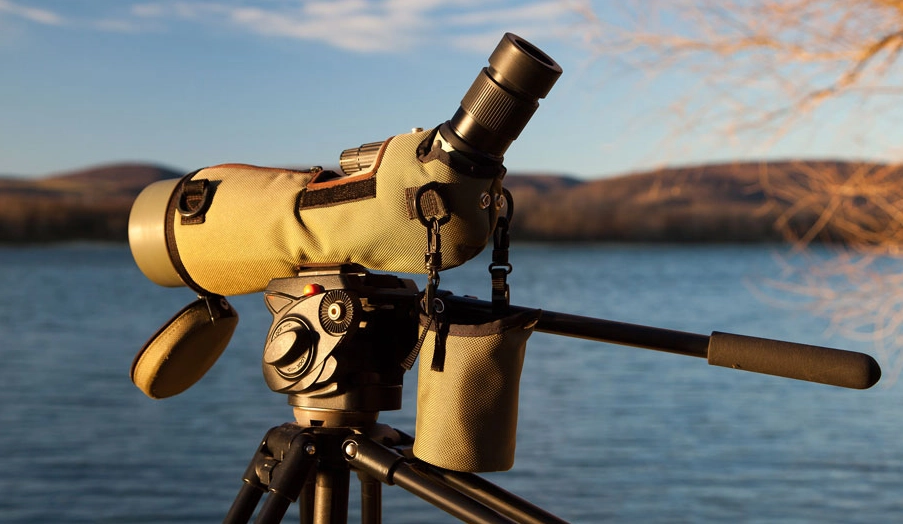
FAQ: Your Magnification Questions Answered
 What's more important, a bigger zoom range or better glass quality?
Reader Comments