You just got a new spotting scope, or you're thinking about buying one. The big question pops up: how far can I actually see with this thing? The marketing might say "1000 yards" or boast about high magnification, but the real answer is frustratingly vague. It depends. It's not a single number.
I've been using scopes for over a decade, for everything from tracking hawks on mountain ridges to checking bullet holes on distant targets. The biggest mistake I see is people equating maximum magnification with clear viewing distance. A 60x zoom doesn't mean you can see clearly at 2000 meters. Often, it means you'll see a bigger, blurrier, shakier mess.
True clarity—where you can make out fine details like feather patterns on a bird, the rings on a target, or the craters on the moon—is determined by a cocktail of factors. Your gear is just one ingredient. Let's break down what really determines how far you can see clearly with a spotting scope.
What You'll Find Inside
What Determines How Far You Can See Clearly?
Think of your spotting scope as part of a system. The system includes the optics, the atmosphere, the target, and you. A weak link anywhere ruins the view.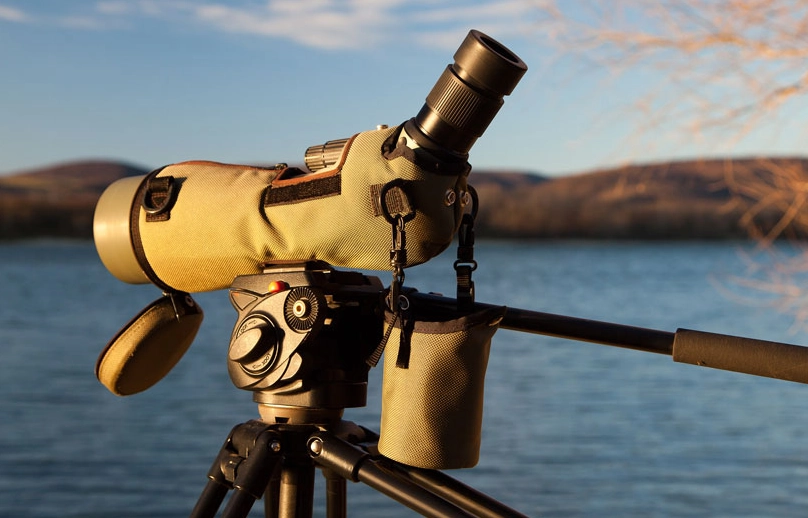
1. Optical Quality: The Heart of the Matter
This is where you get what you pay for. A $150 scope and a $1500 scope both might be labeled 20-60x80. The difference in clear viewing distance is massive.
Glass and Coatings: High-end scopes use ED (Extra-low Dispersion) or FL (Fluorite) glass. This isn't marketing fluff. It dramatically reduces chromatic aberration—that colorful fringing you see around high-contrast edges. Cheap glass smears colors and kills fine detail at distance. Multi-coated lenses increase light transmission and contrast. On a hazy day, a fully multi-coated scope might still show a clear image where a cheaper one just shows a gray mush.
Prism Type: Roof prism scopes are more compact, but high-quality phase-corrected coatings are essential for maintaining resolution. Porro prism designs often offer better optical performance for the price but are bulkier. A poorly made roof prism will rob you of clarity long before you reach the scope's theoretical limits.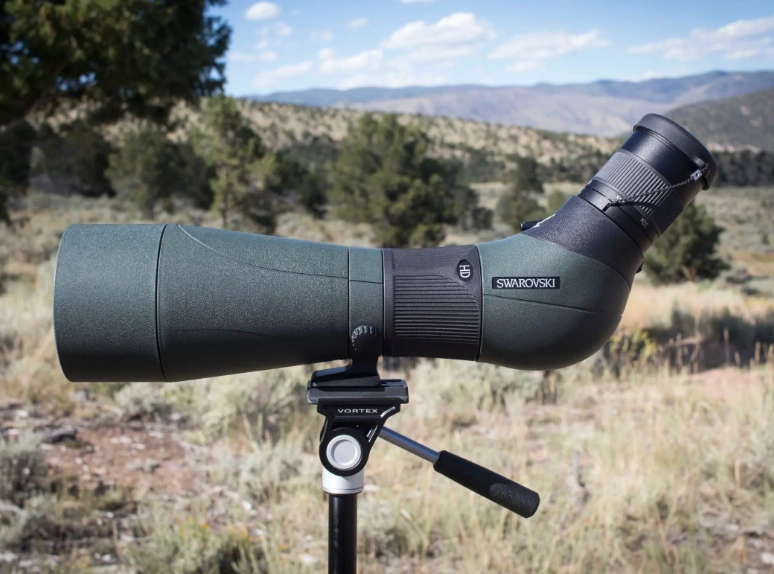
2. The Atmosphere: Your Biggest Enemy
This is the factor most beginners ignore. Light has to travel through miles of air to reach you. That air is never perfectly still or clear.
Heat Haze (Mirage): The number one killer of long-distance clarity. On a sunny day, heat radiating off the ground creates turbulence. Your view shimmers and wobbles. No amount of optical quality can fix this. Over asphalt or dry fields, it can ruin clarity beyond 200-300 yards by mid-morning.
Haze, Humidity, and Pollution: Tiny particles scatter light. A humid summer day or urban pollution acts like a veil. Distant objects lose contrast and appear washed out. I've had days on the coast where a scope that could easily resolve a gull at 500 meters on a crisp winter morning struggled at 300 meters in the summer haze.
3. Magnification and Objective Lens Size: A Balancing Act
The specs (e.g., 20-60x80) tell part of the story. The 80mm is the objective lens diameter—the light-gathering end. Bigger gathers more light, which is crucial for dawn/dusk viewing and maintaining a bright image at high magnification.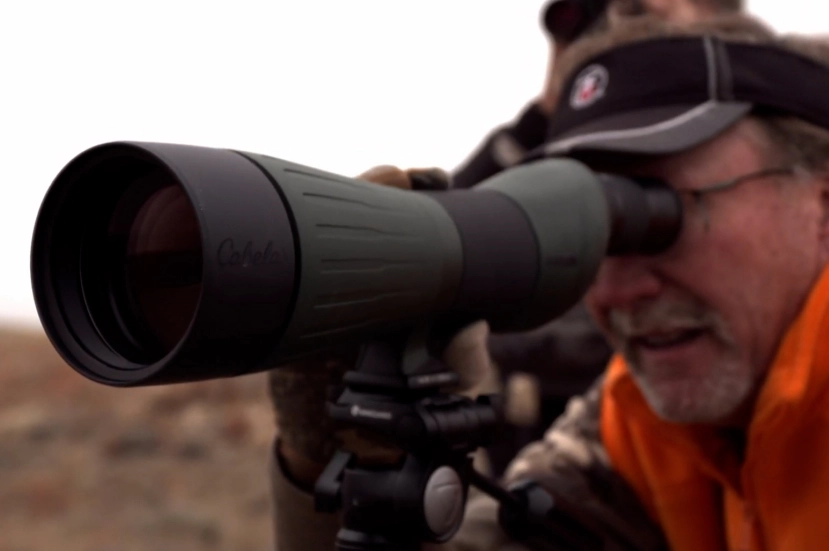
Here's the non-consensus part: Higher magnification often *reduces* your effective clear viewing distance. Why? It amplifies every problem. It magnifies atmospheric distortion, it magnifies image shake from your hands or the wind, and it magnifies any optical flaws in the scope. The image gets dimmer too.
Your clearest view is almost always at a moderate magnification. For an 80mm scope, that's often in the 30x-45x range, depending on conditions.
4. Your Eyes and Setup
Are you using a tripod? If not, forget about clarity at any real distance. Hand-holding a spotting scope at even 30x is a joke. A sturdy tripod is non-negotiable. A wobbly one is almost as bad.
Have you adjusted the diopter correctly? That little ring on the eyepiece compensates for your own eyesight. If it's off, your view will never be sharp. Set it once on a distant, high-contrast object at medium power and leave it.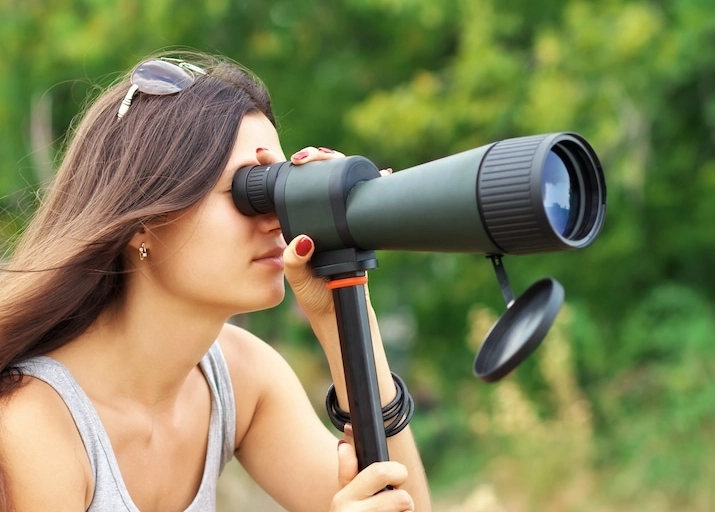
Real-World Viewing Distance Scenarios
Let's get concrete. Here’s what you can realistically expect in different activities. These assume good to excellent optical quality and a sturdy tripod.
| Activity / Target | Typical Clear Viewing Distance | Key Factors & Notes | Example (What You Can See) |
|---|---|---|---|
| Birding (Large Birds) Eagles, Herons, Hawks |
300 - 800 meters | Atmosphere is key. Early morning offers best clarity. Color and plumage details are visible at the lower end of this range. | At 400m, you can clearly see the white head and tail of a bald eagle, distinguish between a Red-tailed and Red-shouldered hawk based on belly band patterns. |
| Birding (Small Songbirds) Warblers, Finches |
30 - 100 meters | Closer range needed for fine details. Vegetation often obscures. Fast movement requires quick focusing. | At 50m, you can see the streaking on a Song Sparrow's breast or the eye-ring on a Nashville Warbler clearly enough for a positive ID. |
| Target Shooting / Zeroing .22 Caliber holes |
100 - 300 meters | Contrast is critical. A black target on white paper is ideal. Heat mirage from the sun on the ground is the main enemy. | On a cool, calm day, a good 60mm scope can clearly resolve .22 cal holes at 100m. For .223 holes at 300m, you'll likely need an 80mm+ scope with high-quality optics. |
| Long-Range Hunting Observation Judging antler points, animal behavior |
500 - 1500+ meters | Extremely dependent on atmospheric conditions. Requires large objective lens (85mm+) and excellent glass. Often done from elevated positions. | In pristine mountain air, you might count antler points on an elk at 800m. In flatland heat haze, the same animal at 500m could be a shimmering, indistinct blob. |
| Astronomy (Moon) | Effectively Infinite | No atmospheric distortion (mostly). Clarity depends on optical quality and magnification stability. See incredible detail. | You can see craters, mountain ranges, and rilles in stunning detail. The terminator (line between light and shadow) is especially dramatic. |
| Astronomy (Planets) Jupiter, Saturn |
Effectively Infinite | Atmospheric "seeing" (steadiness) is everything. Requires high magnification and steady air. | On a night of good seeing, you can see Jupiter's cloud bands and its four major moons; Saturn's rings are clearly separated from the planet's disc. |
Personal Anecdote: I once spent a frustrating hour trying to read a target at 200 yards with a mid-range 60mm scope. The image was soft and wavy. I blamed the scope. Later that day, a cloud passed over, dropping the temperature slightly. I looked again. Suddenly, every bullet hole was crisp and clear. The scope was fine; the atmosphere was the problem. It taught me to always assess conditions first.
How to Maximize Your Spotting Scope's Clear Viewing Range
You can't control the weather, but you can stack the deck in your favor.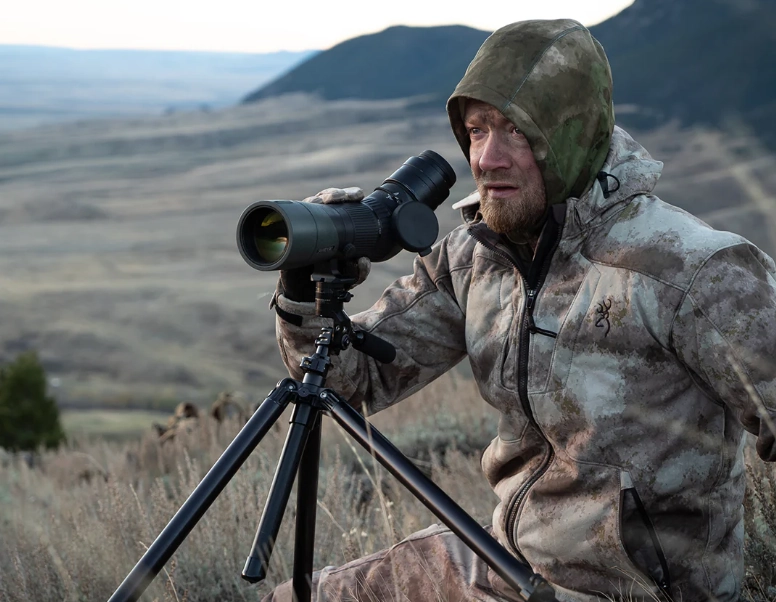
Pick Your Time: For terrestrial viewing, early morning is almost always best. The ground hasn't heated up yet, minimizing heat haze. The air is often clearer. For astronomy, nights with stable, dry air (high pressure systems) are golden.
Use a Rock-Solid Tripod: I can't stress this enough. Don't pair a $1000 scope with a $50 tripod. Vibration is a clarity killer. A good tripod is heavy, but it's worth it. Use a hook to hang your backpack from the center column for extra stability in wind.
Start Low, Zoom In Carefully: Always find your target at the lowest magnification. It's brighter, has a wider field of view, and is more stable. Then, slowly zoom in only until the image starts to degrade from atmospheric distortion. Stop there. That's your maximum useful magnification for that moment.
Manage Expectations with Magnification: If you need to identify a small bird at 150 feet, 20x is plenty. You don't need 60x. The lower power will give you a brighter, steadier, and often sharper view.
Keep Your Lens Clean: A smudged objective lens or eyepiece scatters light and murders contrast. Use a proper lens brush and cloth. It's a simple thing that makes a huge difference.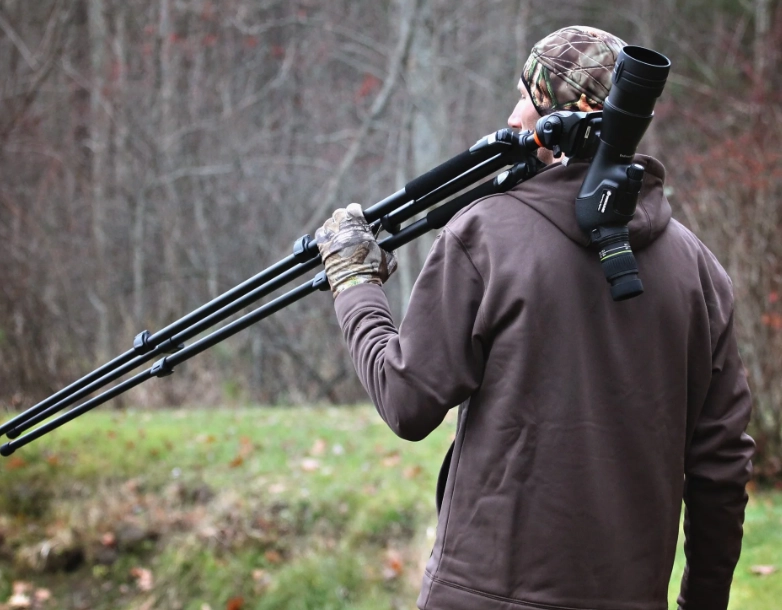
FAQ: Your Spotting Scope Distance Questions Answered
So, how far can you see clearly? There's no single answer. With premium optics under perfect conditions, the moon's craters are infinitely clear. On a hot, humid day, a target at 200 yards might be a fuzzy mess. The key is understanding that your spotting scope is a tool limited by physics. Invest in good glass, use a solid support, learn to read the atmosphere, and dial your magnification back until the image snaps into focus. That's where you'll find your true clear viewing distance.
Reader Comments