Let's get this out of the way first. After a decade of chasing warblers through thickets and waiting hours for eagles to take flight, I can tell you there is no single "best" birding camera. The question itself is a bit of a trap. What you're really looking for is the best system for your type of birding, your budget, and your willingness to carry weight. A camera body is just the brain; the lens is the eyes, and your technique is the soul. This guide will help you match all three.
I've seen too many beginners buy a fancy, high-megapixel body and pair it with a cheap, slow lens. The results are always disappointing—soft images of a distant blur. We'll fix that mindset here.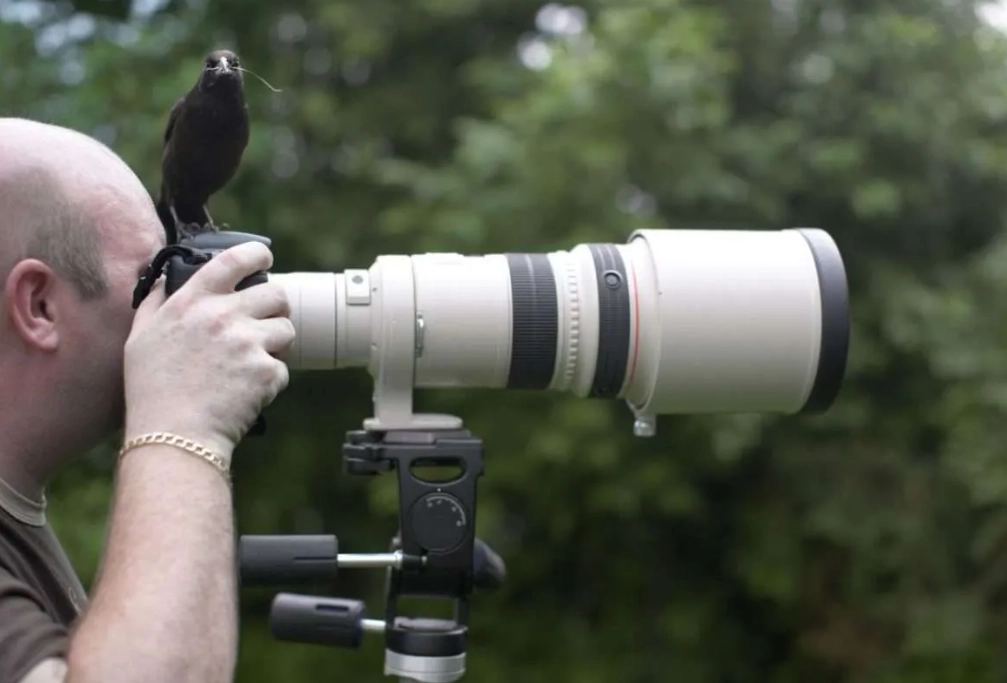
Your Quick Guide to Navigating This Article
- The Real Challenge of Bird Photography
- DSLR vs. Mirrorless: The Real-World Showdown
- The Autofocus Battle: What Actually Matters for Birds
- The Lens is King: Focal Length & Aperture Explained
- How Much Should You Budget for a Birding Camera?
- Real-World Setup Scenarios
- Common Mistakes New Bird Photographers Make
- Your Birding Camera Questions, Answered
The Real Challenge of Bird Photography
Birds are terrible models. They're small, fast, skittish, and often backlit by a bright sky. Your gear needs to solve these specific problems:
- Reach: Getting close enough without disturbing them. This means long focal lengths—400mm is a starting point, 600mm is better for small birds.
- Speed: Autofocus that can lock onto a darting swallow and tracking that can follow it. Frame rates of 10+ frames per second (fps) help capture the perfect wing position.
- Light Gathering: Birds are active at dawn and in deep woods. A lens with a wide maximum aperture (like f/4 or f/2.8) lets in more light, allowing for faster shutter speeds.
- Portability: This is the silent killer. A 600mm f/4 lens is a dream, but it weighs over 6 pounds. Are you hiking 5 miles with that?
DSLR vs. Mirrorless: The Real-World Showdown
The industry has shifted. While you can find incredible deals on used DSLRs (like the Nikon D500 or Canon 7D Mark II), new development is almost entirely in mirrorless. Here’s the practical difference for a birder.
| Feature | DSLR (Legacy Tech) | Mirrorless (Current Tech) |
|---|---|---|
| Autofocus Coverage | Focus points clustered in the center. You often focus and recompose. | Points spread across most of the frame. You can track a bird even at the edge. |
| Viewfinder | Optical. You see the real scene. No lag, but no preview of exposure. | Electronic (EVF). You see exactly what the sensor sees—exposure, white balance. Can be jarring at first. |
| Size & Weight | Generally bulkier due to the mirror mechanism. | Typically more compact, but with long lenses, the body size difference is minimal. |
| Lens Ecosystem | Massive, affordable used market. Native lenses for Canon EF/Nikon F mount. | Growing rapidly. New RF/Z/E-mount lenses are stellar but expensive. Adapting old DSLR lenses works well. |
| Best For Birders Who... | Are on a tight budget, prefer an optical viewfinder, and don't mind older tech. | Want the latest AF performance, are investing for the long term, and value a lighter kit. |
My take? If you're starting from zero and have the budget, go mirrorless. The autofocus advantage is real. But if $1500 is your total system budget, a used DSLR combo gets you much further.
The Autofocus Battle: What Actually Matters for Birds
Forget megapixels. Autofocus (AF) is your most critical spec. Marketing terms are confusing. Here’s what you need to look for:
Subject Detection AF
This is the game-changer. Cameras from Sony, Canon, Nikon, and OM System can now automatically detect and lock onto animals or birds. It sounds like magic, and sometimes it is. It helps the camera ignore distracting branches and hold focus on the bird's eye.
But it's not perfect. In dense foliage, it can get confused. I still use single-point AF for perched birds in complex scenes.
Tracking Performance
Can the camera hold focus on a bird flying towards you? This is the ultimate test. Look for reviews that specifically test "bird-in-flight" tracking. Cameras like the Sony A1, Canon R5/R7, and Nikon Z9/Z8 are top-tier here.
A less discussed factor is AF customizability. Can you adjust how quickly the focus responds to something passing in front of your subject (like a branch)? Pro bodies let you tune this; entry-level ones don't.
The Lens is King: Focal Length & Aperture Explained
Spend more here. A great lens on a mediocre body will outperform a mediocre lens on a great body every time for birding.
Focal Length: Think of it as magnification. 400mm is the bare minimum. 500mm or 600mm is the sweet spot. You can use teleconverters (1.4x or 2x) to extend reach, but they cost light (reduce aperture) and can slightly reduce image quality.
Aperture (f-number): A lower number (like f/4) is "faster." It means: 1. More light for faster shutter speeds to freeze motion. 2. More pleasing, blurred backgrounds (bokeh). 3. Heavier and much more expensive.
Most birders end up with a variable aperture zoom lens, like a 150-600mm f/5-6.3. At 600mm, your max aperture is f/6.3. It's darker and heavier than at 150mm, but it's the most practical way to get that reach.
How Much Should You Budget for a Birding Camera?
Let's talk real numbers. These are estimates for new gear. The used market can cut these prices by 30-50%.
- Entry-Level ($1,000 - $2,000): Crop-sensor mirrorless body (e.g., Canon R10, Nikon Z50) + a super-telephoto zoom (e.g., Sigma 150-600mm Contemporary). This is a powerful starter kit. The crop sensor gives you extra "reach" (1.5x or 1.6x crop factor) which is helpful.
- Enthusiast ($2,500 - $5,000): Advanced crop-sensor (Canon R7, Sony A6700) or entry full-frame (Canon R6 II, Nikon Z6 III) + a higher-end zoom (Tamron 150-500mm, Sigma 60-600mm) or a used prime lens (like a 300mm f/4). This is where performance gets serious.
- Professional ($6,000+): Top-tier body (Canon R5, Sony A1, Nikon Z8) + professional prime lenses (400mm f/2.8, 600mm f/4). This is for those who demand the absolute best and often monetize their work.
Don't forget the tripod and gimbal head. Handholding a 600mm lens for sharp shots is a skill that takes practice. A good tripod setup (like a Manfrotto 055 with a Sidekick gimbal) costs $400-$800 but is essential for static birds or long sessions.
Real-World Setup Scenarios
Let's make this concrete. Here are two setups based on real people I've guided.
Scenario 1: The Backyard & Local Park Birder (Budget: ~$1,800) Jenny wanted to photograph birds at her feeder and on weekend walks. She didn't want a heavy kit. We went with a Micro Four Thirds system: an OM System OM-1 (used) and the Olympus 100-400mm f/5.0-6.3 lens. The 2x crop factor of MFT makes that 400mm lens act like an 800mm lens on a full-frame camera. The whole kit is light, weather-sealed, and the OM-1 has fantastic bird detection AF. It's a niche choice, but perfect for her needs.
Scenario 2: The Serious Hiking Birder (Budget: ~$3,200) Mark hikes 10+ miles in mountain forests. Weight was his #1 priority, but he needed reach for warblers. We chose a Canon R7 (crop sensor for extra reach) and the RF 100-500mm f/4.5-7.1 L lens. This lens is a marvel—incredibly sharp and relatively light for its range. The R7's 32 megapixels on a crop sensor allow for heavy cropping if the bird is still too far. He carries it on a peak capture clip, not a tripod, for mobility.
Common Mistakes New Bird Photographers Make
I've made most of these myself.
Chasing Megapixels Over Lens Quality. A 45MP sensor with a soft lens yields a huge, soft file. A 24MP sensor with a razor-sharp lens yields a detail-rich image you can print large.
Using Too Slow a Shutter Speed. The old "1/focal length" rule doesn't cut it for birds. With a 500mm lens on a crop sensor, you need 1/1000s at minimum for a perched bird, and 1/2000s or faster for flight. Crank that ISO up—noise can be fixed, motion blur cannot.
Neglecting the Background. Move a few feet left or right. A cleaner background (sky, distant trees) makes your subject pop more than any aperture setting.
Not Learning Post-Processing. Shooting in RAW and learning basic adjustments in Lightroom or DxO PhotoLab is non-negotiable. It's the digital darkroom where you bring out the details in shadows and feathers.
Your Birding Camera Questions, Answered
 How important is weather sealing for a birding camera?
Reader Comments