Quick Navigation
You see them hopping on lawns, hear their cheerful song at dawn, and spot their rusty red breasts from coast to coast. So it's a fair question to ask: is the American Robin rare? Honestly, it's one of those questions that seems silly until you really think about it. If they're everywhere, why would anyone wonder if they're rare? But that's the thing – sometimes the most obvious facts are the ones we question the most. Maybe you've moved to a new area and haven't seen one. Maybe your local park seems suspiciously robin-free this spring. Or perhaps you're just curious about conservation and want to know where this bird stands.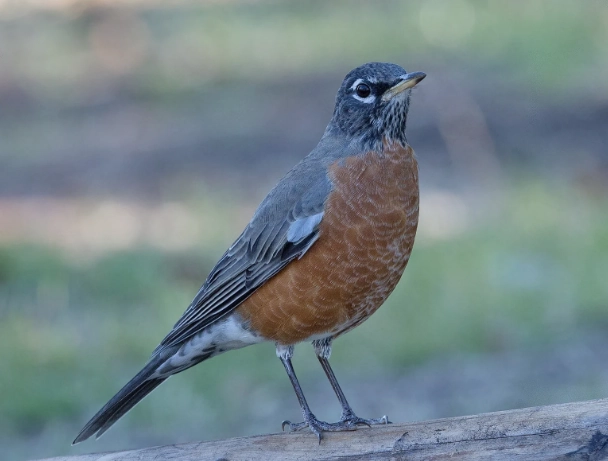
Let's cut to the chase right away. No, the American Robin is not rare. Not even close. In fact, it's one of the most widespread, common, and numerous bird species in all of North America. We're talking about a population estimated at a whopping 370 million individuals. That's more than the human population of the United States. So, if you're asking "is the American Robin rare?" from a continental, big-picture perspective, the answer is a resounding no.
Quick Take: The American Robin (Turdus migratorius) is a conservation success story of a different kind – it's a species that has thrived alongside human development. Its adaptability is its superpower, and its numbers are stable and robust across its massive range.
But here's where it gets interesting, and where your specific question might have a more nuanced answer. "Rare" can mean different things. Is it rare on a global species list? No. Could it be rare or temporarily absent in your specific backyard, county, or during a particular season? Absolutely. That's the real story. The question "is the American Robin rare?" opens a door to understanding bird distribution, migration, and what "common" really means in nature.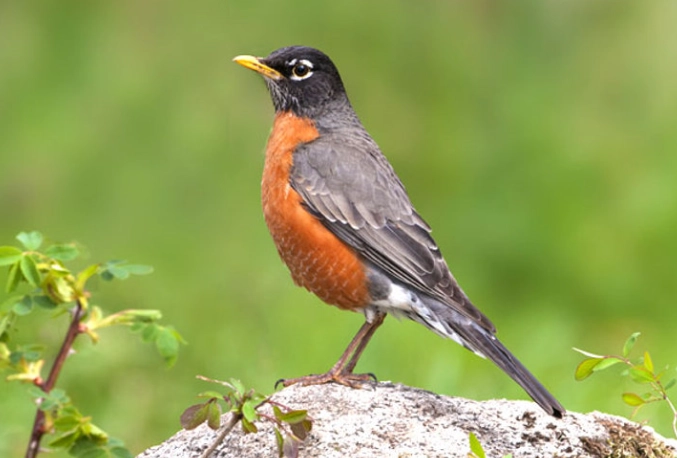
By the Numbers: Just How Common Are American Robins?
We can't just say they're common and leave it at that. You deserve the data. Let's look at what makes the robin's common status so undeniable.
The North American Breeding Bird Survey, a long-term, large-scale avian monitoring program run by the U.S. Geological Survey (USGS) and Canadian Wildlife Service, is our best source for hard numbers. Their data consistently places the American Robin as one of the top three or four most abundant land birds on the continent. The Breeding Bird Survey relies on thousands of skilled volunteers counting birds along set routes, and the robin is a staple on nearly every single one in its range.
Think about its range for a second. It breeds from Alaska and northern Canada all the way down to the highlands of Mexico and Guatemala. It winters across the entire lower 48 states, Mexico, and along the southern coasts. That's an incredible geographic footprint. There are very few places in North America where you can't find an American Robin at some point during the year.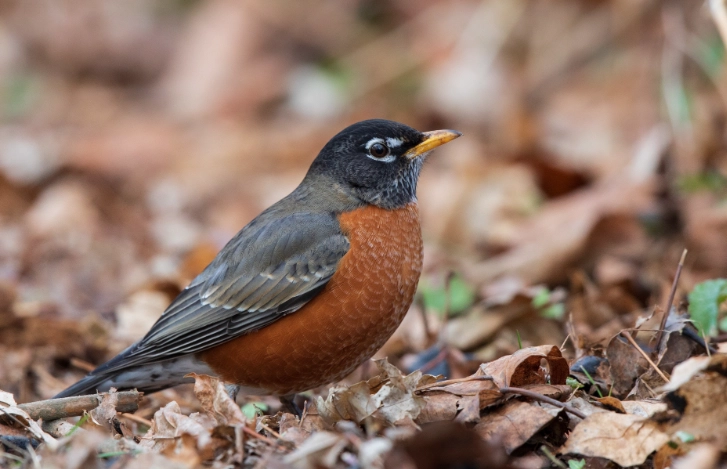
| Metric | Data | What It Means |
|---|---|---|
| Estimated Global Population | ~370 Million | Outnumbers most other North American bird species by a huge margin. |
| Breeding Range Size | ~16 million sq km | Covers most of North America, one of the largest ranges for a songbird. |
| Conservation Status (IUCN) | Least Concern | The lowest risk category; population trend is stable. |
| eBird Frequency (Lower 48, Year-Round) | Reported on ~40% of all checklists | For context, the common Mourning Dove is on ~25%. Robins are ubiquitous. |
I remember leading a beginner bird walk a few years ago. Someone asked, almost apologetically, "Is that a robin?" as if it was too boring to mention. I told them it's never boring to properly identify the most successful bird on the continent. Its commonness is its crowning achievement. So when you ask, "Is the American Robin rare?" you're really asking about a biological superstar of adaptation.
When Might an American Robin *Seem* Rare? The Exceptions
Alright, so they're everywhere. But you're smart to wonder, because our personal experience doesn't always match the data. There are legitimate reasons why you might look around and think, "Hey, where are all the robins?" Let's break down the scenarios where the American Robin might play hard to get.
Seasonal Shifts and Migration Magic
This is the big one. Robins are famous for their migratory movements, though it's not the simple "south for winter" story we learned as kids. It's more of a grand, continent-wide shuffle.
In the summer, robins are spread out across their breeding grounds, including northern forests and suburbs. They're territorial then, so you might see a pair here, a pair there. Come fall, they form massive, sometimes jaw-dropping flocks that descend on berry-laden areas. If you live in a region that lacks these winter food sources (like persistent fruit trees or open, unfrozen ground), your local summer robins will vanish. They've moved to where the food is, which could be just a few counties over or a thousand miles south. So in your winter backyard, the answer to "is the American Robin rare?" might temporarily be "yes." But drive twenty miles to a park with holly trees, and you might find a hundred of them.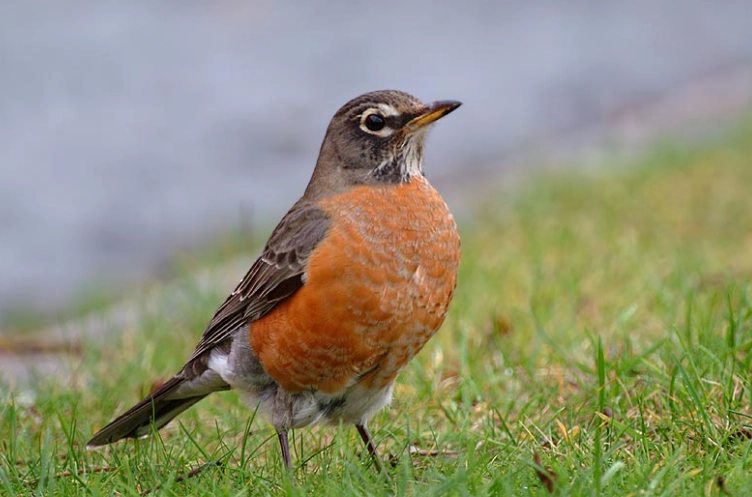
Personal Anecdote: I live in the Midwest. In my suburban yard in January, I might see zero robins for weeks. It's easy to worry. Then, during a January thaw when the snow melts, a flock of 50 will appear out of nowhere to patrol the soft lawn for earthworms. They weren't rare; they were just waiting in a nearby wooded roost for the right conditions.
Habitat Mismatch
Robins are adaptable, but they have preferences. They love open spaces for foraging (lawns, fields, parks) interspersed with trees for nesting and cover. If you're in the middle of a dense, unbroken forest, a vast desert, or a heavily industrialized area with no green space, you won't find many robins. They're also less common in the very heart of dense urban downtowns compared to suburbs. So your location matters. A birder in downtown Manhattan might log fewer robins than someone in Central Park, who might see fewer than someone in a leafy Connecticut suburb.
Is the American Robin rare in the Mojave Desert? Yeah, pretty much. Is it rare in a Phoenix suburb with grassy yards and citrus trees? Not at all.
Local Population Fluctuations
Bird populations aren't static. A harsh winter, a late spring freeze that kills insects, or even disease can cause a temporary dip in local numbers. West Nile Virus in the early 2000s did hit robins fairly hard in some areas, and local recoveries can take a few years. These events can make it feel like robins have become scarce. But on the continental scale, these are blips. The species' overall resilience and high reproductive potential (they often raise 2-3 broods of 3-4 chicks per year) allow it to bounce back quickly.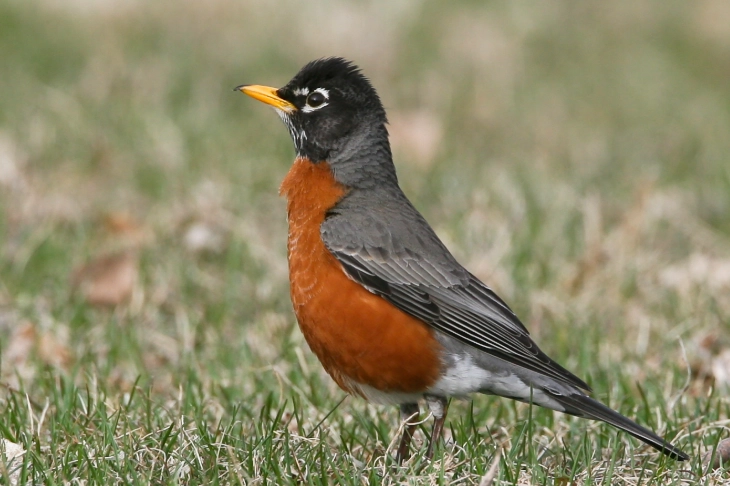
Why Are Robins So Successful? The Secrets to Their Abundance
It's not an accident. Their commonness is a direct result of some brilliant evolutionary adaptations, many of which were perfectly suited to the changes humans made to the landscape.
- Dietary Flexibility: This is their number one trick. In spring and summer, they're famous for eating earthworms. But their menu is huge: insects, spiders, snails, and most importantly, a vast array of fruits and berries. This lets them switch food sources with the seasons and survive winters where the ground is frozen.
- Human Habitat Creator: We built the perfect robin world. We cleared forests for farms and later, suburbs. We planted lawns (foraging grounds) and ornamental trees and shrubs (nesting sites and food). Our sprinklers keep the ground soft for worms. We're basically robin concierges.
- Nesting Adaptability: They'll nest on ledges, in gutters, on light fixtures, in dense shrubbery, and of course, in tree forks. They're not overly picky, as long as the site offers some support and concealment.
- Cultural Tolerance: Unlike many birds, robins are rarely persecuted. They're viewed as a beloved sign of spring, not a pest. This cultural protection matters.
The Cornell Lab of Ornithology's All About Birds guide calls them "one of the most widespread and familiar birds," and they've earned that title.
Common Misconceptions and Questions (Your FAQs Answered)
Are American Robins Endangered or Threatened?
No. Not remotely. As the table showed, the International Union for Conservation of Nature (IUCN) lists them as Least Concern. Their population trend is classified as stable. You can check their official listing on the IUCN Red List website to see the formal assessment. They face no major existential threats at the species level.
If They're So Common, Why Are They Protected by Law?
Ah, this is a classic point of confusion. In the United States, almost all native birds, including incredibly common ones like robins, crows, and sparrows, are protected under the Migratory Bird Treaty Act. This law was a landmark piece of conservation legislation designed to stop the wholesale slaughter of birds for feathers and meat. It protects birds broadly, not just the rare ones. So you can't shoot a robin, destroy its active nest, or keep it as a pet without permits. Its commonness doesn't strip its legal protection.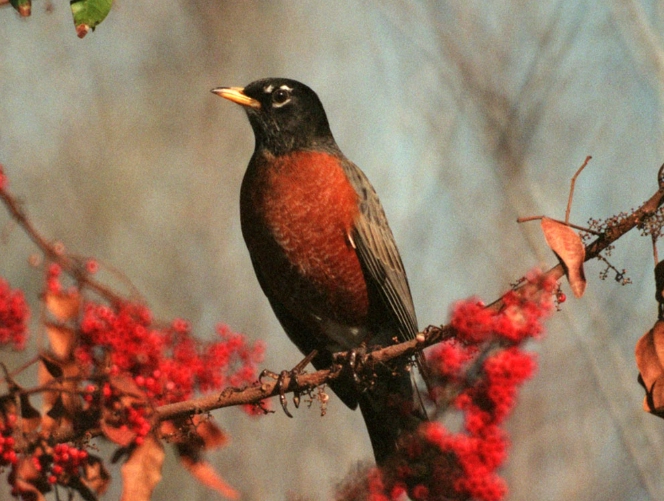
I See Flocks of Hundreds in Winter. Is That Normal?
Completely normal. In fact, it's a sign of a healthy local food source. Winter is when their social walls come down. They flock together to find food (berry patches) and for safety in numbers at communal roosts, which can sometimes contain thousands of birds. It's a spectacular sight and the opposite of rare.
How Can I Attract Robins to My Yard?
If you're in their range and have a somewhat suitable habitat, you probably don't need to "attract" them—they'll find you. But to make your yard a five-star robin resort:
- Leave areas of your lawn untreated with pesticides to encourage earthworms and insects.
- Plant native fruit-bearing trees and shrubs like serviceberry, dogwood, winterberry, and crabapple.
- Provide a birdbath with clean, fresh water. Robins love to bathe and drink.
- Offer nesting platforms or leave natural, dense shrubbery undisturbed for nesting sites.
Honestly, sometimes the best thing to do is just watch. They're already there.
The Bottom Line: Rethinking 'Common' and 'Rare'
So, let's circle back to your original search. Is the American Robin rare?
The definitive, data-driven answer is no. It is one of the most common birds on the continent. Its population is in the hundreds of millions, its range is enormous, and it has adapted brilliantly to human environments. The question "is the American Robin rare?" is almost always answered with a reassuring "no, you don't have to worry about this one."
But the beauty of asking is that it leads you to a deeper appreciation.
Understanding why it's not rare teaches you about migration patterns, habitat needs, and ecological success. It helps you appreciate the daily wildlife drama happening in your own neighborhood. That robin pulling a worm from your lawn is part of a 370-million-strong dynasty, a master of adaptation whose song is a backdrop to North American life.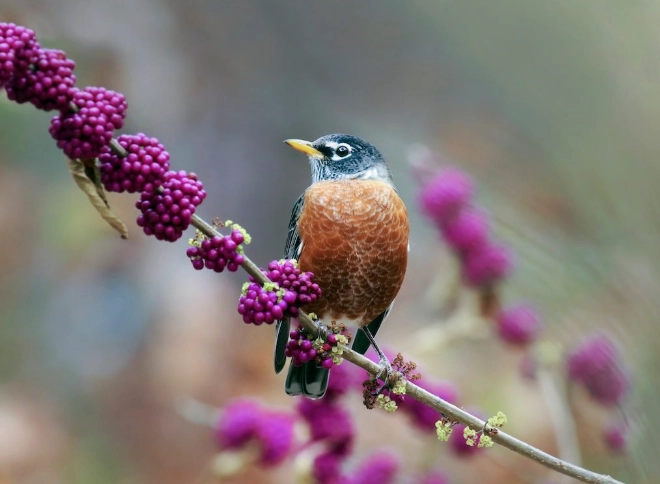
Final Thought: Next time you see one, don't just dismiss it as "just a robin." See it for what it is: a stunningly successful species that has turned our backyards into its kingdom. Its commonness is its badge of honor, a sign that, for now, all is well in its world. And that's something worth noticing.
If you're curious about tracking their movements or contributing to the science that keeps tabs on birds like the robin, consider participating in projects like eBird or the Christmas Bird Count. You'll quickly see just how "un-rare" your local robins really are.
Reader Comments