You're walking along a fast-moving river in late winter, the air crisp. Something catches your eye – a flash of white, then a sleek, dark shape diving beneath the choppy surface. A few seconds later, it pops up twenty feet downstream with a small fish wriggling in its thin, hooked bill. You've just met the Common Merganser, one of our most elegant and efficient fishing ducks. Forget the placid mallards on the pond; this bird is a streamlined hunter built for speed and precision.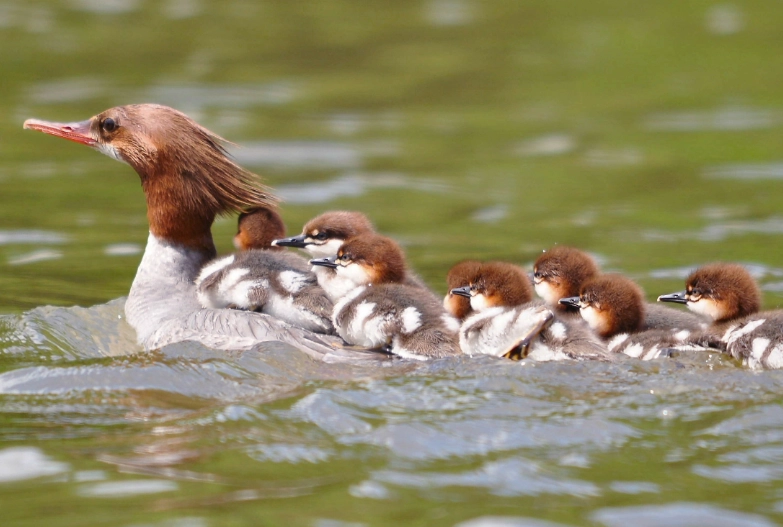
I've spent over a decade chasing these birds across continents, from the rocky rivers of Montana to the forested lakes of Scandinavia. The thrill of spotting that clean white breast against dark water never gets old. But I've also seen countless birders get them wrong, confusing them with other species or missing them entirely because they didn't know where or how to look.
What's in This Guide
How to Identify a Common Merganser?
This is where most beginners stumble. They see a large, diving duck and guess "some kind of duck." Let's break it down so you can be confident.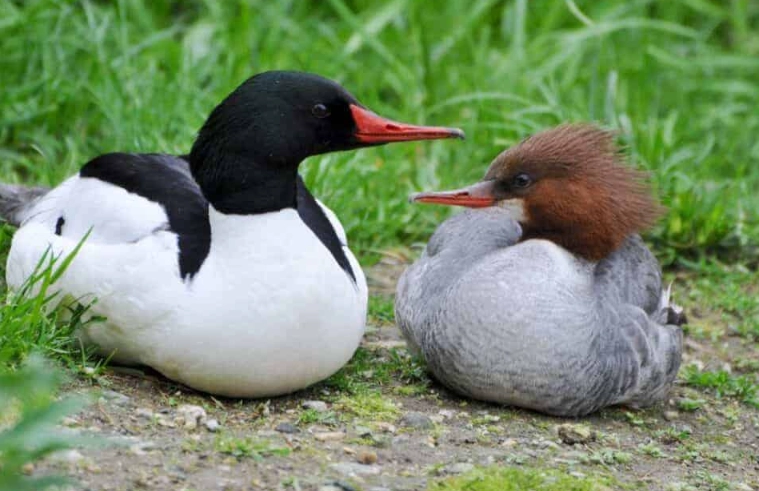
The male, or drake, is the real showstopper. From a distance, he looks like a black-and-white painting: a clean, white body with a black back, and a dark, iridescent green head that can look black in poor light. Get closer with your binoculars, and you'll see his most distinctive feature – a narrow, bright red, serrated bill. It looks almost too delicate for a duck. The serrations (like tiny teeth) are key for gripping slippery fish. He also has a shaggy crest at the back of his head, though it's often held flat.
The female is trickier and causes more misidentifications. She has a rusty-cinnamon head and neck with a sharp, shaggy crest, a gray body, and a white throat and breast. Her bill is the same red but often looks darker. The most common mistake is calling her a female Hooded Merganser. The Hooded female has a much smaller, darker bill and a more uniformly brown head without the crisp white chin patch.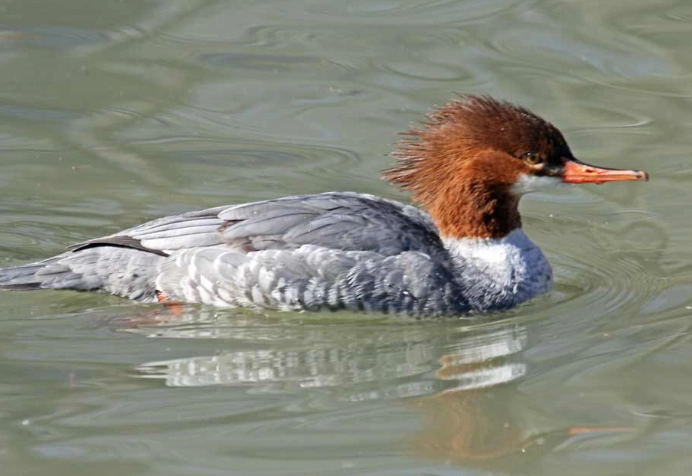
Juveniles look like a washed-out version of the female for their first few months. By their first winter, males start showing patches of white on their sides, looking like a messy intermediate stage.
Common Merganser vs. Red-breasted Merganser: The Head-to-Head
This is the big one. In North America, the Red-breasted Merganser is a close cousin often found in saltwater. In Europe and Asia, the naming gets confusing – what North America calls the "Common Merganser" is often called the "Goosander." Let's clear that up with a direct comparison.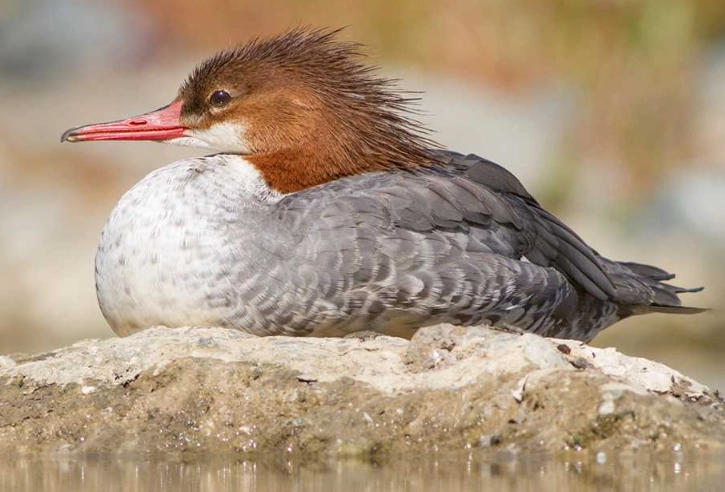
| Feature | Common Merganser (Goosander) | Red-breasted Merganser |
|---|---|---|
| Male's Head | Dark green, appears black. Smooth, clean look. | Dark green with a messy, spiky double crest. Often looks "unkempt." |
| Male's Breast | Pure, clean white without any markings. | White, but often with a faint salmon-pink wash and sometimes sparse gray speckles. |
| Female's Head Color | Rich, rusty cinnamon or ginger-brown. | Duller, more grayish-brown. |
| Primary Habitat | Freshwater: rivers, large lakes, reservoirs. | Coastal/Saltwater: bays, estuaries, coastlines. Also large freshwater lakes in winter. |
| Bill Shape | Long, thin, bright red. Slightly thicker at the base. | Long, thin, bright red. Noticeably thinner and more needle-like. |
The habitat clue is huge. If you're on a rocky river miles inland, it's almost certainly a Common. On a coastal jetty, think Red-breasted first. I've seen birders argue for ages over a distant duck on a Great Lake in winter – it's a classic tough call.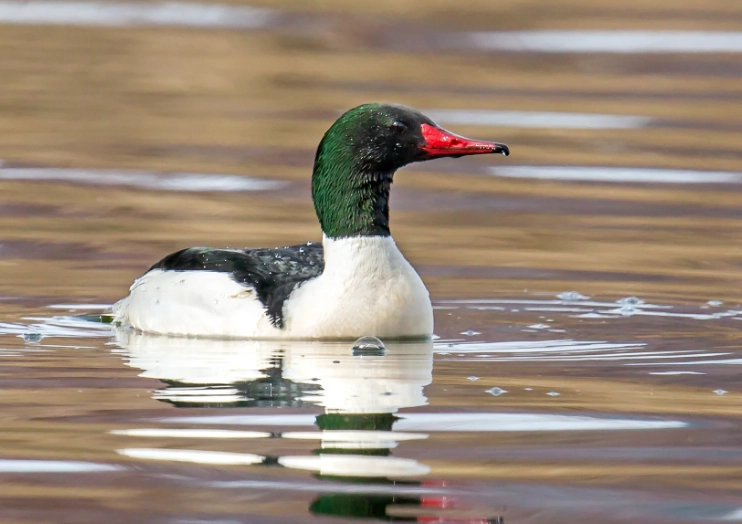
Where Can You See Common Mergansers?
They aren't backyard birds. You need to go to their world. Think moving water and fish.
In summer, they nest in tree cavities or nest boxes near clear, fast-flowing rivers and large, deep lakes across the northern forests of North America, Europe, and Asia. They need old-growth trees for nesting holes. This makes them a good indicator of healthy forest and river ecosystems.
Come winter, they shift. They follow open water. Frozen lakes push them onto larger rivers that don't freeze completely, reservoirs below dams (which stay ice-free), and sometimes even coastal estuaries and bays, though they're less common in pure saltwater than their Red-breasted cousins.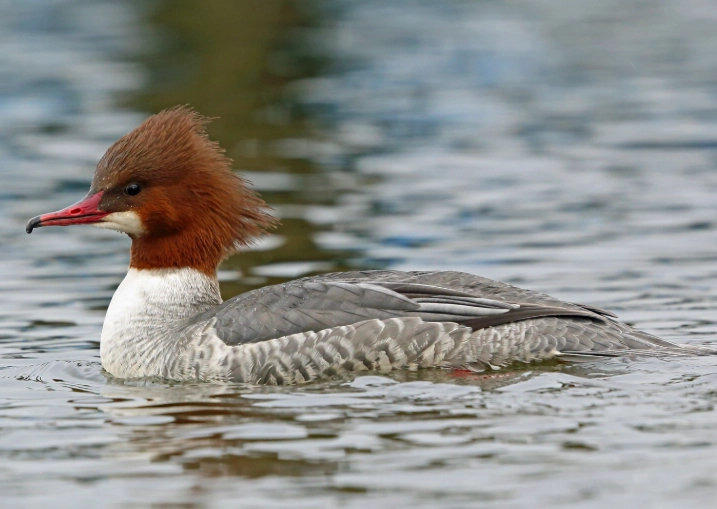
Top Spots for Reliable Sightings
Based on my own notebooks and reports from trusted sources like the Cornell Lab of Ornithology's eBird data, here are some predictable places:
In North America: The Columbia and Snake River systems in the Pacific Northwest are stellar year-round. The Great Lakes in late fall and winter, especially near power plant outflows that create open water. The Colorado River through the Grand Canyon. In the East, the Delaware and Susquehanna Rivers hold good numbers.
In Europe (as Goosander): Scottish rivers like the Tay and Spey are famous. Lakes in the Alps and Scandinavia. Many reservoirs across the UK and Germany in winter.
Timing matters. Dawn and dusk are prime fishing times, so the ducks are most active. A calm, overcast day is better for viewing than a bright, glary one where the water's glare hides their colors.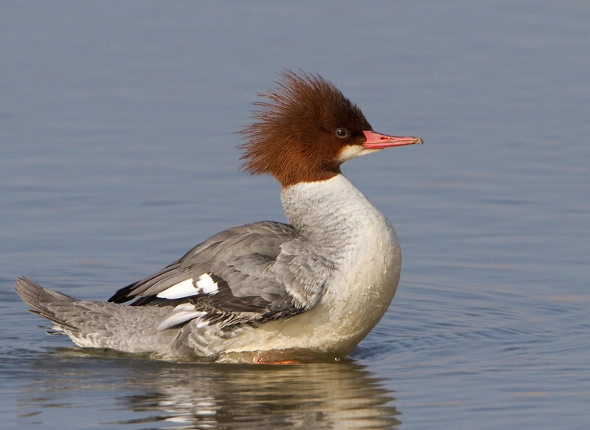
Behavior, Diet, and the Art of Fishing
Watching a merganser fish is watching a specialist at work. They're pursuit divers. They don't just dip their heads under; they propel themselves with their feet, often diving 10-20 feet deep, using their wings for steering underwater. They can stay down for 30 seconds or more. I've watched a female lead a line of a dozen fluffy chicks into a rapid current, all diving in sync to forage – an incredible sight.
Their diet is almost exclusively live fish: minnows, suckers, salmon smolts, perch. They'll also take aquatic insects, crayfish, and frogs. The "sawtooth" bill is perfect for gripping, not chewing. They swallow fish headfirst.
This fish diet causes conflict. Anglers and fish farmers sometimes see them as competition, particularly for trout and salmon stocks. Research from agencies like the U.S. Fish and Wildlife Service suggests their impact is often overstated in healthy ecosystems, but it's a persistent point of tension.
They're social outside of breeding season, forming flocks called "rafts" that can number in the dozens or even hundreds on prime wintering waters. Seeing a large raft of these elegant birds is a highlight of any winter birding trip.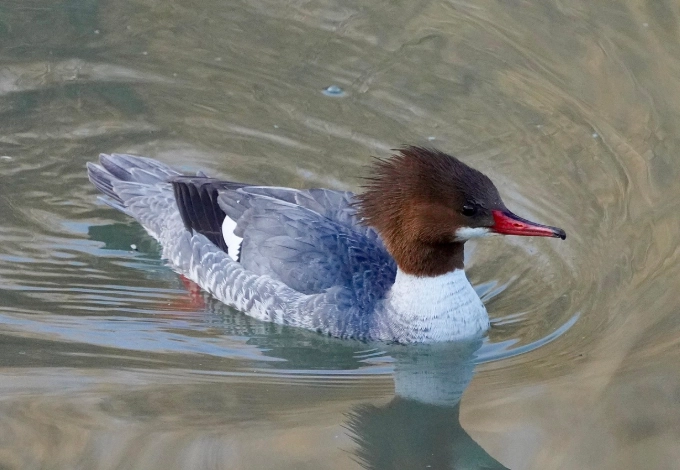
Pro Tips for Spotting and Photographing Them
Here's the stuff you won't find in most field guides, learned from cold mornings and missed shots.
Scan with the current. They dive and pop up downstream. If you spot one, don't freeze your binoculars on the spot. Scan 20-50 feet downstream along the same bank. They often follow the same underwater contour.
Listen for the splash. Not the dive, but the take-off. When spooked, they run across the water, wings beating loudly. That slapping sound can alert you to a flock you hadn't seen.
Photography is tough. They're often on moving water, which means variable light and challenging backgrounds. Crank your shutter speed (1/1000s or faster) to freeze action. Expose for the white on the male's breast; it's easy to blow out the highlights. Get low to the water if you can for a more intimate angle.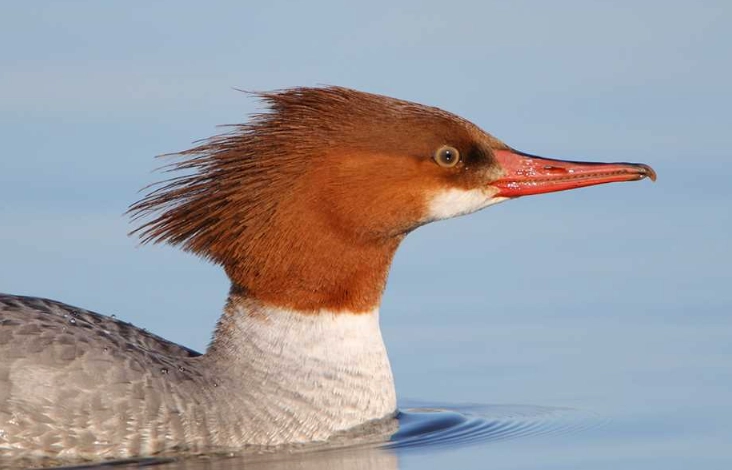
The biggest mistake I see? People give up too quickly. You see a merganser, it dives, and you move on. Wait. It will reappear, and often closer than you think as it works its way upstream between dives.
Reader Comments