I remember the first time I really saw a brown pelican. Not just a blurry shape on a post, but up close. It was on a weathered dock in Florida, preening. The late afternoon sun hit its feathers, and what I'd always thought was just a drab brown exploded into shades of chestnut, silver, and gold. The sheer size of the bill, the careful folding of those massive wings—it stopped me cold. That moment flipped a switch. This wasn't just a "seagull with a bucket"; it was a complex, ancient, and incredibly successful fishing machine.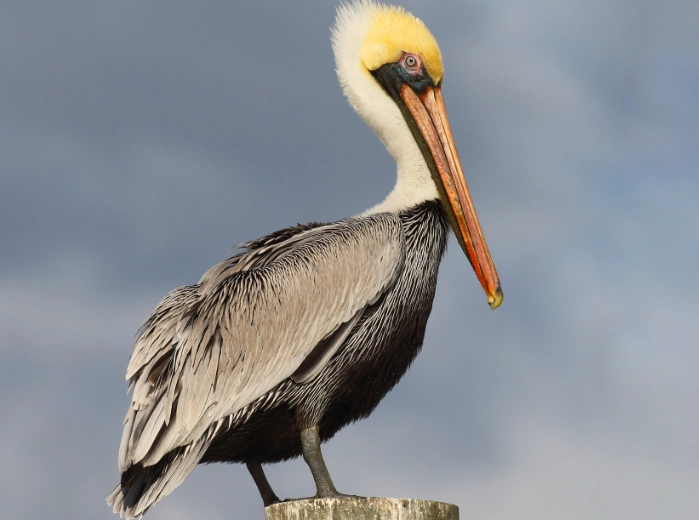
Most people recognize a brown pelican, but very few actually know them. They get written off as clumsy or comical. That's a mistake. Understanding the details—the subtle differences between a juvenile and an adult, the physics behind their dive, the specific coastlines they haunt—transforms a casual sighting into a genuine connection with one of North America's most resilient coastal birds.
What's in this guide?
How to Identify a Brown Pelican (It's Not Just Brown)
Let's get the obvious out of the way. Yes, it's big. Yes, it has a huge bill. But if you only look for those two things, you'll miss the whole story. The most common error I see? People assuming every large, brownish waterbird is a brown pelican, or worse, not realizing that the scruffy-looking bird next to the sleek one is the same species at a different age.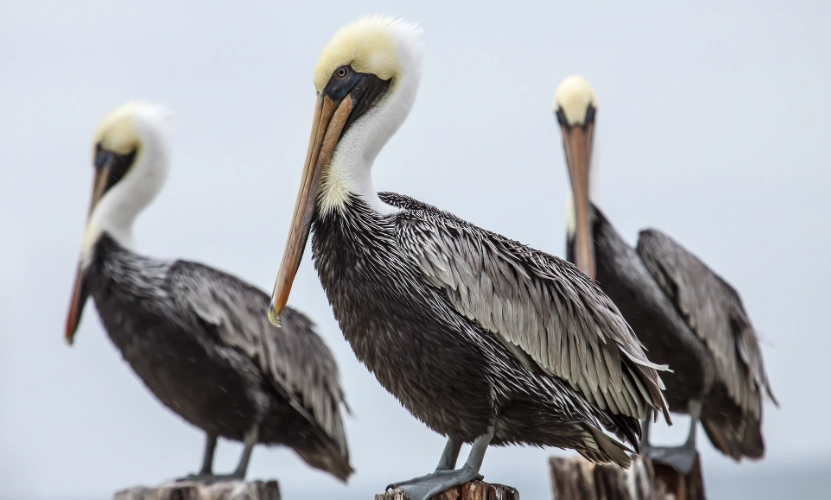
Accurate identification hinges on three things: plumage, bare parts (bill, pouch, legs), and size/structure. And you must consider the season and the bird's age.
Adult vs. Juvenile: A Tale of Two Birds
An adult brown pelican in breeding plumage is stunning. The body is a rich, silvery brown. The head is bright white with a wash of pale yellow on the crown. The back of the neck turns a deep, dark chestnut brown. The bill is grayish with a reddish tip, and the pouch can range from olive to reddish.
Now, look at a juvenile. Totally different animal. It's overall a streaky, dirty gray-brown from head to tail. No white head, no chestnut neck. Just a uniformly dingy bird with a bluish-gray bill and pouch. It looks like a completely different species. This is where most beginners get tripped up.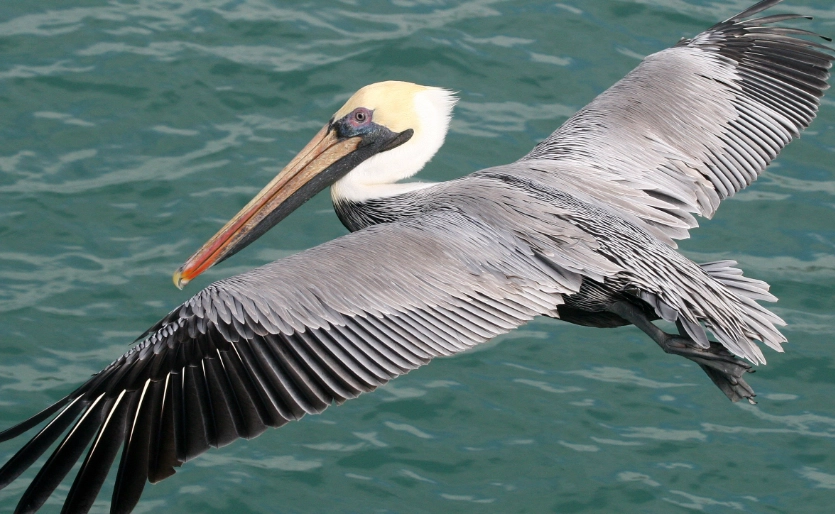
Here’s a quick reference table to lock it in:
| Age/Phase | Head & Neck | Body & Wings | Bill & Pouch | Key Tip |
|---|---|---|---|---|
| Juvenile (1st year) | Dingy gray-brown, streaky. No contrast. | Uniformly dull brown-gray underneath, darker above. | Bill bluish-gray. Pouch grayish. | Looks like a "generic" brown seabird. Most commonly misidentified. |
| Subadult (2nd-3rd year) | Patchy. Starts developing a pale neck and darker hindneck. | Variable mix of juvenile dinginess and adult tones. | Bill begins to show adult colors (gray with red tip). | The "awkward teenage" phase. Plumage is messy and inconsistent. |
| Adult (Non-breeding) | White head and neck. Hindneck dark brown (not as rich as breeding). | Silvery-brown underparts, darker brown upperparts. | Bill gray with red tip. Pouch often olive or dusky. | The "classic" look, but neck color is less vibrant. |
| Adult (Breeding) | Bright white head with yellow crown. Rich chestnut-brown hindneck. | As non-breeding, but colors can appear richer. | Pouch turns dark red, almost blackish. Legs black. | The full, spectacular display. Chestnut neck is the giveaway. |
See the pattern? It's all about the head and neck.
One non-consensus point I'll stress: ignore the pouch color as a primary field mark unless the bird is very close. At a distance, lighting can make an olive pouch look dark or a reddish one look pale. The pattern of the head and neck is far more reliable. Also, many guides don't mention that in flight, even juveniles show a clear contrast between dark flight feathers and a paler wing lining—a useful clue against other large birds.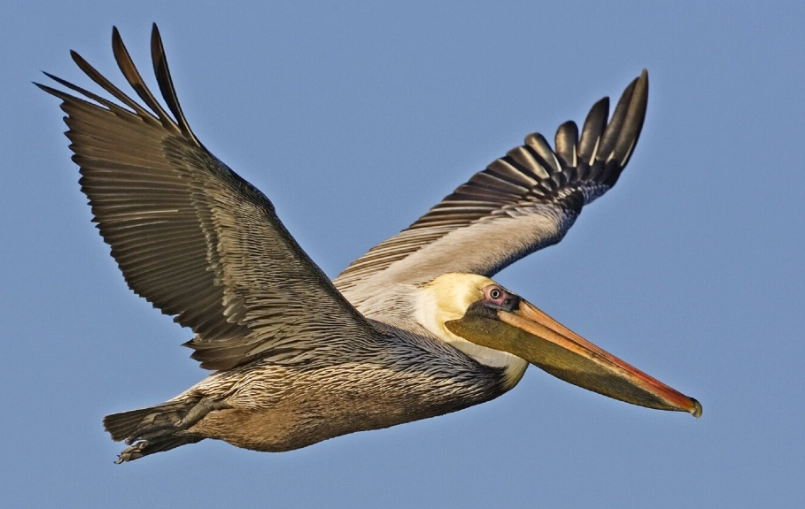
The Secret Life of a Pelican: Behavior Beyond the Plunge
Everyone wants to see the dive. The dramatic, head-first plunge from 20 or 30 feet up. It's incredible. But if you only watch for that, you're missing 95% of their fascinating behavior.
The Plunge-Dive: A Masterclass in Physics
Let's break down the famous dive, because it's more than just belly-flopping. They don't just fall. As they tip over, they twist their body slightly, often hitting the water at an angle to minimize impact. They don't always fully submerge. A shallow dive for a near-surface fish might just involve the head and neck.
The real magic happens underwater. The instant their bill hits, the lower mandible flexes outward, and the pouch expands into a huge net. They don't "scoop" so much as engulf a half-circle of water and hope the fish is in it. Then they must drain up to 3 gallons of water before swallowing—that's why you see them point their bills down, letting the water stream out while the fish stays trapped.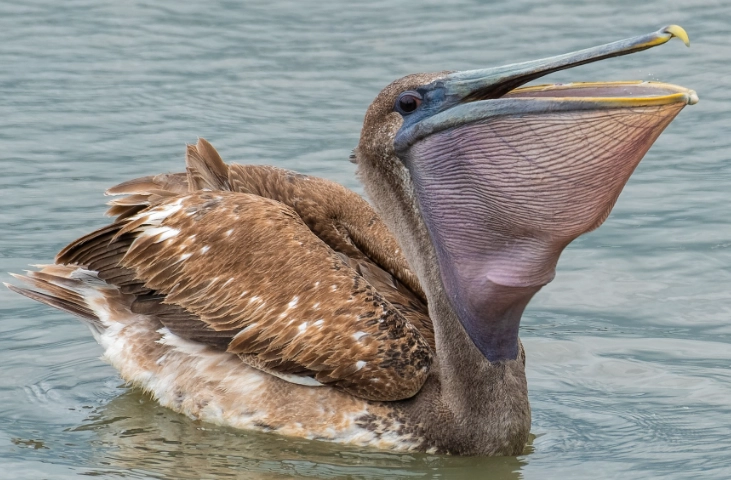
Here’s what most people don't notice: they often hunt in coordinated groups. I've watched a line of a dozen pelicans fly in formation, then dive almost in sequence, herding and confusing schools of fish. It's a strategic, social hunt, not a solo act.
The Other 95%: Loafing, Preening, and Flying
Pelicans spend most of their day loafing. They're energy conservators. They'll sit on sandbars, pilings, or mangrove roots for hours, often facing into the wind. Watch them preen—it's a meticulous, all-morning affair. They work oil from a gland at the base of their tail through every feather. That "dirty brown" color? It's perfect camouflage against muddy estuaries and weathered wood.
Their flight is deceptively graceful. With a 7-foot wingspan, they're masters of the glide. They fly in lines or V-formations, often skimming inches above the wave crests to use ground effect for lift. The head is drawn back onto the shoulders in flight, unlike herons which neck outstretched.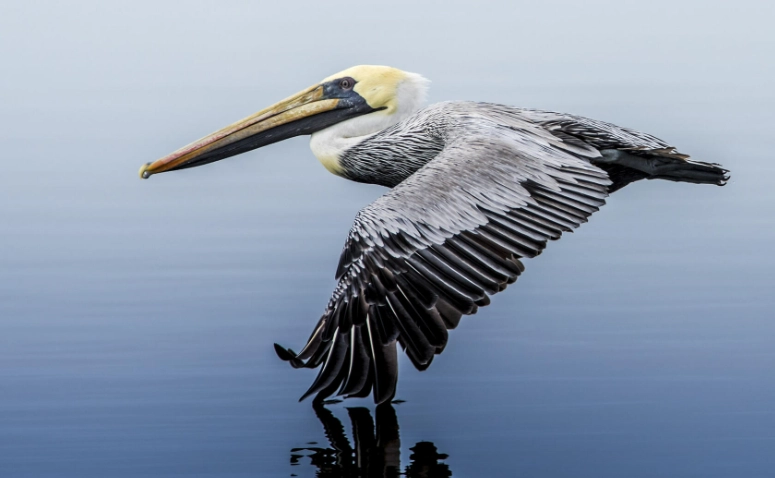
Where Are the Best Places to See Brown Pelicans?
Location is everything. You won't find them on inland lakes (that's the white pelican's domain). They are strictly coastal, from marine harbors to brackish estuaries. Their range stretches from the Chesapeake Bay down to the Amazon, and up the Pacific Coast to British Columbia.
But some spots are legendary. I've spent years poking around these coasts, and here are the places where your chances of a memorable encounter are highest. These aren't just random beaches; they're locations with reliable food sources, roosting sites, and often, a lack of heavy disturbance.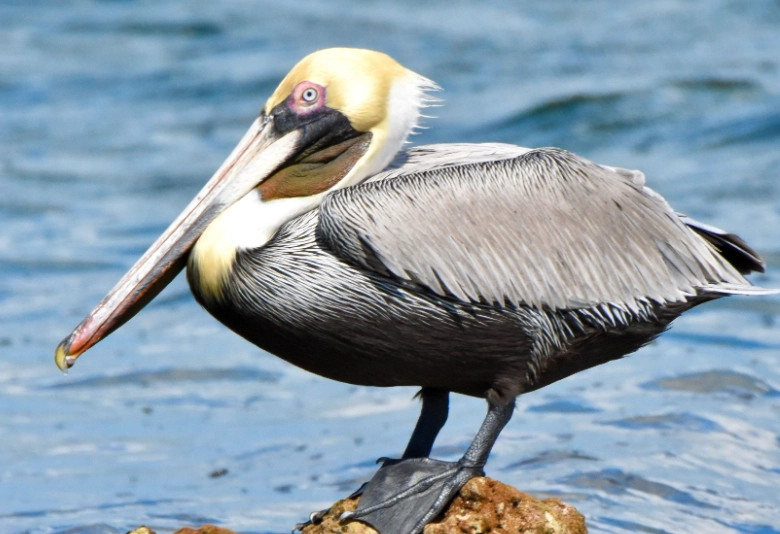
| Location | Best Time of Year | What to Look For | Why It's Special |
|---|---|---|---|
| St. Petersburg & Fort De Soto Park, Florida (Gulf Coast) | Year-round (peak numbers Oct-Apr). | Hundreds roosting on channel markers, mangrove islands, and fishing piers. Spectacular group diving in the passes. | Incredibly tolerant of people. You can observe complex social behavior from a kayak or the beach. The Cornell Lab of Ornithology often uses footage from here. |
| La Jolla Cove, San Diego, California | Year-round. | Pelicans gliding along cliffs, diving just beyond the surf line. Close views from the seawall. | Iconic Pacific Coast scenery combined with guaranteed, close-up pelican action. Great for photography. |
| Galveston Island, Texas | Year-round, but spring and fall migration bring surges. | Fishing piers, jetties, and the Bolivar Flats shorebird sanctuary. Often mixed with dolphins. | A major migratory corridor. You can see every age class here, and the interaction with commercial fishing boats is fascinating. |
| Ponce Inlet, Florida (Atlantic Coast) | Year-round. | Massive roosts on the sandbars north of the inlet. Pelicans following fishing boats back to the marina. | One of the most reliable spots to see truly large congregations (500+ birds). The inlet current concentrates fish. |
| Channel Islands National Park, California | Spring & Summer (breeding season). | Nesting colonies on offshore islands (viewable by boat tour). | The only chance to see breeding colonies on the U.S. Pacific coast. A more wild, natural context than urban harbors. |
My personal favorite? The Gulf Coast of Florida in winter. The light is soft, the crowds are thinner, and you can see mixed flocks of adults in breeding finery and scruffy juveniles all in one frame. Bring binoculars, but you often won't need them—they get that close.
From Near-Extinction to Recovery: The Pelican's Comeback
You can't talk about brown pelicans without talking about DDT. In the mid-20th century, this pesticide washed into coastal waters, accumulated in fish, and poisoned pelicans at the top of the food chain. It caused them to lay eggs with shells so thin they crushed under the weight of the incubating parent.
By the early 1970s, the brown pelican was virtually gone from Louisiana (the "Pelican State") and endangered everywhere. The U.S. Fish and Wildlife Service listed it under the precursor to the Endangered Species Act in 1970.
Then, a conservation success story. DDT was banned in the U.S. in 1972. Combined with legal protection and active restoration programs like transplanting chicks from Florida to Louisiana, the population rebounded. It was delisted in 2009.
But the story isn't over. They now face modern threats: habitat loss from coastal development, entanglement in fishing gear, and pollution from plastics and oil spills. Their recovery shows that regulation works, but it requires constant vigilance.
Your Brown Pelican Questions, Answered
The brown pelican is a gateway bird. Its size and charisma pull you in. But the deeper you look—at the molt patterns, the hunting strategies, the social dynamics on a crowded piling—the more you realize this is one of the most finely tuned and resilient creatures on the coast. Next time you see one, don't just snap a photo. Watch it. See if it's an adult or a kid. See how it rides the air. You're not just looking at a bird; you're looking at a survivor.
Reader Comments