You stand at the edge of a marsh, binoculars in hand. The air hums with insect noise and the distant calls of unseen birds. It looks peaceful, maybe even a bit sleepy. That's the first illusion wetlands create. The truth is, these soggy landscapes are avian metropolises, buzzing with non-stop activity. What do birds actually do in wetlands all day? It's not just about standing around looking elegant. From dawn to dusk, their lives are a complex cycle of survival tasks—feeding, nesting, socializing, and resting—all tightly woven into the fabric of this unique ecosystem. If you understand these behaviors, you don't just see birds; you start to read the story of the wetland itself.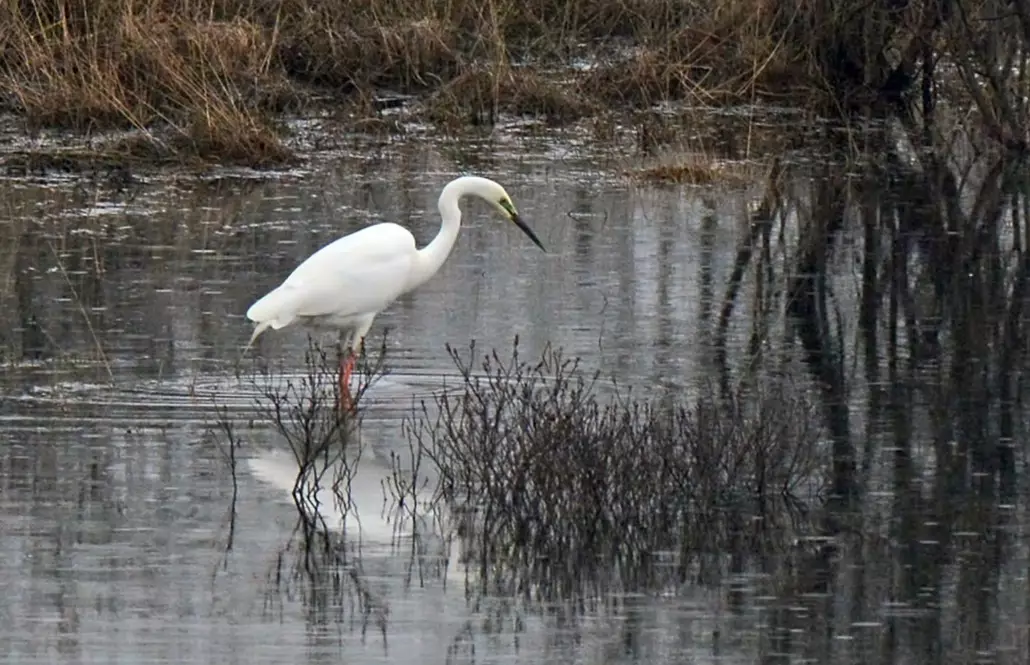
Your Quick Guide to Wetland Bird Life
The Wetland Supermarket: A Feeding Frenzy
First and foremost, wetlands are about food. They're incredibly productive, offering a menu more diverse than any five-star restaurant. This isn't a gentle graze; it's a specialized, often frantic, hunt.
Bird Bill = Specialized Tool
Look at a bird's beak, and you'll know its job. The long, spear-like bill of a heron isn't for show—it's for lightning-fast strikes at fish and frogs. A duck's broad, flat bill acts like a sieve, filtering tiny insects and seeds from the mud (a behavior called "dabbling"). Shorebirds like sandpipers have sensitive, slender probes to feel for worms and crustaceans buried in the mud. Each tool is perfectly adapted to a specific aisle in the wetland supermarket.
I remember watching a Great Blue Heron at a local wildlife refuge. It stood motionless for what felt like ages, then its neck snapped forward faster than I could blink. When it lifted its head, a sizable sunfish was wriggling in its bill. That moment of stillness wasn't laziness; it was intense, energy-conserving focus. Miss that strike, and it goes hungry.
Dabbling ducks, like Mallards and Northern Shovelers, present a different spectacle. They tip forward, tails in the air, paddling furiously with their feet to stir up the bottom. Their bills work overtime, filtering out edible morsels from the murky water. It looks comical, but it's a highly efficient feeding technique.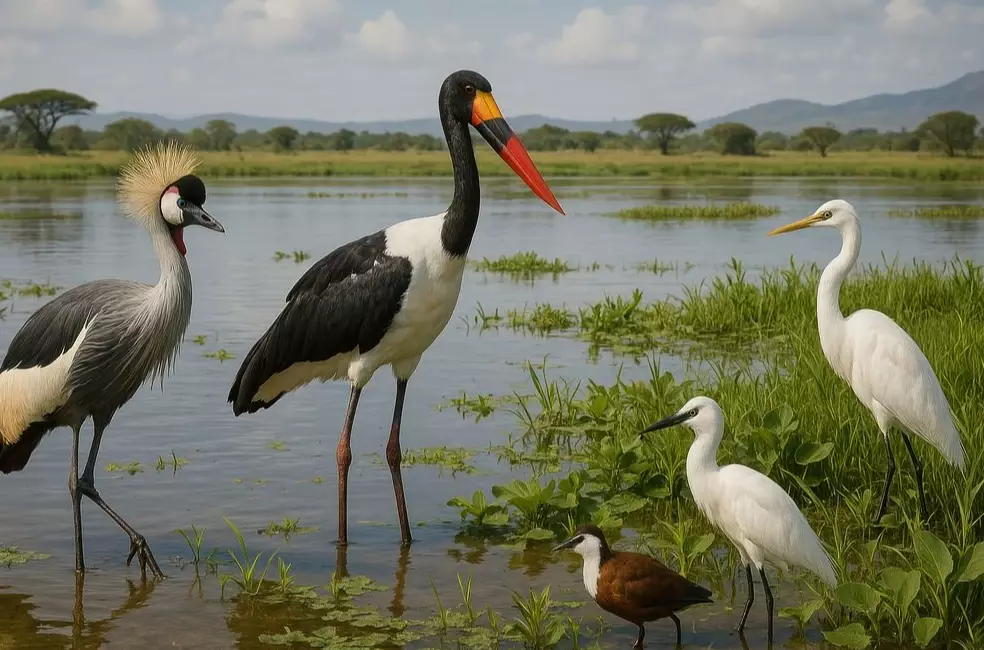
Home Building in the Muck: Nesting & Raising Young
Finding food is one thing. Raising the next generation in a watery world is an architectural and defensive challenge. Safety from predators is the prime real estate consideration.
Nesting Strategies: From Floating Platforms to Reed Fortresses
Birds have evolved incredible solutions. Many waterfowl and grebes build floating nests anchored to emergent vegetation. These rise and fall with the water level, a clever flood-prevention system. Red-winged Blackbirds and Marsh Wrens weave intricate, cup-shaped nests deep within dense cattail stands, using the reeds as a natural fortress. Terns and skimmers go for simplicity and isolation, laying eggs directly on bare sand or shell beaches on wetland islands.
Here's a subtle mistake many new birders make: they assume a quiet nest means it's abandoned. Not true. Parent birds, especially during incubation, are masters of stealth. They sit tight, relying on camouflage. Blundering too close can cause them to flush, leaving eggs or chicks exposed to sun or predators. Give nests a very wide berth.
The Nursery Phase
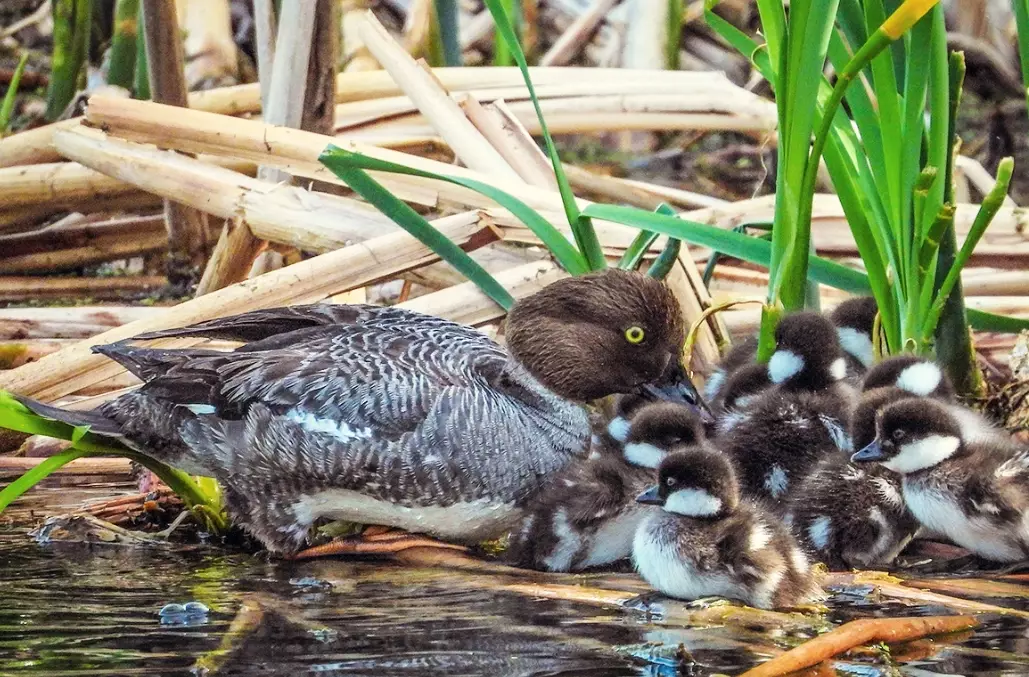
Once hatched, the work intensifies. Ducklings are precocial—they hit the water swimming within hours, following their mother in a neat line as she leads them to rich feeding areas. Heron and egret chicks are altricial; they're naked, helpless, and demand constant feeding. Visit a heronry (a colony nesting site) in spring, and the noise is deafening—a cacophony of squawking chicks begging for the next fish delivery.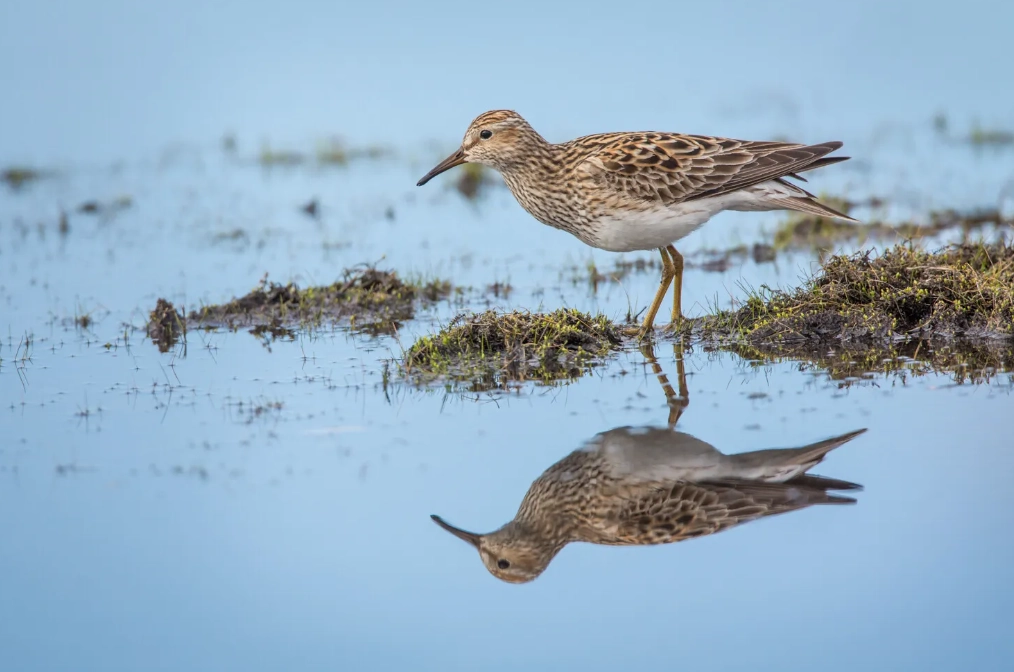
Social Hub of the Avian World
Wetlands are rarely solitary places. For many species, they function as crucial social centers.
Colonial nesting is a prime example of this social life. Gulls, terns, herons, and cormorants nest in dense, often noisy, colonies. There's safety in numbers—more eyes to spot predators like raccoons or hawks. But it also creates a bustling community where interactions are constant. You'll see squabbles over nest material, coordinated mobbing of predators, and constant communication.
Outside breeding season, wetlands become staging areas for flocks. You'll see thousands of Snow Geese or Sandhill Cranes gathered in fall and spring, resting and feeding. The social bonds formed here are vital for the coming migration.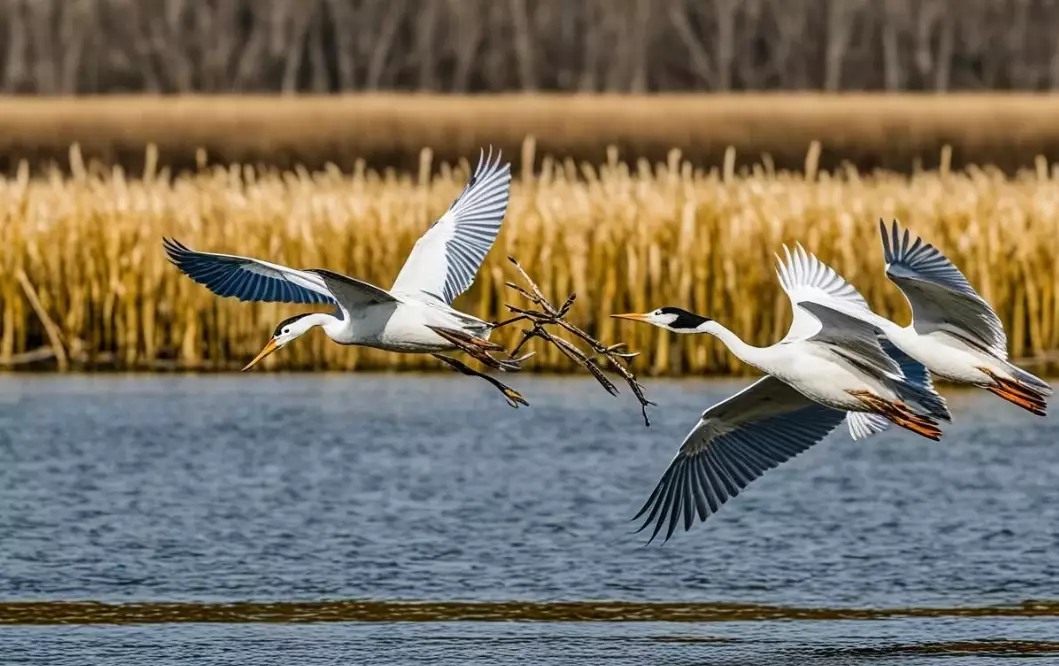
The Critical Pit Stop: Migration & Rest
This is one of the most critical, yet underappreciated, things birds do in wetlands. For migratory species traveling thousands of miles, a healthy wetland isn't a luxury; it's a life-or-death refueling station.
Think of a shorebird like the Red Knot. It flies from the Arctic to South America. Its body undergoes an incredible physiological change to prepare, but it needs to stop and feast on protein-rich horseshoe crab eggs in places like Delaware Bay. Without that wetland "gas station," the journey fails. Ducks, geese, and songbirds use wetlands similarly to rest, feed heavily, and build up fat reserves for the next leg of their journey.
During the day, you might see large groups of birds simply loafing—resting on a sandbar or in shallow water. This isn't downtime. It's essential recovery. Digestion, preening to maintain waterproof feathers, and conserving energy are all active, vital processes.
How to Watch Wetland Bird Behavior Like a Pro
Knowing what to look for transforms a casual glance into rewarding observation. Ditch the checklist mentality for a while.
Patience is Your Best Tool. Pick one bird and watch it for 10-15 minutes. Note everything: How does it move? What is it picking at? Does it interact with others? You'll be amazed at the story that unfolds.
Time Your Visit. Behavior changes with the clock. Early morning is peak feeding and territorial activity. Midday might see more resting and preening. Late afternoon often brings another feeding bout. Tides massively influence coastal wetland behavior—incoming tides concentrate fish and foraging birds.
Use the Landscape. Position yourself at the edge of different habitats—where open water meets reeds, or where a mudflat borders grass. These edges are where action happens, as predators ambush and prey move between zones.
Listen. Close your eyes for a minute. How many different sounds can you hear? The splash of a diving bird, the grunt of a feeding coot, the alarm call of a blackbird. Sound often tells you what's happening before you see it.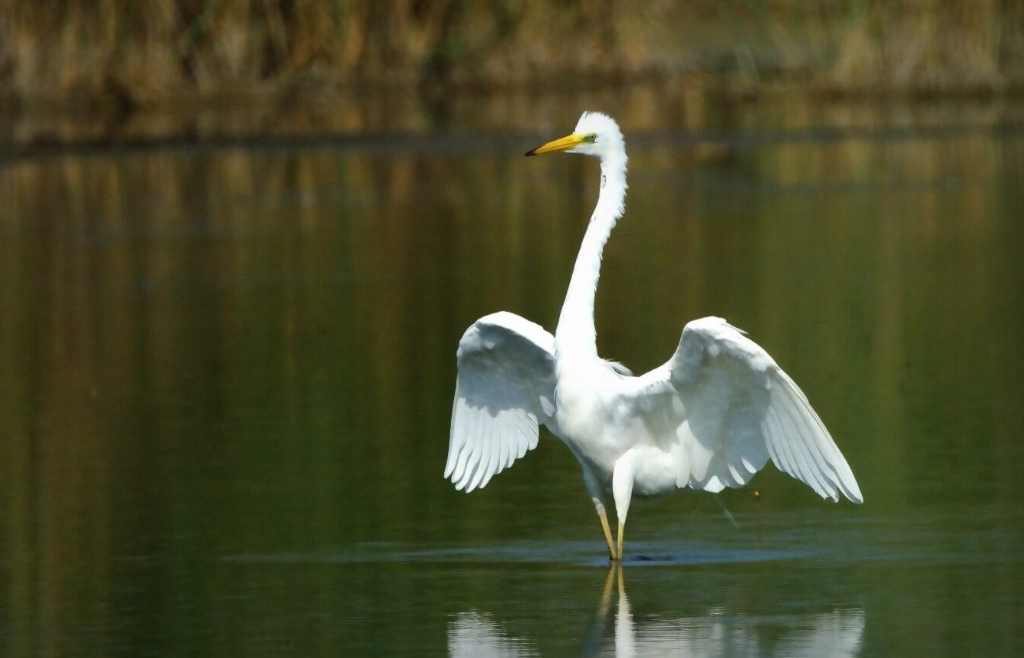
Your Wetland Bird Behavior Questions Answered
Why do some wetland birds stand on one leg for so long?
What's the biggest mistake people make when trying to see wetland bird behavior?
 I only see common ducks like Mallards. How do I find more interesting wetland bird behaviors?
Are there specific tools or gear that help in observing these behaviors?
Reader Comments