You're out on a trail at sunrise, the air is cool, and the woods are coming alive with song. A Warbling Vireo lets loose its cascading melody from a willow, and you think, "I wish I could take this sound home." That's the magic moment when the desire to record bird sounds hits. But where do you even begin? The world of audio gear is confusing, and most advice is written for people who already know what an XLR cable is. Let's cut through the noise. This guide is for the absolute beginner who just wants to capture clean, clear bird sounds without getting a degree in audio engineering.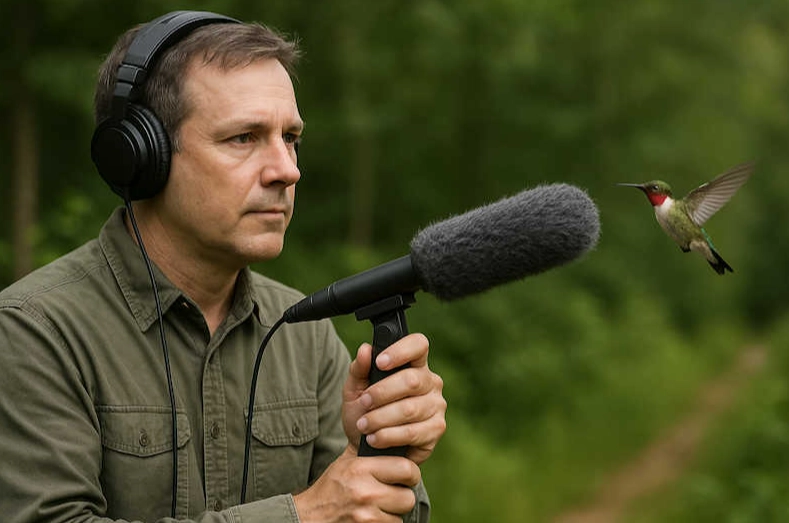
Your Quick Start to Bird Sound Recording
Essential Gear for Bird Sound Recording
You don't need a studio on your back. For starters, focus on three core pieces: a recorder, a microphone, and something to protect that microphone from the wind. Smartphones are a legitimate starting point, but they have hard limits. Their tiny mics struggle with distant birds and amplify handling noise. If you're serious, a dedicated handheld recorder is your first real upgrade.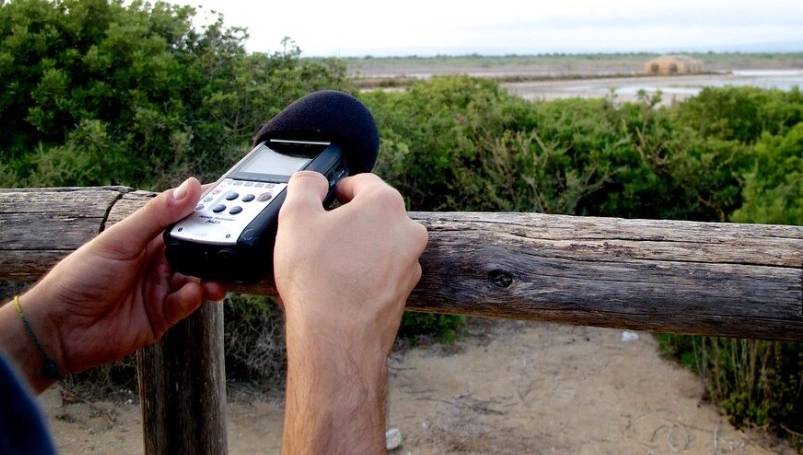
Handheld Recorders: The Workhorses
These are all-in-one units with built-in microphones. They're simple, portable, and perfect for learning. The market has a few clear winners for beginners.
| Recorder Model | Price Point | Key Advantage for Beginners | One Drawback |
|---|---|---|---|
| Zoom H1n | Budget-Friendly | Extremely simple interface, great built-in mics for the price. It's the go-to "first recorder." | Plastic build feels a bit cheap; preamps can get noisy in very low-volume situations. |
| Tascam DR-05X | Budget-Friendly | Similar to the Zoom H1n, often with slightly better battery life. A solid alternative. | Menu system can be slightly less intuitive for some. |
| Zoom H5 | Mid-Range | Interchangeable mic capsules. You can start with built-ins and later add a shotgun mic directly onto it. | Larger and more expensive. Overkill if you're just testing the waters. |
I started with a Zoom H2n years ago, and its XY microphone capsule (where two mics are placed at an angle) gave me surprisingly good stereo recordings right out of the box. The lesson? Don't get paralyzed by choice. Any of the budget models will do a fantastic job compared to your phone.
Microphones: Your Ears in the Field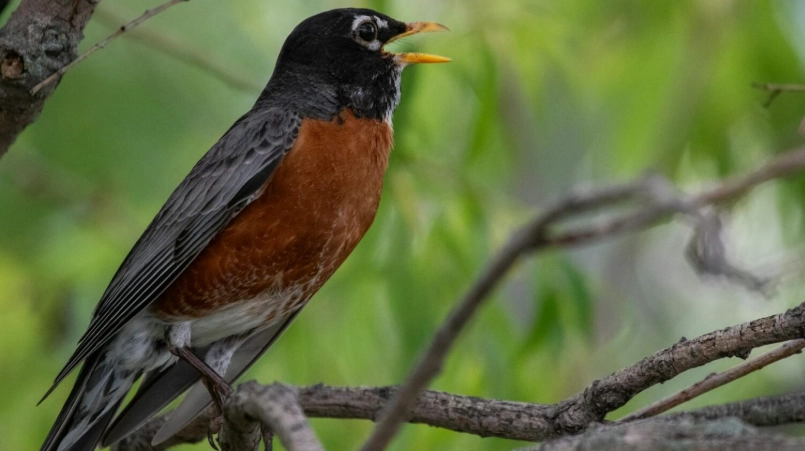
The recorder captures the sound, but the microphone is what actually hears it. Built-in mics on the recorders above are good. External mics are better. For birds, you want directionality—the ability to focus on the sound in front of you and reject noise from the sides and rear.
Shotgun Microphones: These are long, tube-like mics that are highly directional. They're ideal for pinpointing a single bird in a tree. Models like the Rode VideoMic NTG or Sennheiser MKE 400 are popular starter options that plug directly into many recorders.
Parabolic Microphones: These use a dish to collect and focus sound waves. They can capture incredibly distant and faint sounds but are bulky, expensive, and have a very narrow "sweet spot." Not recommended for your first purchase.
Gear Truth No One Tells You
Your first $50 should go towards a proper windshield, not a slightly better mic. The furry "dead cat" or foam cover that comes with most mics is only good for a light breeze. For real field work, you need a blimp-style windshield (a wire cage covered in fake fur). It's the single most effective tool for getting usable audio on a windy day. A Rycote Mini WindJammer is a great investment.
Step-by-Step Field Recording Techniques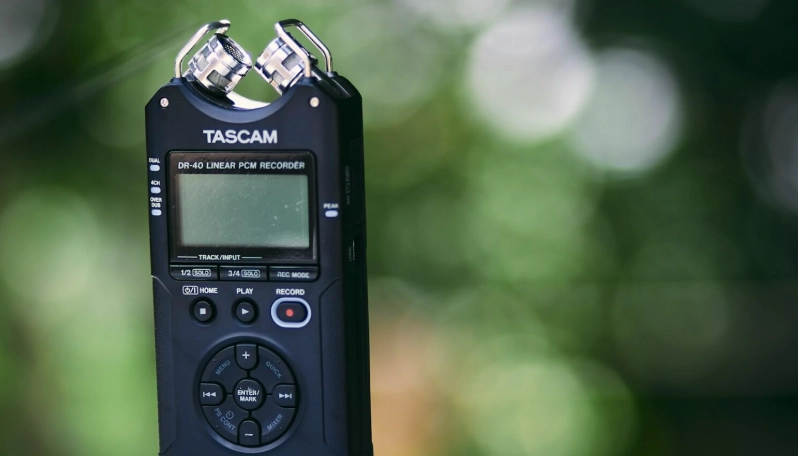
You have your gear. Now let's use it. Good technique matters more than expensive equipment.
Before You Leave Home
Charge everything. Twice. Bring spare batteries or a power bank. Format your memory card in the recorder, not your computer. Set your recording format to WAV at 44.1 kHz or 48 kHz, 24-bit. This gives you high-quality, uncompressed audio to work with. MP3 is for listening, not for archiving or serious editing.
In the Field: The Hunt for Clean Audio
Find your bird first with your eyes or binoculars. Then, listen. Is it consistently singing from one perch? Perfect. Move slowly and quietly. Your goal is to get as close as you can without disturbing the bird. If it stops singing or flies away, you're too close. Back off.
Point your mic (or recorder) directly at the sound source. Hold the recorder steady—don't fidget. If you're holding it, keep your arms relaxed but firm. Even better, use a small tripod or rest it on a stable surface like a log or your knee. Handling noise is a common killer of clean recordings.
Monitor with headphones. The cheap earbuds that came with your phone are okay in a pinch, but closed-back headphones (like the Sony MDR-7506) will block external sound and let you truly hear what you're recording. Listen for problems as they happen.
The #1 Enemy: How to Beat Wind Noise
Wind is the arch-nemesis of the wildlife recordist. It creates low-frequency rumble that completely smothers delicate bird song. Here's the multi-layer defense system I use:
- Physical Wind Protection: Always use your windshield. Blimp first, then the furry cover. No exceptions, even if it "doesn't feel that windy."
- Positioning: Use your body, a tree, or a rock as a windbreak. Get the mic out of the direct flow of air.
- Post-Processing Savior: Software can help salvage a windy recording. A high-pass filter (more on that below) can cut out the worst of the rumble. But it's a band-aid. Good field technique is the cure.
Simple Editing Basics for Cleaner Audio
You don't need to be a pro. Free software like Audacity is more than powerful enough. Your editing goals are simple: make the bird louder and the background quieter.
Step 1: Trim. Cut out the long silent parts at the start and end of your recording.
Step 2: Normalize. This boosts the overall volume of your recording to a standard level without causing distortion. In Audacity, it's under Effect > Normalize.
Step 3: Apply a High-Pass Filter. This is the magic button for cleaner field recordings. It removes low-frequency noise like distant traffic, wind rumble, and mic handling bumps. Set it to around 80-150 Hz. The bird's song (mostly high frequencies) will pass through, while the junk gets cut.
Step 4: Gentle Compression. This reduces the difference between the loudest and softest parts. A bird's song can have quiet introductory notes and loud climaxes. A little compression (a ratio of 2:1 or 3:1) evens it out, making the whole performance more audible. Don't overdo it.
Expert Advice: 3 Mistakes Beginners Always Make
After a decade of recording, I've made every error in the book. Here are the subtle ones that ruin recordings but are rarely mentioned.
1. Recording in "Auto Level" or "Auto Gain" Mode. It seems helpful—the recorder adjusts the volume automatically. But when the bird stops singing, the recorder cranks up the gain to find sound, amplifying all the background hiss. Then when the bird sings again, it's distorted. Always use manual gain. Set it so your loudest expected sound (the bird's song) doesn't hit the red/clipping indicators. A little headroom is good.
2. Ignoring the Acoustic Environment. You're focused on the bird, not the space. Recording a warbler in a dense, echoey spruce forest will sound muddy. Recording a meadowlark in an open field on a still day will sound crystal clear. Choose your location and weather as carefully as you choose your subject. Early mornings often have less wind and human noise.
3. Chasing Rarity Over Quality. The thrill is recording a rare bird. But if it's 100 yards away across a busy road, the recording will be useless. A pristine, close-up recording of a common American Robin is infinitely more valuable for learning and sharing than a noisy, distant snippet of something rare. Build your skills on cooperative subjects.
Your Bird Recording Questions Answered
You can absolutely start with your smartphone. Modern phones have decent mics and there are great apps like RecForge II (Android) or Voice Record Pro (iOS) that let you record in WAV format. The real limitations are the microphone's sensitivity and directionality. It will pick up everything around you equally. For a bird close by on a quiet day, it can work. But for distant birds or in slightly noisy environments, a dedicated recorder with external mic inputs will give you control and quality a phone can't match. Think of your phone as training wheels.
The hour after sunrise is the undisputed champion, often called the "dawn chorus." Birds are most vocally active then, defending territories and attracting mates. The air is also usually calmer, meaning less wind noise. Late afternoon can see another spike in activity. Avoid the middle of a hot, windy day—birds are quiet, and the audio conditions are poor.
 How do I reduce annoying background sounds like traffic or airplanes?
Prevention is 90% of the battle. Scout locations away from roads and under flight paths. Use topography—a hill or dense woods between you and the road can block sound. A highly directional shotgun mic helps reject sound from the sides. In editing, a spectral editor like the one in Audacity lets you visually "paint out" short, transient noises like a single airplane flyover or a click. For constant noise like highway rumble, a noise reduction plugin can help, but it often degrades the bird sound too. It's always better to get it right in the field.
The gold standard is Macaulay Library at the Cornell Lab of Ornithology. Your recordings become part of a permanent scientific archive used by researchers worldwide. It's fulfilling. For sharing with the community, xeno-canto is a fantastic, dedicated platform for bird sounds. For casual sharing, SoundCloud or YouTube work. Always remember to note the species, date, location, and your name—this "metadata" is what turns a pretty sound into useful data.
Reader Comments