Let's be honest. The best view in the world means nothing if your binoculars are giving you a headache—literally. I've been there, halfway through a morning at a migratory hotspot like Cape May, New Jersey, and my neck and shoulders are screaming from holding up a pair of bricks. That's when I realized the search for the best lightweight birding binoculars isn't just about convenience; it's about endurance, comfort, and ultimately, seeing more birds because you're not distracted by pain.
The ideal pair disappears in your hands, letting you focus entirely on the subtle field marks of that distant warbler. This guide cuts through the specs to find binoculars that are truly light, optically excellent, and built for the long haul. We're not just talking about weight on paper, but how that weight feels after three hours of scanning a marsh.
What's in This Guide?
Why Lightweight is Non-Negotiable for Birders
You might think a few extra ounces don't matter. I thought so too, until a long day of birding proved me wrong. The strain is cumulative. Every micro-adjustment your muscles make to stabilize a heavier optic adds up. Lightweight binoculars, typically under 22 ounces (around 625 grams), reduce fatigue dramatically. This means steadier hands, less shake, and a sharper image when you finally lock onto that elusive bird.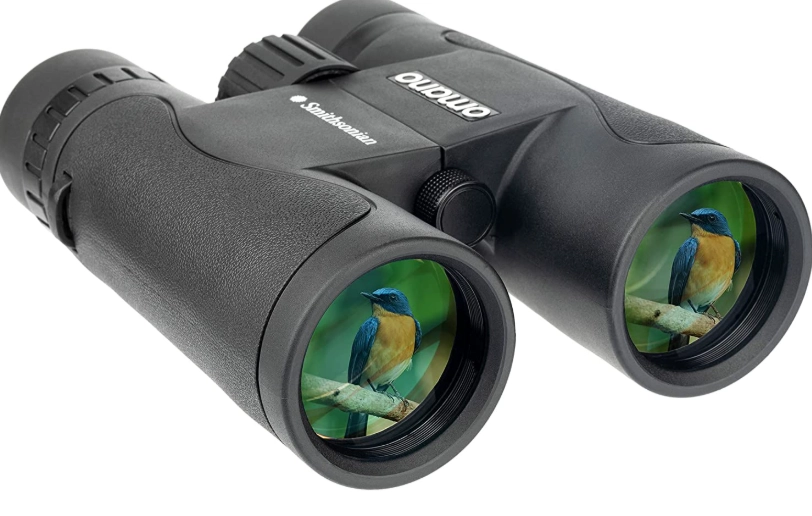
It also changes how you bird. With a heavy pair, you're less likely to quickly raise them for a casual check of a treetop or a flash of movement in the brush. A light pair becomes an extension of your eyes—always at the ready. For travel birders, this is doubly important. Every ounce in your carry-on counts, and a compact, light pair leaves room for other essentials.
My Personal Rule: If a binocular feels heavy in the store after 60 seconds, imagine it after 60 minutes in the field. Always test for balance, not just weight. A well-balanced 20-ounce binocular can feel lighter than a poorly balanced 18-ounce one.
Key Specs Explained: More Than Just Magnification
When we talk about lightweight optics, three specifications are king: the configuration (like 8x42), the objective lens size, and the field of view. Most birders get hung up on magnification alone, but that's a mistake.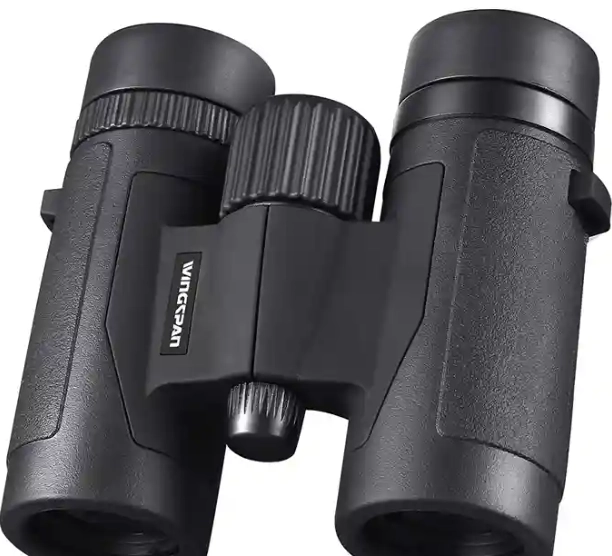
Configuration: The 8x32 Sweet Spot
The classic birding binocular is an 8x42. The "8" is magnification, the "42" is the diameter of the front objective lenses in millimeters. For a truly lightweight champion, look at the 8x32 configuration. You sacrifice a tiny bit of light-gathering capability (that "42" vs. "32") for a massive reduction in size and weight. In all but the darkest conditions (like deep forest understory at dusk), a high-quality 8x32 is more than sufficient. The weight savings are often 25% or more.
Field of View: The Hidden Game-Changer
This is measured in feet at 1000 yards or degrees. A wider field of view makes it dramatically easier to find and follow fast-moving birds like swallows or warblers in dense foliage. Some lightweight models compromise here, offering a narrow, tunnel-like view. Don't accept it. Look for a field of view over 390 feet at 1000 yards (or about 7.5 degrees). This spec is often buried in the product details, but it's critical for enjoyment.
Close Focus Distance
Want to admire the intricate feather details on a butterfly or a nearby flower? A close focus of under 6 feet opens up a world of macro-style nature observation. Many standard binoculars focus down to 8-10 feet, which feels limiting once you've used a pair that can get closer.
Top Lightweight Models Compared Side-by-Side
Here’s a breakdown of current leaders in the lightweight category. This isn't just a list of light binoculars; it's a list of excellent binoculars that happen to be light.
| Model & Configuration | Weight (oz/g) | Field of View (ft@1000yds) | Close Focus (ft) | Best For | The Real-World Take |
|---|---|---|---|---|---|
| Swarovski CL Curio 7x21 | 8.3 oz / 235 g | 366 | 6.6 | Ultra-portability, travel, backup pair | Incredibly tiny, shockingly good optics for the size. The 7x magnification is very steady. A luxury featherweight. |
| Zeiss Victory SF 8x32 | 21.9 oz / 620 g | 444 | 5.9 | The birder who wants no compromises | Top-tier optics in a relatively light package. The field of view is breathtakingly wide, making target acquisition effortless. |
| Nikon Monarch M7 8x30 | 15.2 oz / 431 g | 435 | 8.2 | Value-focused birders needing great performance | A standout in the mid-price range. Exceptionally bright and sharp for its class and weight. The close focus is its only minor weak point. |
| Vortex Diamondback HD 8x32 | 17.5 oz / 496 g | 430 | 5.0 | Beginners and budget-conscious birders | Offers fantastic features (like that super close focus) for the money. Backed by Vortex's unbeatable warranty. A bit bulkier in hand than others. |
| Kowa BD II 6.5x32 | 19.4 oz / 550 g | 426 | 6.6 | Birding in forests, shaky hands, general nature viewing | The lower 6.5x magnification provides an extremely bright, wide, and steady view. It feels more immersive. An underrated gem. |
Notice the Kowa BD II 6.5x32? Most lists just parrot the 8x mantra. But for forest birding or if you have even a slight hand tremor, that lower magnification provides a brighter, wider, and radically steadier view. It's a trade-off in detail at extreme distance, but for 90% of sightings, it's a wonderfully relaxed experience. That's the kind of non-consensus tip you get from using gear for years, not just reading spec sheets.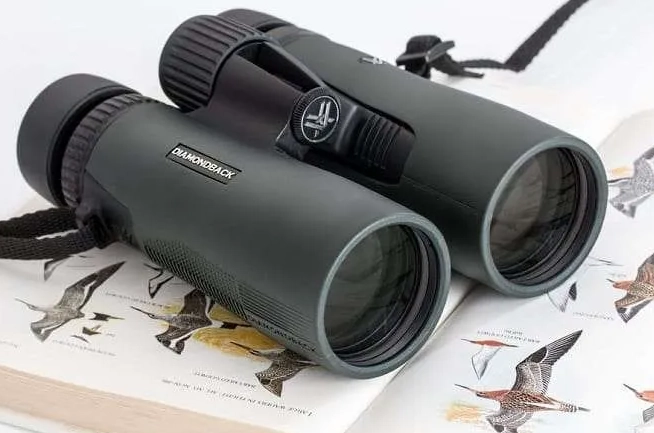
How to Choose Your Perfect Pair: A Simple Framework
Don't get lost in the numbers. Ask yourself these three questions:
1. What's my primary birding habitat? Open shorelines and hawkwatches favor higher magnification (8x or 10x). Dense forests and woodlands benefit from wider fields of view and often lower magnification (8x or even 7x) for a brighter image.
2. How do they feel in my hands? This is non-negotiable. Can you reach the focus wheel comfortably? Is the eyecup design right for your face, whether you wear glasses or not? Do the barrels fit your grip? Order from a retailer with a good return policy and test them at home, looking out your window at different distances.
3. What's the true budget? Include a good harness, like those from Op/Tech USA or Cross Trek. Even the lightest binoculars are better on a harness than a neck strap. It distributes weight across your shoulders and back. A $50 harness with a $300 binocular is a better setup than a $350 binocular on a crappy strap.
Common Mistakes Even Experienced Birders Make
I've seen seasoned birders trip up here. First, they obsess over twilight performance, choosing a heavier 42mm objective lens for those last 10 minutes of dusk, while ignoring the fatigue the heavier glass caused for the preceding 4 hours. For most, the 32mm is the smarter daily driver.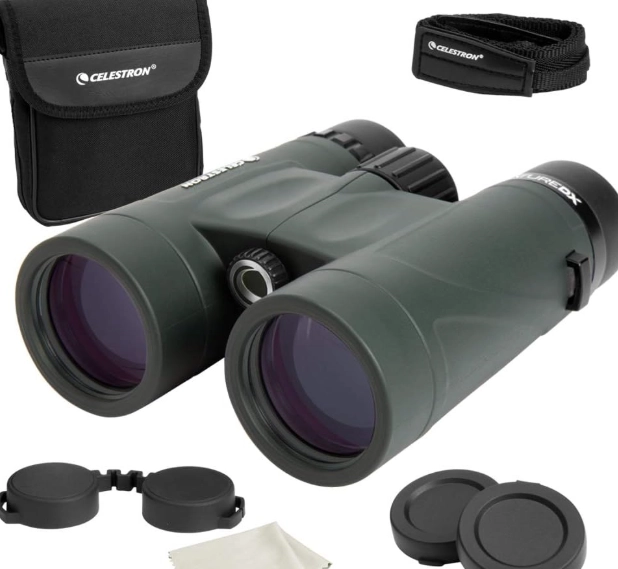
Second, they ignore eye relief. If you wear glasses, you need long eye relief (usually over 16mm). If the spec is short and you wear glasses, you'll never see the full field of view. It's like looking through a toilet paper tube.
Finally, they forget about durability. Lightweight shouldn't mean flimsy. Look for rubber armoring, nitrogen purging (for waterproof/fogproof performance), and a strong warranty. Brands like Vortex and Leupold offer unconditional lifetime warranties that are incredibly user-friendly.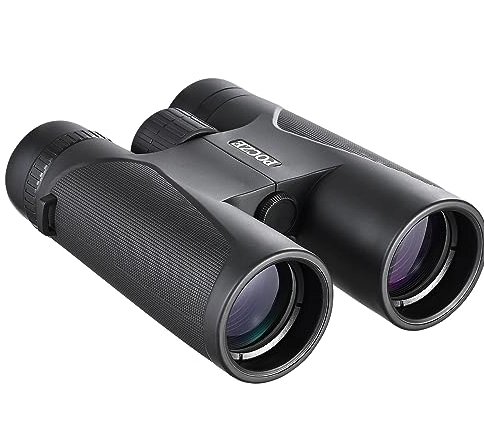
Your Lightweight Binocular Questions Answered
Are compact binoculars (like 8x25) good enough for serious birding?
I have a budget under $200. Can I still get a decent lightweight binocular?
How much does lens coating technology matter in a lightweight model?
Is it worth buying a used high-end lightweight binocular to save money?
Reader Comments