You see a flash of color in the trees, hear an unfamiliar song, and a question pops into your head: "What bird is that?" That curiosity is the seed of birding. But between that moment and confidently identifying your first warbler lies a gap that can feel wide. It's not about memorizing hundreds of species overnight. It's about knowing how to look, what to listen for, and having a few key tools that don't break the bank. I've been guiding new birders for over a decade, and the biggest mistake I see isn't misidentification—it's getting overwhelmed by gear advice or feeling pressured to know everything immediately. Let's fix that.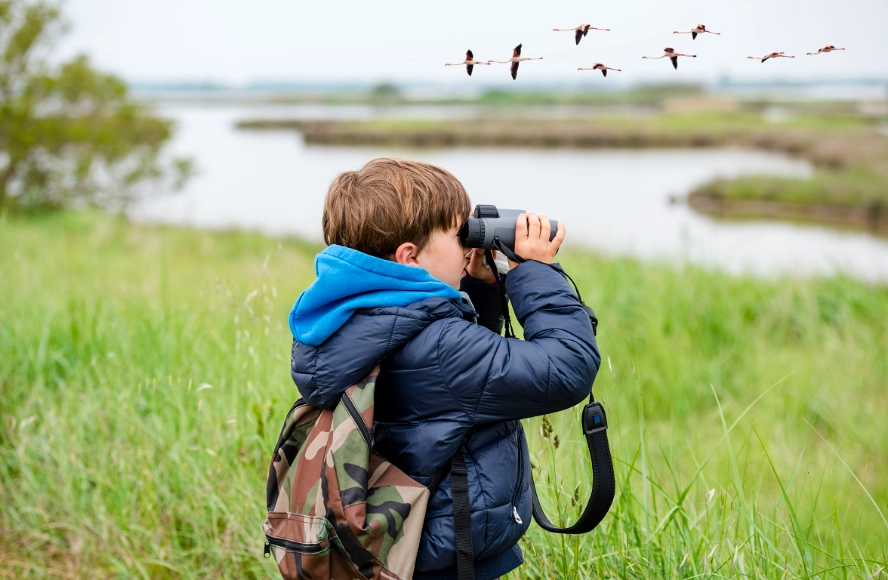
Your Birding Journey Starts Here
The Non-Negotiable Gear (And What to Skip)
Forget the $2,000 binoculars and the heavy camera lens. You need two things to start: a way to see detail, and a way to put a name to what you see.
Binoculars: Your Most Important Tool
The specs are confusing: 8x42, 10x50, field of view, close focus. Here's the translation. The first number is magnification (8x). The second is the diameter of the front lens in millimeters (42mm), which affects how much light gets in. For beginners, I almost always recommend an 8x42 model. The 8x power is steady enough to hold by hand, and the 42mm objective lens gathers plenty of light for dawn and dusk viewing. A 10x is shakier and has a narrower field of view, making it harder to find that little bird hopping in the bushes.
Pro Tip You Won't Find in Manuals: The single most important spec for a beginner is close focus distance. Many cheap binoculars can't focus on anything closer than 15-20 feet. You'll miss butterflies, dragonflies, and even birds in nearby shrubs. Look for a close focus of 10 feet or less. It opens up a whole world of close-up observation.
Budget is real. While top-tier brands like Swarovski and Zeiss are incredible, a $150-$300 pair from Nikon, Vortex, or Celestron is more than capable. I started with a Nikon Prostaff 3S 8x42, and it served me perfectly for years. Avoid the $30 impulse buy from a big-box store; the optics are usually so poor they'll frustrate you into quitting.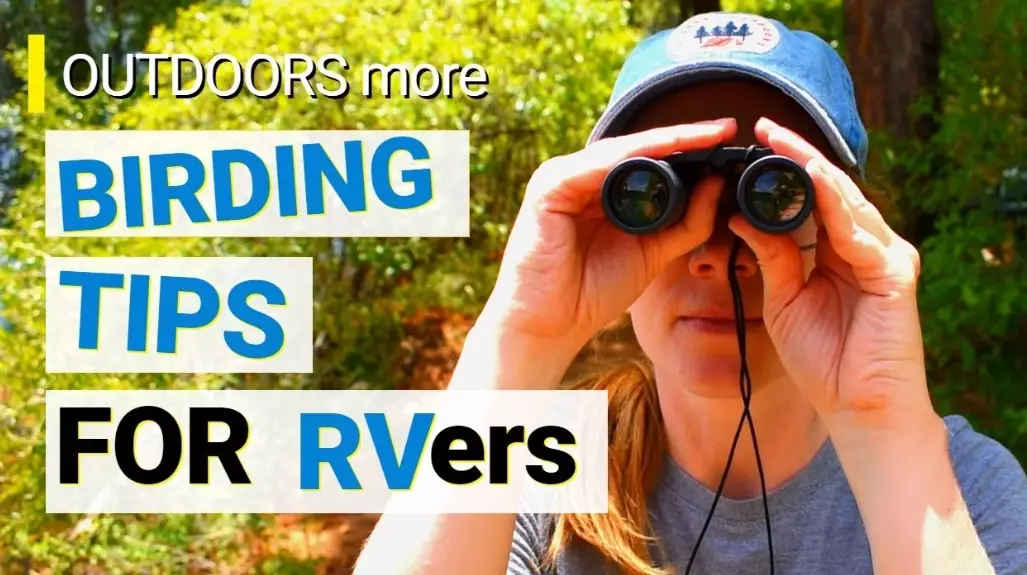
Field Guide: The Book vs. The App Debate
You have two excellent choices, each with pros and cons.
| Format | Best For | Top Recommendations |
|---|---|---|
| Book (Physical) | Learning bird families, side-by-side comparisons, no battery needed. The tactile experience helps memory. | The Sibley Guide to Birds (detailed paintings), National Geographic Field Guide (excellent photos). |
| App (Smartphone) | Quick ID in the field, playing bird songs on the spot, logging your sightings ("listing"). | Merlin Bird ID by the Cornell Lab of Ornithology (free, has sound ID). Audubon Bird Guide (also free, comprehensive). |
My advice? Use both. Start with the Merlin app because it's free and intuitive. Its "Sound ID" feature, which listens and suggests what's singing, is a game-changer for learning calls. Then, get a physical guide for deeper study at home. The act of flipping pages helps cement visual patterns in your brain in a way scrolling doesn't.
What can you skip for now? A spotting scope (for distant shorebirds), heavy-duty camouflage clothing, and an expensive camera. Wear muted colors (avoid bright white), comfortable shoes, and clothes suitable for the weather. That's your starter outfit.
Your Eyes and Ears: Core Field Skills
Gear gets you to the starting line. Your senses do the running. Bird identification isn't just about color; it's about shape, behavior, and context.
How to Look at a Bird: The GISS Method
GISS stands for General Impression of Size and Shape. Before you reach for color, ask yourself:
- Size & Shape: Is it sparrow-sized, robin-sized, or crow-sized? What's the silhouette? A plump body with a short tail? A sleek body with a long tail?
- Bill Shape: This is huge. Is it short and thick (for cracking seeds), long and thin (for probing insects), hooked (for tearing meat)?
- Posture & Behavior: Does it cling to a tree trunk head-up (nuthatch) or head-down (brown creeper)? Does it bob its tail constantly (palm warbler, spotted sandpiper)?
I remember trying to ID a small, fast bird in dim light. All I could see was a vague shape darting from branch to branch. Focusing on its constant, frantic tail-flicking immediately pointed me to the family of flycatchers. Color was useless in that light, but behavior was the giveaway.
Learning Bird Songs and Calls
This is the skill that feels like a superpower. You'll identify 90% of the birds you hear before you see them. Don't try to learn them all at once.
Start with the common, year-round residents in your area: the American Robin's cheerful carol, the Northern Cardinal's "cheer-cheer-cheer," the Blue Jay's raucous call. Use the Merlin app's Sound ID feature as a real-time tutor. Listen, then look at the suggestion. Soon, you'll start recognizing patterns. Is the song a clear whistle or a raspy chatter? Is it repetitive or a complex melody?
One subtle mistake beginners make is only birding with their eyes. Sit still in one spot for 15 minutes. Close your eyes. Just listen. You'll be amazed at how many more birds are around you.
The Unspoken Rules: Birding Ethics & Etiquette
This is where a hobbyist becomes a true birder. Our enjoyment should never come at the expense of the birds.
- Keep Your Distance: Use your binoculars and scope to close the gap, not your feet. If a bird changes its behavior (stops feeding, flushes, eyes you nervously), you're too close. This is critical during nesting season.
- Respect Habitat: Stay on trails to avoid trampling sensitive plants and disturbing ground-nesting birds.
- Playback Use (Playing Recordings): This is a major ethical hot topic. While it can be effective, overuse stresses birds, making them waste energy defending territory or abandoning a feeding area. The American Birding Association has strict guidelines. As a beginner, it's best to avoid playback altogether. Learn to find birds through patience and observation.
- Share the Space: Be mindful of other birders, photographers, and general park users. Keep voices low.
Planning Your First Successful Outing
Don't just wander into the deepest woods. Set yourself up for success.
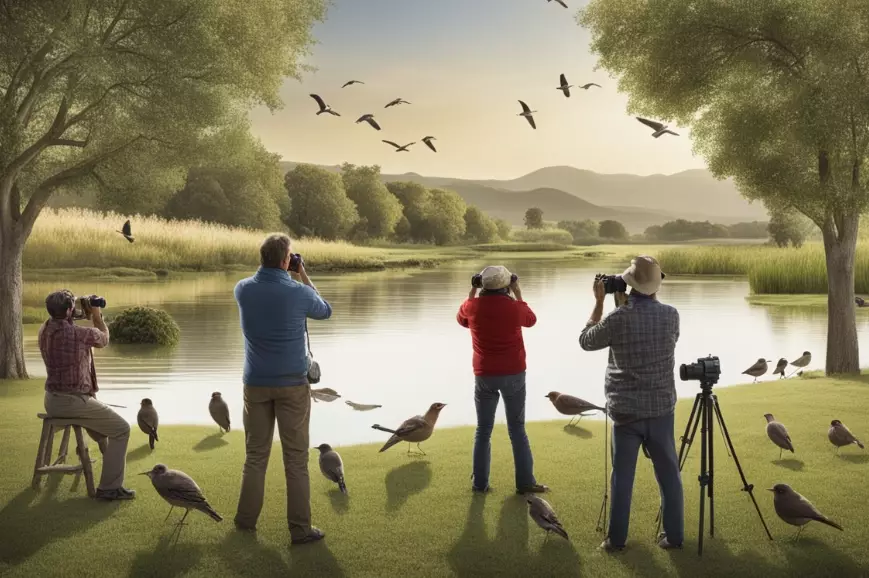
Location: Start easy. Your local park, a nature center with trails, a community garden, or even a cemetery (often quiet and green) are perfect. Bodies of water—ponds, lakes, river edges—attract a wide variety of birds. Check if your local Audubon chapter leads beginner-friendly walks.
Timing: Birds are most active during the "golden hours"—the first few hours after sunrise and the last few before sunset. That's when they're feeding and singing most. A mid-day summer hike can feel surprisingly quiet.
The Plan: Give yourself a simple goal. "I'm going to sit on this bench by the pond for 30 minutes and identify every bird I see and hear." Or, "I'm going to walk this one-mile loop slowly and try to use the GISS method on five different birds." Quality over quantity.
Pack water, snacks, sun protection, and a notebook or use an app like eBird to jot down what you see. Don't worry about getting every name right. Note the unknown sparrow as "little brown bird with striped chest, ground-feeder." That's a perfect start.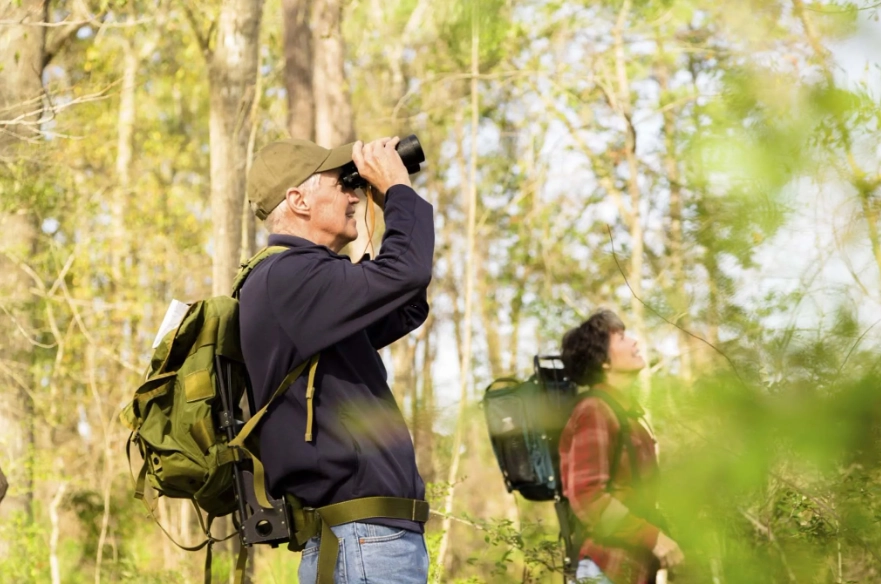
Answers to Common Beginner Questions
Do I really need expensive binoculars to start birding?
I feel overwhelmed trying to learn all the birds. Where do I even start?
Is it okay to feed birds in my backyard to attract them?
What's the biggest mistake new birders make on their first few outings?
How do I deal with not being able to identify a bird?
Reader Comments