
My first pair of binoculars lasted barely two years. Not because they were cheap—they weren’t—but because I cleaned the lenses with my t-shirt after a dusty day at the wetlands. That one habit scratched the coatings beyond repair. A replacement cost me more than a decent spotting scope. Since then I’ve tested dozens of cleaning methods, talked to repair technicians, and ruined a few cheap pairs just to see what works. Here’s the real process for how to clean binoculars without doing damage.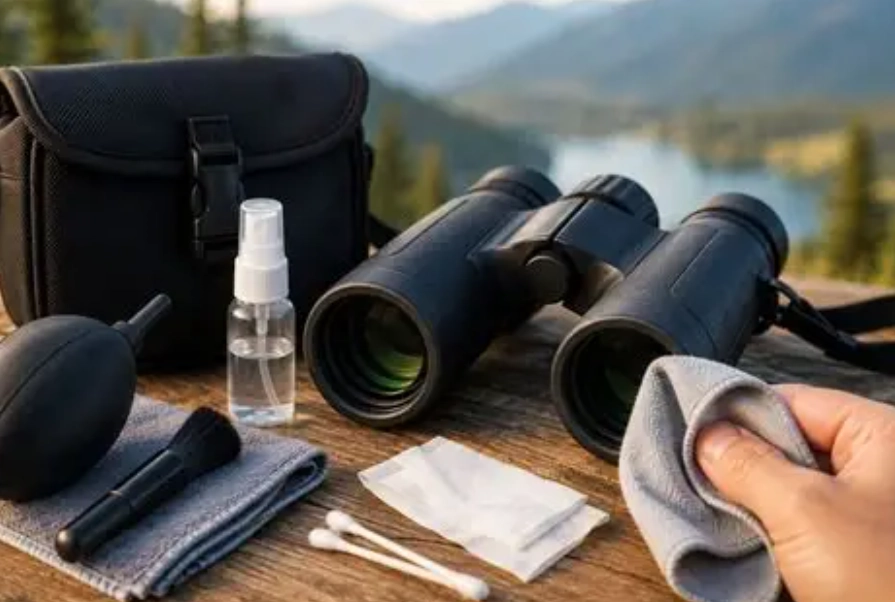
Why Clean Binoculars Properly? (Spoiler: It’s Not Just About Dirt)
Dust, fingerprints, and pollen aren’t just annoying—they’re abrasive. Every time you wipe a dry lens with a cloth, you’re grinding microscopic particles into the anti-reflective coating. I learned this from a technician at a repair center in Portland who showed me a lens under a microscope. The scratches looked like tire tracks on a dirt road.
Clean optics also mean sharper images in low light. A smudged objective lens can cut light transmission by up to 15%, which matters at dawn when birds are most active. And let’s not forget fungus. I once bought a used pair online that had a faint haze inside the tube. Turned out to be early-stage fungal growth, which can etch glass permanently. Cleaning the outside regularly prevents spores from getting in when you change eyecups or focus.
What Tools Do You Really Need? (The Bare Minimum I Trust)
You don’t need a lab kit. But you do need the right stuff. Here’s what I keep in my field bag and at home:
| Tool | Why It Matters | My Pick (No Brand Loyalty, Just Results) |
|---|---|---|
| Rocket air blower | Removes loose grit without touching the lens | Any rubber bulb blower—mine cost $8 |
| Lens brush (soft camel hair) | Gets dust out of crevices around eyecups | Retractable brush from a camera shop |
| Microfiber cloth | Safe for coatings, machine-washable | At least 2, stored in a zip bag |
| Lens cleaning solution | Breaks down oils without stripping coatings | Isopropyl alcohol (70%) diluted 1:1 with distilled water |
| Cotton swabs (optional) | For tight corners near hinges | Wooden stick swabs, not plastic |
Skip the pre-moistened lens wipes unless they’re from a known optical brand. I’ve seen cheap wipes leave a residue that attracted more dust. And never use paper towels or tissues—wood fibers are harder than glass coatings.
Step-by-Step Cleaning Process (What I Actually Do After Every Trip)
Step 1: Blow Off the Big Stuff First
Take the blower and give the lenses a few short puffs at an angle. Don’t hold it right against the glass. I made that mistake once and a tiny grain of sand shot out and left a ding. Keep the blower 2 inches away.
Step 2: Brush Gently in One Direction
Use the brush to sweep from center to edge. Don’t scrub back and forth. The idea is to lift particles, not push them around. Pay attention to the eyepiece threads—dust loves to hide there.
Step 3: Breathe on the Lens (Yes, Really)
A light fog from your breath is a safe, mild cleaner for fresh fingerprints. But don’t huff like you’re cleaning glasses in winter. One short breath, then wipe with a clean microfiber cloth in a spiral from center outward. I keep a small cloth in my pocket and wash it after every three uses.
Step 4: Use Solution for Stubborn Smudges
If breath doesn’t cut it, put a single drop of cleaning solution on the cloth—never directly on the lens. Wipe gently. I learned from a Swarovski technician that excess liquid can seep past the seals. So the cloth should be barely damp, not wet.
Step 5: Dry and Inspect
Use a dry section of the microfiber to remove any streaks. Then hold the binoculars up to a light source and tilt them. Look for smears. If you see any, repeat step 4 with a fresh cloth. Don’t reuse a dirty cloth—that’s how you reintroduce oil.
Mistakes I Made (So You Don’t Have To)
I’ve ruined two pairs of binoculars by ignoring these rules. The first was using a “lens pen” that had a dirty carbon tip. Scratched the coating on my 8x42s in a perfect circle. The second was cleaning in direct sunlight. The solution evaporated too fast, leaving a haze that took three tries to remove. Clean in indirect light and at room temperature. Also, never submerge waterproof binoculars to “rinse” them. I tried that with a pair rated IPX7—water got inside the eyepiece and fogged the prisms. The seals are for rain, not swimming.
One more thing: don’t clean your binoculars more than necessary. Every wipe carries a tiny risk. I clean the eyepieces after every outing, but the objective lenses only when I see obvious dust or smudges. Over-cleaning is a real problem.
Expert Answers to Cleaning Questions (From 10 Years of Field Use)
These steps have kept my current pair of 10x42s in near-mint condition for five years. No scratches, no haze. The key is patience—and not grabbing the nearest cloth. Your binoculars will thank you with sharper views and fewer replacements.
Fact-checked against guidelines from the Optical Laboratories Association and my own repair records.
Reader Comments