Quick Guide
You know the sound. That cheerful, liquid caroling that seems to announce spring itself. You see the familiar rusty-red breast hopping across the lawn. Most of us think "American robin" and picture that classic image. But have you ever stopped to really look at the female? I mean, really look? For years, I didn't. I'd just see "a robin" and move on. It wasn't until I had a pair nesting in the crabapple tree right outside my kitchen window that I started paying attention. And let me tell you, the female American robin is a fascinating, complex, and utterly essential bird who deserves way more credit than she gets.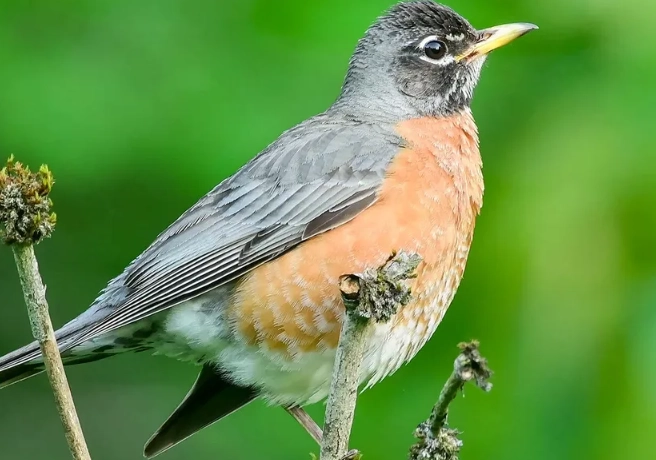
She's the one doing the heavy lifting. While the male is up on the fence post singing his heart out (which is important, don't get me wrong), she's the architect, the primary incubator, and the early warning system for one of the most vulnerable nests in suburbia.
Most guides spend a paragraph on her, focusing on how she's "duller" than the male. That always bugged me. It's not about being dull; it's about being different. Her coloration is a masterpiece of camouflage and practicality. This article is for everyone who's ever wondered about that other robin—the one whose breast isn't quite so vibrant, the one you see meticulously gathering grass. We're going to move beyond a simple ID tip and into the full story of the American robin female.
First Things First: How to Actually Tell Her Apart
Okay, let's get the identification bit out of the way, because this is where everyone starts. It's trickier than you might think, especially with young birds or in certain light. The classic line is "males are brighter, females are paler." That's true, but it's a spectrum, not a rule.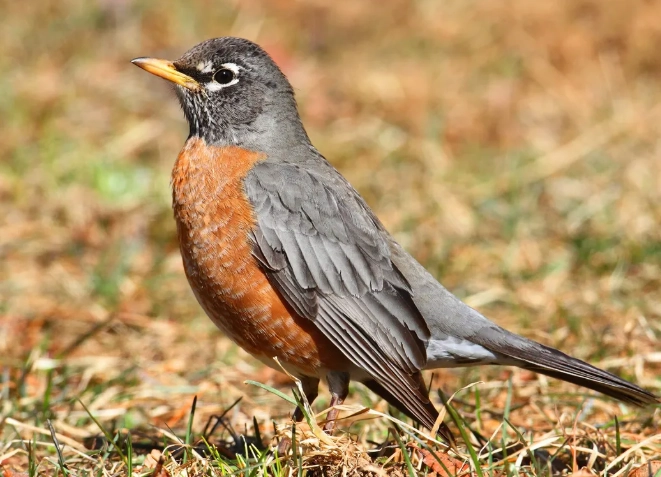
Spotting the Subtle Differences
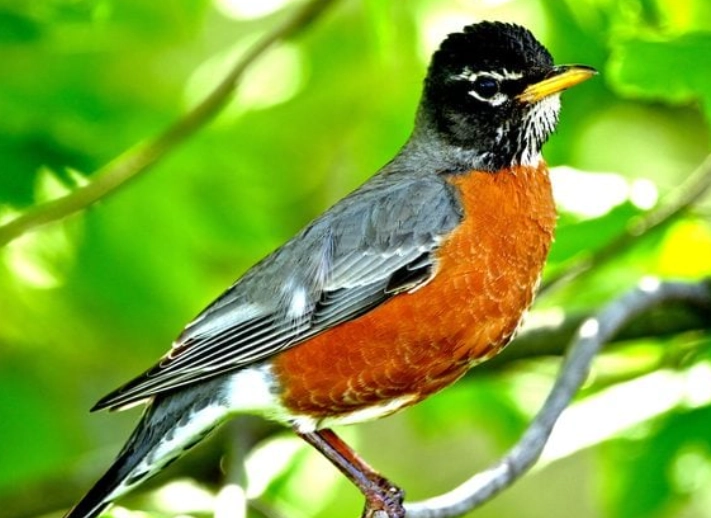
I've found that looking at the head is often more reliable than the breast. The male's head is typically a very dark, almost blackish slate gray, with a stark white outline around his eye and a bright yellow bill. The female American robin's head is a lighter, browner-gray. It looks softer. The contrast around her eye is less dramatic, sometimes blending more with her face. Her bill might have a bit more of a dusky tone mixed with the yellow, though this is variable.
The breast is the famous field mark. The male's is a rich, brick-red or burnt orange. It looks like it was dipped in paint. The female's is paler, often described as orange-ish or a washed-out red. Sometimes it can have a faintly speckled or mottled look at the throat, where the male's is usually a solid block of color. In low light or at a distance, honestly, you might not be able to tell. That's okay. Behavior often gives it away.
| Trait | Male American Robin | Female American Robin | Quick Tip |
|---|---|---|---|
| Head Color | Dark slate gray to blackish | Lighter, brownish-gray | Look for the "cap." Dark cap = likely male. |
| Eye Ring/Contrast | Sharp, bold white broken eye ring | Softer, less contrasting ring | The male's face looks more "defined." |
| Breast Color | Deep, vibrant brick-red or orange-red | Duller, paler orange or reddish-brown | Think "vivid" vs. "pastel." |
| Overall Contrast | High contrast between black head and red breast | Lower contrast; colors blend more | Female appears more uniformly colored. |
| Typical Posture (Spring) | Upright, singing from high perch | Often lower to ground, foraging intently | Who's singing? Who's gathering grass? |
Why does she look this way? It's not an accident. That softer, more camouflaged plumage is a huge advantage when she's the one sitting on the nest for hours on end. A bright red beacon would be a dinner bell for every hawk and crow in the neighborhood. Her survival, and the survival of her eggs, depends on blending into the shadows of the nest.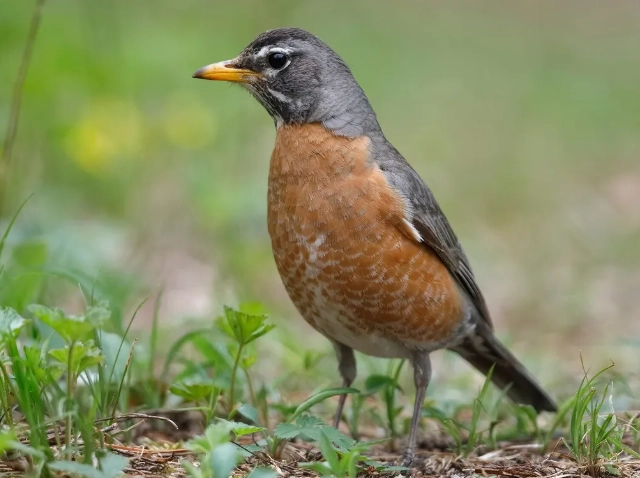
Beyond Looks: Her Pivotal Role in the Robin Lifecycle
This is where the story of the American robin female gets really good. If you only learn her ID, you're missing the best part. She is the central engine of robin reproduction. Let's break down her year, because it's a brutal and amazing schedule.
Architect and General Contractor: Nest Building
The male might start showing her potential sites, fluttering to a branch and chirping. But the final decision? That's hers. And the construction? Overwhelmingly hers. I've watched this for hours. The male might occasionally bring a twig, but it's the female American robin who does the meticulous work. She's the one making a thousand trips, gathering dead grass, twigs, and paper.
She forms the cup with her own body, pressing her breast against the materials to shape it. Then comes the magic part: the mud lining. She finds a patch of wet earth, collects mud in her beak, and plasters it into the cup. This is back-breaking work. Finally, she lines this hardened mud cup with fine, dry grass. The result is a surprisingly sturdy, weather-resistant cradle. The entire process takes about 2-6 days, and she's exposed the whole time. Talk about a vulnerable period.
Funny story: one year, a female robin in my yard kept stealing the strands of natural jute twine I had tying up my tomato plants. I'd find little blue threads woven into the nest. She's a pragmatic recycler, using whatever works.
The Marathon Sit: Incubation
She typically lays one egg per day, usually first thing in the morning, until she has a clutch of 3-5 beautiful blue eggs (that iconic "robin's egg blue"). Incubation starts after the last egg is laid, so all the chicks hatch at roughly the same time. And who does almost all the sitting? The female American robin.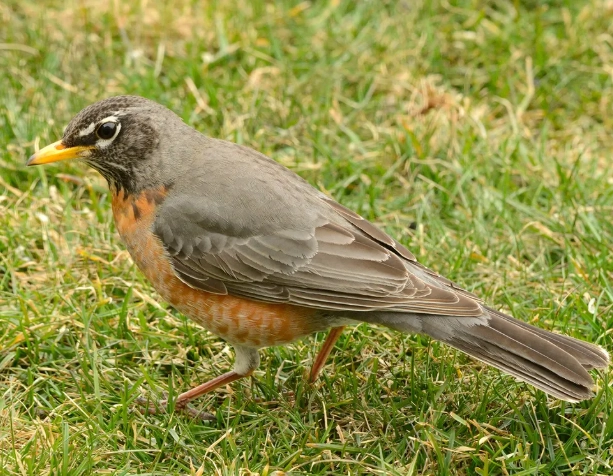
She's on that nest for about 12-14 days straight. She leaves only for brief feeding breaks, often prompted by the male coming to relieve her with a food offering or a call. Her body heat and careful egg-turning are what develop the chicks inside. During this time, her camouflage is her best defense. She sits incredibly still, often with her head low and her body flattened. If you approach, she might slip silently off the nest and give a loud alarm call from a nearby tree.
Feeding Frenzy: The Nestling Phase
Once the blind, naked chicks hatch, both parents kick into overdrive. The division of labor gets a bit more equal here, but the female still often spends more time at the nest brooding the tiny chicks to keep them warm. Both parents are constantly foraging. A study from the Cornell Lab of Ornithology notes that robin parents make hundreds of trips a day to feed their young.
The diet shifts dramatically. While adults eat a lot of fruit, especially in winter, nestlings need protein for growth. That means worms, insects, and caterpillars. You'll see both parents with beaks full of wriggling prey. The female American robin is a hunting machine during this period. After about two weeks, the fat, speckled fledglings leave the nest. They can't fly well yet, so they hop around on the ground, hidden in bushes, while both parents continue to feed them and warn off predators with frantic calls. This is when people often find "abandoned" baby robins—they're usually not abandoned, the parents are just hiding nearby.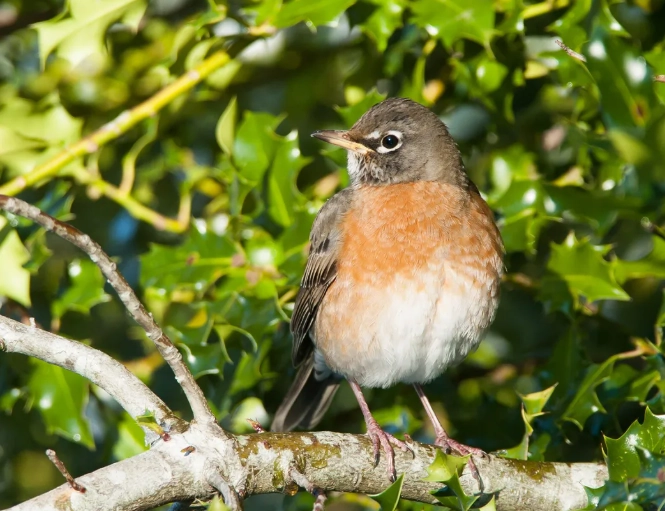
And then, often, she starts all over again. Many pairs, especially in the north, raise two broods, sometimes three, in a single season. By the end of summer, a single American robin female may have successfully raised over a dozen chicks. It's an exhausting, dangerous, and critically important job.
Migration: Is It Different for Her?
Here's something not everyone knows. Migration patterns can differ between the sexes. In many bird species, males migrate earlier to claim the best territories. With robins, it's a bit more complex because their migration is less rigid—many are partial migrants, sticking around if food is plentiful.
However, broad patterns show that female American robins often winter slightly farther south than males on average. The males tend to hold their ground farther north, gambling on an early spring to claim prime real estate. This means that in early spring, the first robins you see are overwhelmingly males. The females trickle in later. In fall, the females and young birds may head south first, while some males linger. It's a subtle difference, but it matters. When you see that first robin of spring, singing boldly from a treetop, you're almost certainly looking at a male. The quieter, foraging female American robin will join him a week or two later to inspect his territory and start the cycle anew.
Threats and Conservation: What She's Up Against
Robins are common, but that doesn't mean their life is easy. For the female, whose life is so tied to the nest, the threats are particularly acute.
- Predators: Squirrels, snakes, crows, jays, hawks, and domestic cats. Cats are a massive problem, especially for fledglings on the ground. A nest is a sitting duck.
- Weather: A late spring snowstorm or a heavy downpour can chill eggs or tiny nestlings. A poorly placed nest can flood or overheat.
- Human Activity: This is a big one. Well-meaning people "pruning" trees and shrubs in spring can accidentally destroy active nests. Lawn chemicals can reduce worm populations or poison the birds directly. The use of insecticides kills the caterpillars her chicks need to survive.
- Window Collisions: Robins fly hard and fast. They frequently die from hitting windows, a leading cause of bird mortality.
So, what can you do if you appreciate the hard work of the American robin female in your yard?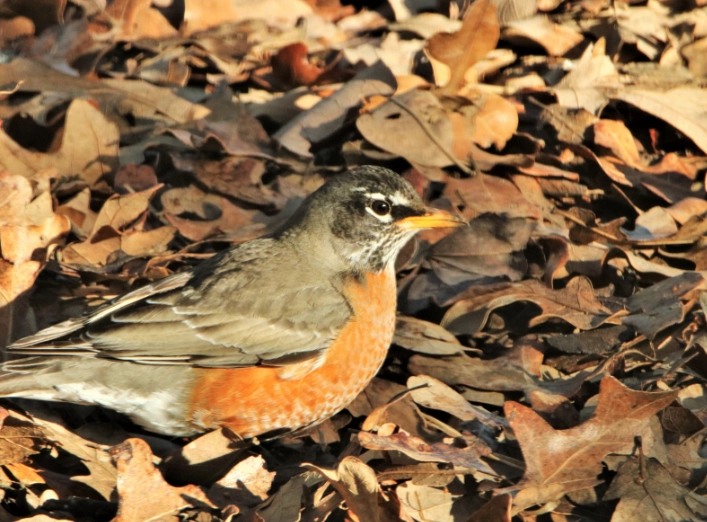
How to Be a Robin-Friendly Gardener
- Delay pruning until late summer or fall to avoid nesting season.
- Go easy on the pesticides. Accept some caterpillar damage—it's baby bird food.
- Keep cats indoors, especially during spring and summer.
- Provide a mud puddle in spring. She'll thank you for the nest-building material.
- Plant native trees and shrubs that produce berries (like junipers, serviceberries, dogwoods) for fall and winter food.
- Consider window treatments (decals, strips) to prevent collisions.
Common Questions About the Female American Robin
A Final Thought on Appreciation
Next time you hear that robin song, take a moment. The singer is the male, putting on a show. But then, look down. Look in the grass, along the garden edge. You might see her—the American robin female, head cocked, listening for worms, or flying by with a beak full of nesting material. She's not just a paler version of the bird in the song. She's the builder, the protector, the provider. Her story is one of resilience, subtle beauty, and monumental effort. She's the quiet force behind one of North America's most beloved bird songs. And now that you know what to look for, you'll never see your backyard robins the same way again.
It changed how I garden, how I watch, and how I appreciate the complexity right outside my window. That's not bad for a bird so many of us take for granted.
Reader Comments