Quick Guide to This Article
- Why the Fear? Understanding the Misconception
- The Anatomy of a Non-Threat: Why Turkey Vultures Aren't Built for Attack
- Turkey Vulture vs. Other Birds of Prey: A Crucial Distinction
- When Might You Have a Problem? (It's Rare)
- Your Action Plan: Encountering a Turkey Vulture
- Clearing Up Common Questions (The FAQ Section)
- The Bigger Picture: Why We Should Appreciate Them
So, you're out on a hike, and you see this huge, dark bird circling overhead. Or maybe you've stumbled upon a group of them hunched over something in a field. Your first thought might be a mix of awe and a little bit of fear. Are turkey vultures aggressive to humans? It's a question that pops into a lot of people's heads, and honestly, it's based on how they look more than how they act.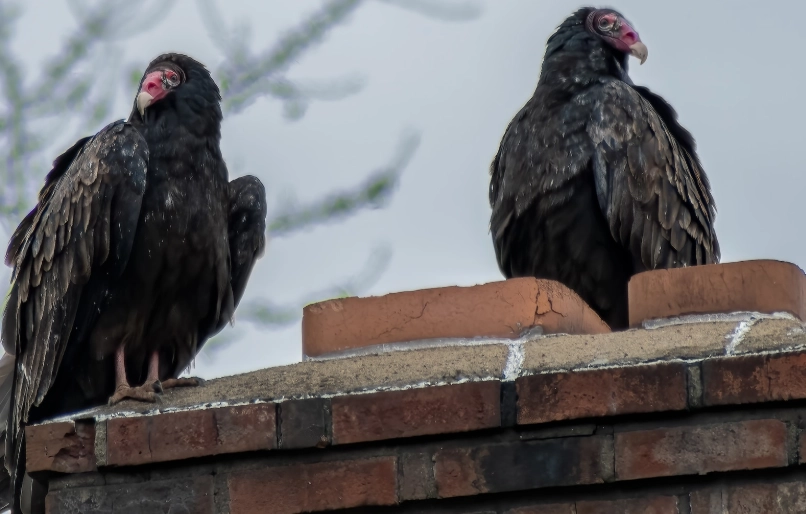
Let me cut to the chase right away.
The short, definitive answer is no. Turkey vultures are not aggressive to humans. In fact, they are among the least aggressive large birds you're likely to encounter in North America. The idea that they might be dangerous is one of the biggest misconceptions about them. They're scavengers, not hunters. Their whole deal is finding things that are already dead, not going after live creatures. Thinking a turkey vulture might attack you is like worrying a garbage truck is going to chase you down the street.
But I get it. Seeing a bird with a six-foot wingspan and a bald, red head can be intimidating. They don't win any beauty contests, and that works against them in the public perception department. This article is here to dig into the why behind their peaceful nature, what they actually do if you get too close, and how to coexist with them without a second thought.
Key Takeaway: Aggression requires intent to harm or dominate. Turkey vultures have zero intent to harm humans. Their behavior is purely defensive or, more often, avoidant.
Why the Fear? Understanding the Misconception
First, we need to unpack where this question even comes from. Why would anyone think a turkey vulture is aggressive?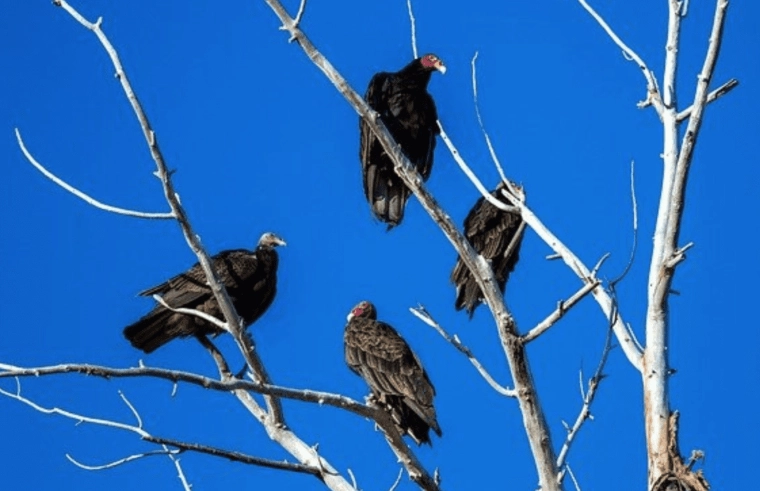
It boils down to a few things:
- Their Appearance: Let's be honest, they look a bit ominous. The featherless red head, the dark plumage, the hooked beak—it's the classic "bird of prey" look in many people's minds. We associate those features with eagles and hawks, which are predators.
- Their Association with Death: They eat dead stuff. That creeps people out. There's an unconscious leap some make from "eats dead things" to "might want to make me a dead thing." It's an emotional, not logical, connection.
- Group Behavior: Seeing a dozen of them gathered, hissing and posturing around a carcass, can look like a threatening scene. It's not aggression; it's a dinner party with some bickering over the best seat.
- Confusion with Other Birds: This is a big one. People often mistake them for hawks, eagles, or even the much rarer (and behaviorally different) black vulture, which can be slightly more brazen.
I remember the first time I saw one up close at a wildlife rehab center. I expected it to be, well, feisty. Instead, it just shuffled away from the keeper's hand, looking more annoyed than anything, like I look when someone wakes me up from a nap. It was a lesson in judging a book by its cover.
The Anatomy of a Non-Threat: Why Turkey Vultures Aren't Built for Attack
If you want to know if an animal is a potential threat, look at its tools. A lion has claws and teeth for hunting. A turkey vulture's body is a masterpiece of specialization for one job: finding and eating carrion as efficiently and safely as possible.
Funny Feet Fact: A turkey vulture's feet look weak and chicken-like. Unlike eagles or hawks, their talons are blunt and not designed for gripping and killing prey. They're for walking and holding down a meal while they eat. You have stronger grips in your hands than they have in their feet.
Their beaks, while sharp and hooked, are designed for tearing into soft, decaying flesh. They're not built for fighting live, struggling animals. Their primary defense isn't attack—it's regurgitation. Yes, you read that right. If seriously threatened, their go-to move is to vomit a foul-smelling concoction of half-digested carrion at the threat. It's a deterrent that works on smell and disgust, not force. Not exactly the move of an aggressive attacker.
Their flight is another clue. They soar for hours on thermal updrafts, conserving energy while they scan the ground with an incredible sense of smell (unique among raptors) for the scent of ethyl mercaptan, a gas produced by decay. This energy-efficient, passive searching method is the opposite of the active, powerful pursuit of a predator.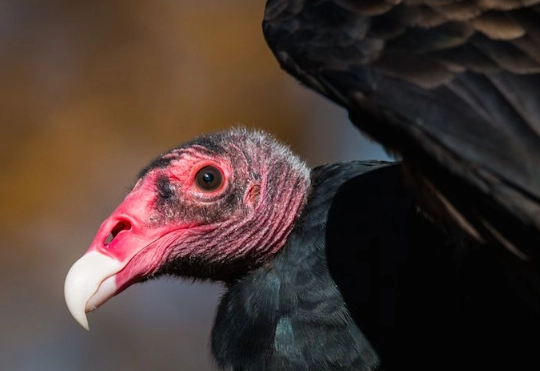
So, What DO They Do When You Approach?
This is the practical part. If you walk towards a turkey vulture, what happens? Let's lay it out.
Their response is a ladder of escalating avoidance, not aggression:
- Watchful Waiting: They'll watch you, maybe tilt their head. They're assessing if you're a threat.
- The Walk-Away: If you keep coming, they will almost always choose to walk away. They're good walkers. They'd rather waddle off than bother with you.
- The Take-Off: If you get too close for comfort (say, within 15-20 feet), they'll launch into the air. Their take-off is awkward and requires a running start. They are vulnerable here, which is why they prefer to leave early.
- Defensive Posturing & Hissing: If cornered (like in a shed or if you got between one and its nest), it may spread its wings to look bigger, hiss loudly, and lunge. This is a bluff. The goal is to scare you off, not make contact.
- The Last Resort: As mentioned, the vomit bomb. This is rare and reserved for extreme, hands-on threats.
Notice that at no point in this sequence is the goal to injure you. The goal is always to create distance. That's the core of it. When people ask, "Are turkey vultures aggressive to humans?" they're picturing a bird diving at their head. That's just not in the turkey vulture playbook.
Turkey Vulture vs. Other Birds of Prey: A Crucial Distinction
This is where a table helps clear things up. Comparing them to actual raptors highlights how different they are.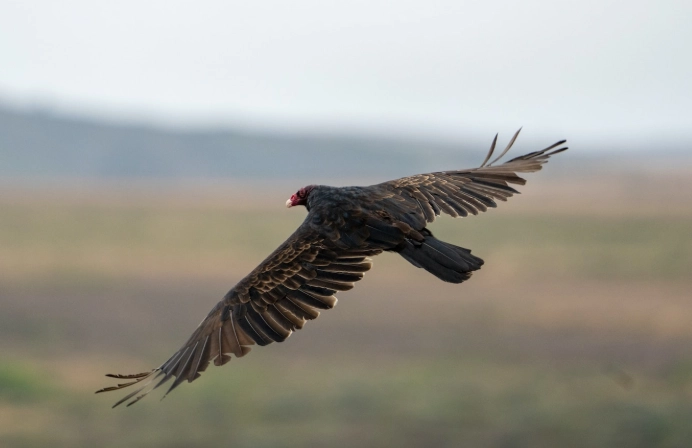
| Behavior/Trait | Turkey Vulture (Scavenger) | Red-tailed Hawk (Predator) |
|---|---|---|
| Primary Diet | Carrion (already dead animals) | Live prey (rodents, rabbits, snakes) |
| Hunting Method | Soaring to smell and locate carcasses | Perch-and-pounce or aerial pursuit |
| Feet & Talons | Weak, blunt, for walking/gripping food | Powerful, sharp, for killing and carrying |
| Response to Humans | Avoidance, retreat, defensive displays | May defend nest aggressively if approached closely |
| Risk to Humans | Virtually none | Very low, but possible defensive strike near nest |
See the difference? It's fundamental. A hawk's biology is wired for catching and killing. A turkey vulture's biology is wired for finding and cleaning up. They occupy completely different niches. The Cornell Lab's All About Birds guide on Turkey Vultures is fantastic for diving deeper into these unique adaptations.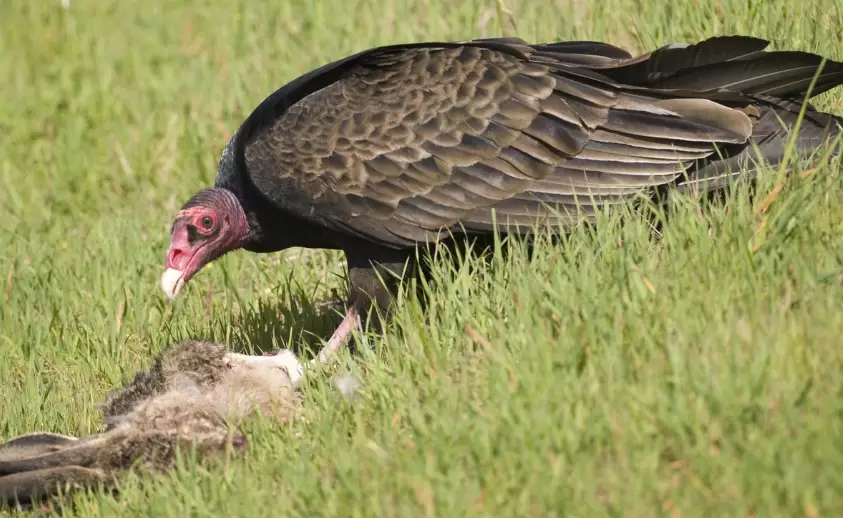
Mixing them up is like confusing a sanitation worker with a big-game hunter.
When Might You Have a Problem? (It's Rare)
Okay, so they're not aggressive. But are there any scenarios where there could be an issue? The problems are almost always caused by us, not them.
Nesting Season Caution
Like any wild animal, a turkey vulture will defend its nest if it feels its young are in immediate danger. They typically nest in remote, secluded places like hollow logs, caves, or abandoned buildings. If you accidentally stumble upon a nest and the parent is present, it may hiss, spread its wings, and bluff-charge to scare you away. The solution is simple: back away calmly. You're in its space.
The "Nuisance" Factor
This is where most human-vulture conflicts arise, and it has nothing to do with aggression. It's about property and mess.
- Roosting Sites: Large groups (called a "wake" of vultures) may choose a convenient stand of trees, a communication tower, or a barn roof to roost for the night. The accumulation of droppings (which are actually quite acidic) can damage paint, roofs, and kill vegetation.
- The Smell: Their defense mechanism is, to put it mildly, pungent. If one vomits on your deck or car, you'll know it.
- Scavenging on Your Property: They might find a roadkill possum in your yard or investigate a compost pile that isn't well-secured.
These are issues of cohabitation, not aggression. The question shifts from "Are turkey vultures aggressive to humans?" to "How can I gently discourage them from using my property as a diner or hotel?" The U.S. Department of Agriculture's Wildlife Services and many state wildlife agencies have helpful, humane guidelines for this. For example, the USDA APHIS Wildlife Damage Management program offers science-based resources on managing wildlife interactions.
Important: Turkey vultures are protected under the Migratory Bird Treaty Act in the United States. It is illegal to harm, kill, or possess them, their eggs, or their nests without a special permit. Any "control" methods must be non-lethal and focus on exclusion and harassment (like using noise makers or spraying them with a hose from a distance to encourage them to move on).
Your Action Plan: Encountering a Turkey Vulture
Let's get super practical. You're face-to-face with one. What do you do?
The Golden Rule: Appreciate from a distance. Give them space, just as you would any wildlife. A good rule is the "one-car-length" rule. If you're within 15-20 feet, you're too close and causing it stress.
If one is on the ground eating:
- Don't approach it. Watch from your car or from far back on the trail.
- Don't try to "shoo" it away. It has every right to be there and is providing a free sanitation service.
- If you have a dog, keep it on a leash. The dog is more likely to bother the vulture than the other way around.
If one is in a building or seems injured:
- For a trapped but healthy bird, open all doors and windows and give it time and space to find its way out.
- If the bird appears injured (can't fly, wing drooping), do not attempt to handle it yourself. Contact a licensed wildlife rehabilitator. You can find one through your state's wildlife agency website or a national directory. Their beaks can cause a nasty cut if they feel threatened and bite in self-defense.
Clearing Up Common Questions (The FAQ Section)
Do turkey vultures carry diseases dangerous to humans?
This is a smart concern. They handle rotting meat, after all. Their incredibly strong stomach acid neutralizes most bacteria and viruses that cause diseases like botulism, anthrax, and cholera. In fact, they help reduce the spread of disease by quickly removing carcasses. The risk of them transmitting something to you is astronomically low, much lower than from a rodent or even a stray dog. Just practice basic hygiene—wash your hands if you touch anything they've been around.
Are they a threat to pets or livestock?
To healthy, adult animals? No. They lack the physical tools to kill a live cat, dog, chicken, or calf. However, there are rare, documented cases (often involving the more opportunistic Black Vulture) of them attacking newborn or severely compromised animals (e.g., during a difficult birth). This is still scavenging behavior on a vulnerable animal, not predation on a healthy one. For the average pet owner, a turkey vulture is not a threat. Your dog barking at it is a bigger problem.
Why do they circle my house?
They're not eyeing you or your pets! They're most likely riding a thermal updraft that happens to be over your neighborhood. Or, they may have smelled something dead nearby—a rodent in the walls, a dead bird in the gutter, or even a gas leak (they're attracted to the smell of ethyl mercaptan, which is added to natural gas). It's worth checking for those things, but it's not a sign of menace.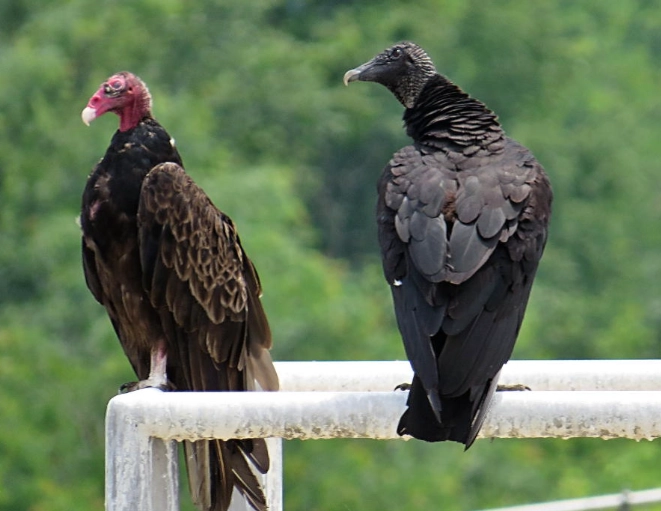
How can I safely attract or observe them?
I don't recommend attracting them, as it can create the nuisance issues mentioned earlier. The best way to observe them is to find their natural hangouts. Look for open fields near wooded areas, especially along highways where roadkill is common. Go out in the late morning when thermals are developing, and look up. You'll see them soaring in lazy circles, rarely flapping their wings. It's a beautiful sight of efficiency.
What's the deal with their bald head?
Pure practicality. Sticking a feathered head into a bloody carcass would be a hygiene nightmare. The bare skin is easier to keep clean and is thought to help with thermoregulation. Evolution's version of a sanitary chef's hat.
The Bigger Picture: Why We Should Appreciate Them
Once you get past the initial "ick" factor, turkey vultures are fascinating and critically important creatures. They are nature's clean-up crew. Without them, dead animals would rot in fields and forests for much longer, spreading disease and attracting less savory pests like rats and feral dogs.
They perform this service for free, asking for nothing in return except to be left alone. They are a success story of adaptation, with unique tools like their keen sense of smell and corrosive stomach acid. Organizations like the HawkWatch International monitor raptor and vulture populations, highlighting their role in healthy ecosystems.
So, the next time you see one, instead of asking, "Are turkey vultures aggressive to humans?" try a different question: "Isn't it amazing that thing can find its lunch from a thousand feet in the air just by smell?"
Shift your perspective from fear to curiosity. Watch the mastery of its flight. Understand that its presence is a sign of a functioning ecosystem, not a threat. Give it the space it deserves, and you'll have witnessed one of North America's most efficient and misunderstood recyclers going about its essential, peaceful business.
Reader Comments