Highlights
- Why Their Flying Style is a Stroke of Genius
- Turkey Vulture vs. The Rest: Your No-Nonsense Comparison Guide
- Beyond the How: The Why of Their Flight
- Where and When to See This Aerial Show
- Capturing the Flight: A Few Photography Thoughts
- Clearing the Air: Common Questions (and Misconceptions)
- A Final Thought From a Fellow Sky Watcher
Let's be honest, the first time you really notice a Turkey Vulture flying, it might not be love at first sight. That wobbling, teetering flight, the almost comical way they hold their wings in a shallow V – it's not the fierce, powerful stoop of a hawk. But stick with me. After years of watching them from my backyard and on hikes, I've come to see their flight not as clumsy, but as pure, elegant efficiency. It's a masterclass in energy conservation, a beautiful adaptation written across the sky. This isn't just about bird identification; it's about understanding one of nature's most misunderstood and fascinating engineers of the air.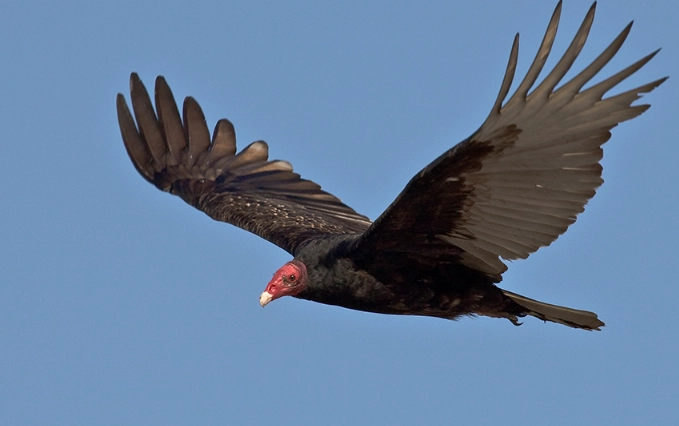
If you've ever looked up, seen a large, dark bird soaring in lazy circles and wondered "Is that an eagle? A hawk?", you're in the right place. We're going to break down everything about Turkey Vulture flight, from the simple tricks to tell them apart from a mile away, to the complex physics that lets them travel hundreds of miles on barely a wingbeat. By the end, you'll see that wobbly silhouette with new eyes.
The One-Second ID Trick
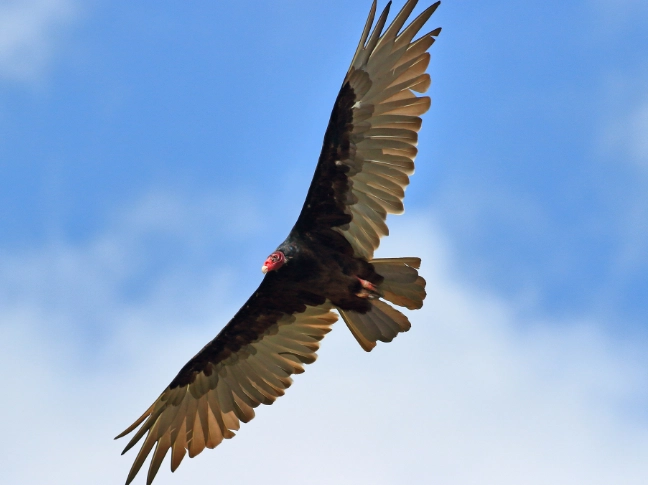
Forget color at first. From below, a soaring Turkey Vulture's wings are two-toned. The trailing edge, from wingtip to body, is distinctly paler than the rest of the wing. It looks like a silvery-gray border. No other large, broad-winged North American bird has this. Combine that with the wobbly, unstable-looking flight, and you've got your ID.
Why Their Flying Style is a Stroke of Genius
That characteristic Turkey Vulture flying style – it's called a dihedral. They hold their wings in a distinct V-shape. It looks unstable, and that's the point. It makes them incredibly sensitive to the slightest puff of air, the smallest thermal bubble. They're like a finely tuned balance, constantly adjusting. This allows them to find and stay in the weakest thermals, the ones that hawks and eagles might not even feel. It's not poor piloting; it's expert-level sensitivity.
Think of them as the ultimate glider pilots, not fighter jets.
Their primary tool is the thermal. As the sun heats the ground, pockets of warm air rise. A Turkey Vulture finds one, spreads those huge wings (we're talking a 6-foot wingspan!), and lets the rising air do the work. They circle tightly to stay within the column. Once they've hit the top, they'll often glide in a straight line, descending slowly, until their keen senses (more on that later) or eyes spot another thermal ahead. This hopscotching across the sky requires almost no muscular energy. It's why you can watch one for an hour and never see a single, purposeful wing flap. A study tracking their flight found they flap their wings less than 1% of their total flight time. Let that sink in.
The Anatomy of a Sky Sailor
- Wings: Long, broad, and perfect for soaring. The finger-like primary feathers at the tips are crucial for fine control in turbulent air.
- Tail: Long and rounded. Acts like a rudder. You'll often see them using subtle tail adjustments to steer while soaring.
- Body: Surprisingly light for their size. Hollow bones and a lack of heavy muscle for flapping make them buoyant in the air.
- Feathers: Dark brown/black. The two-toned underwing is the key visual marker.
This entire design is built for one thing: staying aloft for as long as possible while burning as few calories as possible. For a scavenger that never knows where its next meal is coming from, it's a survival necessity.
Turkey Vulture vs. The Rest: Your No-Nonsense Comparison Guide
This is where most people get tripped up. A dark bird soaring high up – it's easy to jump to conclusions. I've mistakenly called more than a few vultures "eagles" in my time. Here’s the cheat sheet I wish I’d had.
| Bird | Wing Position (Soaring) | Flight Pattern | Wing Shape & Color | Key Turkey Vulture Differentiator |
|---|---|---|---|---|
| Turkey Vulture | Distinct V-shape (Dihedral) | Wobbly, unsteady; constant minor corrections | Long, broad; two-toned silver/black underwing | N/A – This is your baseline. |
| Red-tailed Hawk | Flat or slight lift; wings often pushed forward | Steady, purposeful circles; powerful flaps | Broad, rounded; pale underparts with dark "patagial" bars near shoulder | Steady flight vs. wobbly flight. No two-toned wing. |
| Bald Eagle (Adult) | Flat as a board, straight out to the sides | Powerful, direct; deep, slow wingbeats | Long, broad; all-dark body with stark white head/tail | Flat wings vs. V-shaped wings. Majestic, not wobbly. |
| Black Vulture | Flat with quick, choppy flaps | More rapid wingbeats; less sustained soaring | Shorter, broader; white wingtips only, not two-toned trailing edge | Frequent flapping. White is at the *tips*, not the trailing edge. |
| Common Raven | Varied; often more pointed wing shape visible | Acrobatic; may tumble or roll; heavier flapping | Wedge-shaped tail, narrower pointed wings | Smaller, different silhouette. Tail shape is a dead giveaway. |
See the pattern? The Turkey Vulture flying style is unique. That unstable V is their signature. Once you key in on that, the rest starts to fall into place. I still double-check the underwing color to be sure, but 90% of the time, the flight style tells me first.
Beyond the How: The Why of Their Flight
The Nose Knows: A Flight Powered by Smell
Here's a wild fact: Turkey Vultures have one of the best senses of smell in the bird world. It's rare for birds. They can detect the gasses produced by early decay from incredible altitudes. This is fundamentally linked to their flight. They don't just soar to save energy; they soar to sniff. By cruising at a few hundred feet, they can sample a huge swath of air below them. When they catch a whiff, that soaring pattern changes. They'll make tighter circles, descend, and follow the scent plume downwind to its source. It's a slow, methodical hunt from the air. The Cornell Lab of Ornithology's All About Birds page confirms this unique olfactory ability, setting them apart from most other raptors that rely solely on sight.
Imagine flying a grid pattern over a landscape, not with your eyes, but with your nose. That's their daily commute.
Migration: The Grand Soaring Tour
If you think their daily foraging flight is impressive, wait until migration season. Populations in the northern US and Canada don't tough out the winter. They head south, some traveling all the way to South America. But they don't do it with frantic flapping. They use the same energy-efficient strategy, just on a continental scale.
They follow landforms that generate reliable thermals: mountain ridges, river valleys, coastlines. These "flyways" are like aerial highways of rising air. They'll travel hundreds of miles in a single day, often in large, loose flocks called "kettles." Seeing a kettle of fifty Turkey Vultures all spiraling up in one massive thermal is a breathtaking sight. It's a slow migration compared to a goose's direct flight, but it's perfectly suited to their physiology. You can track these broad-scale movements on resources like the U.S. Fish & Wildlife Service's Feather Atlas, which helps with identification and understanding their range.
Where and When to See This Aerial Show
You don't need to go to a wilderness area. I see them almost daily from my suburban home, riding thermals over the nearby fields.
Prime Turkey Vulture Viewing Times
Time of Day: Late morning to mid-afternoon. Thermals need the sun to heat the ground, so they start forming a few hours after sunrise and peak in the heat of the day. Don't bother looking at dawn or dusk—they'll be roosting.
Weather: Sunny, clear days with some light wind are ideal. Overcast days with stable air mean few thermals, so you'll see less soaring activity. After a storm passes and the sun comes out, it's often prime time as the ground heats up quickly.
Season: Year-round in the southern US. In the north, look for them from spring through fall. Migration periods (early spring and late fall) can yield spectacular numbers.
Look for open areas adjacent to woods or cliffs where they roost and nest. Agricultural fields, highways (sadly, roadkill is a food source), landfills, and river corridors are all hotspots. Just find a place to sit, look up, and scan the sky for that tell-tale wobbly, circling silhouette. Once you spot one, others often appear—they cue in on each other's flight when searching for food.
Capturing the Flight: A Few Photography Thoughts
I'm not a pro photographer, but I've tried my hand at capturing Turkey Vulture flying shots. It's tricky. Their dark feathers blow out the highlights against a bright sky, or you lose all detail in the shadows. My early photos were just black silhouettes.
Here's what I've learned the hard way:
- Lighting is Everything: Shoot with the sun behind you, lighting up the bird's underside. This highlights the two-toned wings. A backlit vulture is just a featureless shadow.
- Underexpose a Bit: Dial down your exposure compensation by a third or two-thirds of a stop. This preserves detail in the black feathers. You can always brighten the shadows in editing.
- Fast Shutter: Even though they soar, they can bank and turn quickly. A shutter speed of 1/1000s or faster will freeze the wingtips and any subtle movement.
- Patience: Let them come to you. Find a good thermal area, set up, and wait for them to circle into your frame. Don't try to chase them.
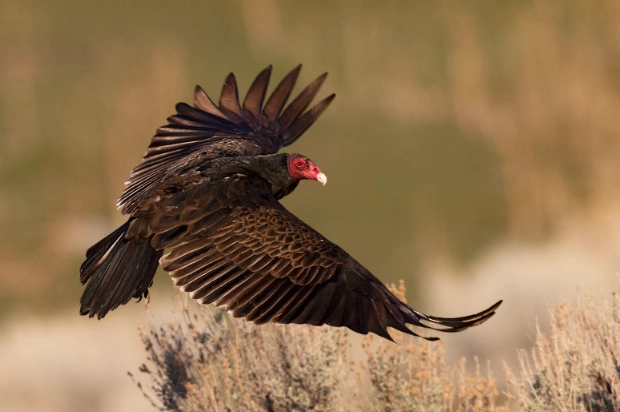
The reward is a photo that shows not just a bird, but a behavior—that unique, energy-saving, dihedral soaring that defines them.
Clearing the Air: Common Questions (and Misconceptions)
A Final Thought From a Fellow Sky Watcher
We often celebrate the predators—the fast, the fierce, the flashy. The Turkey Vulture asks us to appreciate something else: the supremely adapted, the efficient, the essential. Their flight is a lesson in working with the environment, not against it. It's a slow, patient, and utterly brilliant way to travel a world full of ephemeral meals.
The next time you're outside on a sunny day, take a moment to look up. Scan the sky for that wobbly V, that two-toned wing. When you spot it, you're not just seeing a bird. You're watching a master of atmospheric physics, a living glider, and a crucial cleaner of the world below. That Turkey Vulture flying overhead has stories written in the wind, and now, hopefully, you can start to read them.
Happy sky watching.
Reader Comments