Quick Guide
- The Hard Numbers: Why 20 Pounds is a Fantasy for Most Hawks
- The Real Risk: It's About the Attack, Not the Airlift
- How to Actually Protect Your Dog: Practical, Non-Paranoid Advice
- Eagles vs. Hawks: Clearing Up the Confusion
- Your Questions, Answered (The Stuff You're Really Searching For)
- Wrapping It Up: The Bottom Line on Hawks and Dogs
You're out in the backyard with your small dog, maybe a Jack Russell Terrier or a Corgi, and you see a large shadow pass over the grass. You look up and there it is—a big hawk circling overhead. A chill runs down your spine. The question pops into your head, clear as day: Could a hawk pick up a 20 lb dog?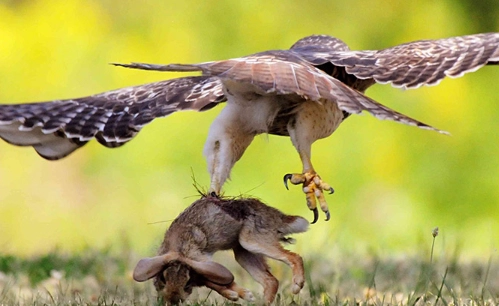
It's not a silly fear. I've been there myself. Years ago, I had a feisty little 15-pound terrier mix named Scout. We lived near some open fields, and seeing red-tailed hawks was a daily occurrence. Every time one soared a bit too low, my heart would skip a beat. I'd usher Scout inside, feeling a mix of protectiveness and maybe a little paranoia. Was I overreacting? That's what sent me down the rabbit hole of researching raptor biology, talking to wildlife experts, and sifting through both scientific data and anecdotal reports.
What I found was more nuanced than a simple yes or no. The short, direct answer to "Could a hawk pick up a 20 lb dog?" is: It's highly improbable for a hawk to successfully lift and carry off a healthy, full-grown 20-pound dog. But—and this is a crucial but—that doesn't mean your pet is completely safe. The real danger lies in the attempt, not the successful aerial extraction.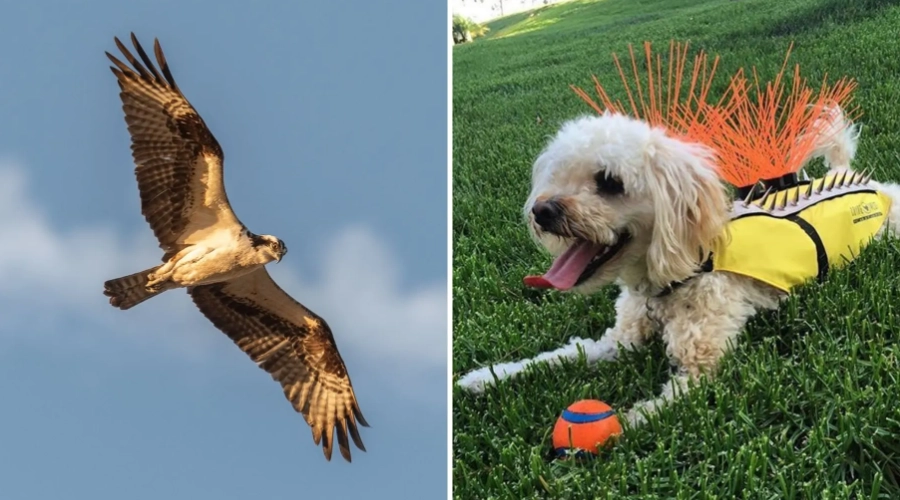
The Hard Numbers: Why 20 Pounds is a Fantasy for Most Hawks
To understand why, we need to talk about the rules of flight and carrying capacity. Birds of prey are marvels of evolution, but they're not superheroes. They operate under strict biological and physical constraints.
The general rule of thumb used by ornithologists is that a raptor can only carry about half its own body weight in flight. Some sources, like the Cornell Lab of Ornithology, are even more conservative, suggesting a carrying capacity of 30-40% of their body weight for sustained flight. Think about that for a second. It means a bird needs to be massively heavy itself to even think about hauling a 20-pound load.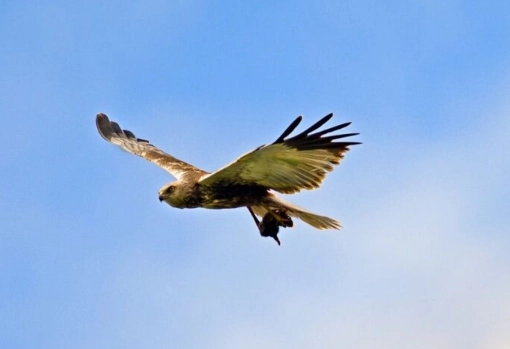
Let's break it down with the most common large hawk in North America, the one you're most likely to see: the Red-tailed Hawk.
| Hawk Species | Average Weight (Female - Larger) | Estimated Max Carry Weight (50% of body weight) | Could it lift a 20 lb (9 kg) dog? |
|---|---|---|---|
| Red-tailed Hawk | 2.5 - 3.5 lbs (1.1 - 1.6 kg) | ~1.25 - 1.75 lbs (0.6 - 0.8 kg) | Absolutely not. The dog is 6-8 times its max capacity. |
| Red-shouldered Hawk | 1.3 lbs (0.6 kg) | ~0.65 lbs (0.3 kg) | No. Targets prey like mice, frogs, small snakes. |
| Ferruginous Hawk (One of the largest) | Up to 4.5 lbs (2 kg) | ~2.25 lbs (1 kg) | No. Still less than a quarter of the dog's weight. |
| Eagle (for Comparison) | Bald Eagle: 10-14 lbs (4.5-6.3 kg) | ~5 - 7 lbs (2.3 - 3.2 kg) | No. Even a mighty Bald Eagle maxes out around half a 20 lb dog's weight. |
See the problem? The math just doesn't work. A 3-pound hawk cannot generate the lift required to fly with a 20-pound animal. It's like expecting a 150-pound person to pick up and run with a 1,000-pound couch. The power-to-weight ratio is all wrong.
So, if someone asks you directly, "Could a hawk pick up a 20 lb dog?", you can confidently say the laws of physics say no. But I need to tell you, the conversation doesn't end there. Focusing solely on the "carrying" part misses the bigger, messier picture of what can actually happen in your backyard.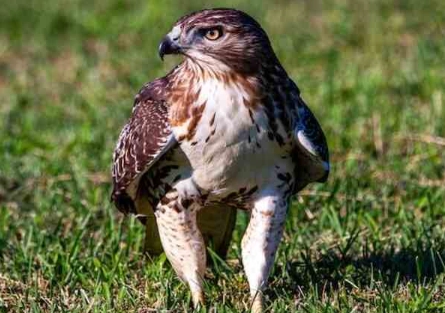
The Real Risk: It's About the Attack, Not the Airlift
This is where pet owners need to pay close attention. While a hawk almost certainly cannot fly off with your 20-pound dog, it can absolutely mistake it for prey, swoop down, and inflict serious, potentially fatal injuries with its powerful talons.
A hawk's talons aren't just for grabbing; they're designed to kill quickly. They exert immense pressure, puncturing vital organs. An attack, even an aborted one, can lead to deep puncture wounds, lacerations, broken bones, and severe trauma. For a small dog, this can be catastrophic, regardless of whether it leaves the ground.
I remember reading a news report from a suburban area where a large Red-tail attacked a 12-pound miniature poodle. The dog survived, but needed extensive stitches and was traumatized for weeks. The owner said the hawk tried to lift it, couldn't, and released it after a few seconds of struggle. The dog was never airborne, but the damage was done. That story stuck with me because it perfectly illustrated the gap between popular fear and reality. The fear is the dog being carried away. The reality is the dog being hurt on the ground.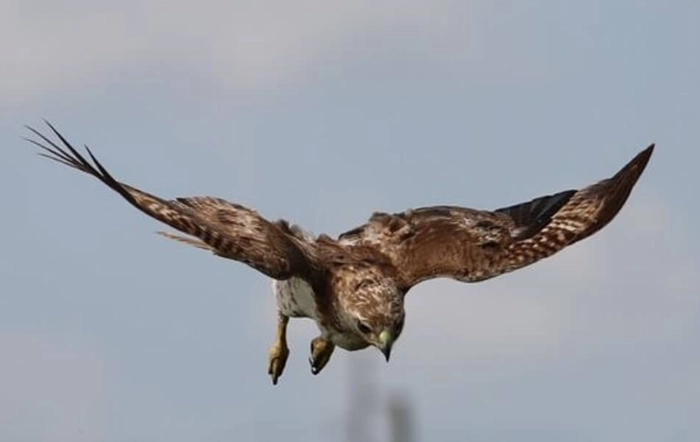
So, let's reframe the core question. Instead of just "Could a hawk pick up a 20 lb dog?", we should be asking: "Under what circumstances could a hawk pose a threat to a dog of this size?"
Factors That Increase the Risk of an Attack
Hawks are opportunistic. They don't have a scale, but they do assess risk versus reward. Certain conditions can make a smaller or vulnerable-looking 20 lb dog seem like a potential target.
- The Dog's Profile and Behavior: A very petite-framed 20 lb dog (like a skinny Italian Greyhound) might look more like a large rabbit than a sturdy 20 lb Boston Terrier. Puppies, senior dogs, or dogs with mobility issues appear more vulnerable. A dog scurrying in a zig-zag pattern mimics prey behavior.
- Hunger and Desperation: In harsh winters or in areas where natural prey is scarce, a hawk might take a risk it normally wouldn't. A starving animal's judgment isn't always optimal.
- Nesting Season: This is a big one. A parent hawk defending a nest nearby is incredibly aggressive and perceives any animal, including a dog, as a threat to its chicks. It may dive-bomb (strike with feet) to drive the threat away, causing injury.
- Misidentification: From a high vantage point, a small, dark-colored dog moving through tall grass could be mistaken for a groundhog or other large rodent.
You see, the query "hawk pick up dog" often comes from a place of deep-seated worry. People aren't just looking for a physics lesson; they're looking for reassurance and practical steps to protect a member of their family. Let's get into that.
How to Actually Protect Your Dog: Practical, Non-Paranoid Advice
Based on everything we've discussed, here's what actually works. Forget the sensationalized stuff; focus on being a smart, observant pet parent.
- Supervision is Non-Negotiable: This is your number one defense. Don't leave small dogs (and yes, a 20 lb dog qualifies as "small" to a raptor) unattended in open yards, especially during dawn and dusk when hawks are most active. Be present.
- Create Covered Spaces: If your dog spends time in the yard, ensure there's a covered patio, gazebo, or even a large patio umbrella they can retreat to. Hawks prefer open strike zones with clear escape routes.
- Use a Lead or Create a Run: A simple overhead wire run with a lead gives your dog space but keeps them from roaming into the most open parts of the yard. It's a simple, effective physical barrier during potty breaks.
- Landscaping as a Deterrent: Hawks avoid dense, tangled areas where their exit might be blocked. Planting shrubbery or creating a small, enclosed garden space gives your dog a safe haven.
- Deterrents That (Sometimes) Work: Reflective objects like old CDs, wind chimes, or dedicated reflective tape can create visual disturbances that hawks dislike. Scarecrows or owl decoys need to be moved frequently, or hawks quickly realize they're fake. I'm skeptical of their long-term value, but some people swear by them.
- Dress for (Non-)Success: This one sounds odd, but it's backed by anecdotal evidence from small dog owners. A brightly colored vest or jacket can break up your dog's natural "prey animal" silhouette, making it look less like food and more like a weird, unidentifiable object. A coyote vest, which has spikes or ruffles, is a more extreme product designed for this purpose.
Look, the goal isn't to wage war on hawks. They're protected under the Migratory Bird Treaty Act, and harming them is illegal. The goal is coexistence through smart management. You can appreciate their beauty from afar while taking sensible steps to keep your pet safe.
Eagles vs. Hawks: Clearing Up the Confusion
When people imagine a bird carrying off a dog, they're often picturing an eagle, not a hawk. This confusion fuels a lot of the anxiety. So let's separate fact from fiction.
Eagles are in a different weight class entirely. A female Bald Eagle can weigh over 12 pounds. Their carrying capacity is higher, but even the most optimistic estimates from places like the National Eagle Center put their comfortable lift capacity at around 4-5 pounds. They can maybe drag a heavier fish or animal to shore, but sustained flight with heavy weight is a different story.
There are documented, though very rare, cases of large Golden Eagles (which are more terrestrial hunters in some regions) taking young deer or pronghorn fawns, which can weigh 10+ pounds. These are exceptional events involving the largest eagles and vulnerable young animals. They are not the norm for a suburban backyard.
So, could an eagle pick up a 20 lb dog? Still no.
But an eagle could certainly attack one and cause grave harm. The same protective principles apply, though eagle encounters in residential areas are far less common than hawk encounters for most people.
Your Questions, Answered (The Stuff You're Really Searching For)
Let's tackle some of the specific, worried questions that pop up around this topic. These are the ones I had, and the ones I see other dog owners asking online.
What size dog is at real risk of being carried away?
This is the logical next question after "Could a hawk pick up a 20 lb dog?". The realistic risk threshold for being lifted is very low. We're talking about animals under 5 pounds, like very small toy breed puppies, chicks, or tiny adult dogs like teacup Yorkies. A hawk might successfully lift a 2-3 pound animal. This is why it's crucial to supervise animals under 10 pounds at all times. For context, a standard squirrel weighs about 1-1.5 pounds.
My dog is 15 lbs. Is that safe?
Safer than a 5 lb dog, but not immune to attack. A 15 lb dog is still well beyond any hawk's lifting capacity. However, all the attack risks we discussed earlier still apply. A 15 lb dog is firmly in the "could be injured on the ground" category, not the "could be flown away" category. Don't let the false security of a few extra pounds make you complacent about supervision.
What about cats? Are they more at risk?
Unfortunately, yes. Cats, especially smaller ones or kittens, fall more squarely into the weight range a large hawk might target. Furthermore, cats' natural behavior—sneaking, pouncing, sitting still in gardens—makes them resemble natural prey more than a leashed or human-accompanied dog often does. The same protective measures (keeping them indoors or in secure catios) are strongly recommended.
I saw a hawk in my yard. Should I be terrified?
No. Be alert, not terrified. A hawk passing through or perching in a tree is just a wild animal using its environment. It's not necessarily "scoping out" your dog. Terror leads to irrational actions. Alertness leads to you calmly calling your dog inside for a few minutes until the bird moves on. I had to learn this difference myself.
What should I do if a hawk actually attacks my dog?
Do not run away. Your instinct will be to scream and maybe even run toward your dog. That's actually the right move. Hawks are wary of humans. Yell, wave your arms, make yourself big and loud. Throw a jacket or a nearby object (not at the bird, but near it) to startle it. The goal is to break its focus. Once the bird releases its grip or breaks off the dive, get your dog to safety immediately and check for injuries. Contact your vet right away, even for small punctures, as bird talons carry bacteria.
Wrapping It Up: The Bottom Line on Hawks and Dogs
Let's tie this all together. The image of a hawk snatching a full-grown small dog from a backyard is a powerful and scary myth, but it's rooted in a misunderstanding of animal capabilities.
To directly answer the title's question one last time: Could a hawk pick up a 20 lb dog? No, it cannot. The biomechanics of flight make it a physical impossibility for the hawk species common to backyards across North America.
The real-world risk is different, but still manageable. The risk is of a defensive or mistaken-identity attack that can cause serious injury on the ground. This risk is higher for very small pets (under ~10 lbs) and in specific situations like nesting season.
The solution isn't living in fear or trying to rid your area of protected wildlife. The solution is simple, proactive stewardship: supervise your pets in open areas, provide covered shelter, and understand the behavior of the wildlife around you. You can enjoy watching a hawk soar on a thermal updraft while also knowing your furry friend is safe and sound at your side.
After all my research and my own experiences, I feel a lot more respect for hawks and a lot less anxiety. They're amazing creatures doing what they've done for millennia. My job isn't to stop them from being hawks; my job is to be a responsible dog owner. Knowing the true answer to "could a hawk pick up a 20 lb dog?" is the first step in doing that job well.
Reader Comments