Quick Guide
- What Does a Black Vulture Actually Look Like? Spotting the Details
- The Great Lookalike Debate: Black Vulture vs. Turkey Vulture
- Where Do These Birds Call Home? Habitat and Range
- How Do Black Vultures Live? Behavior and Social Life
- What's on the Menu? Diet and Feeding Habits
- From Egg to Sky: Reproduction and Life Cycle
- Why Should We Care? Ecological Importance and Threats
- How to Responsibly Watch and Appreciate Black Vultures
- Frequently Asked Questions About Black Vultures
Let's be honest, vultures don't usually top anyone's list of favorite birds. They're often seen as grim, ugly, and a little bit creepy. I used to think that way too, until I spent a few afternoons watching a local roost. There's something fascinating about them, especially the black vulture. They're not just nature's cleanup crew; they're smart, social, and surprisingly complex. If you've ever seen a large, all-black bird with a sort of wrinkled, gray head soaring in circles, you've probably met one. This isn't just another bird guide. We're going to dig into everything that makes the black vulture (scientific name: Coragyps atratus) one of the most misunderstood yet essential characters in the American landscape.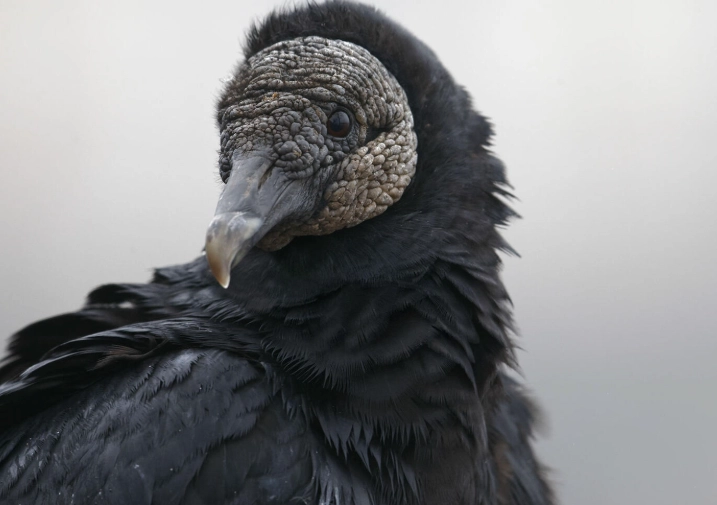
Why should you care? Well, if you're into hiking, birding, or just spend time outdoors in the eastern U.S. or down south, you're going to see them. Knowing what you're looking at makes the experience richer. More importantly, these birds face a lot of challenges, and understanding them is the first step to appreciating and protecting them.
Quick Take: The black vulture is a New World vulture, meaning it's native to the Americas. It's a social scavenger, often seen in groups, and relies heavily on its eyesight (not smell) to find food. They're a permanent resident across much of their range, so you can see them year-round.
What Does a Black Vulture Actually Look Like? Spotting the Details
From a distance, a black vulture is just that—a big, black bird. But get a closer look (binoculars help), and the details pop. Their body is covered in sooty black feathers that often have a slight silvery sheen on the back when the sun hits them just right. The head is the real giveaway. It's bare, with wrinkled, dark gray to black skin. It looks a bit like an old, bald man's scalp, which isn't the most flattering comparison, but it's accurate. This bald head is a brilliant adaptation for hygiene—no feathers to get matted with blood and gunk when they're feeding inside a carcass.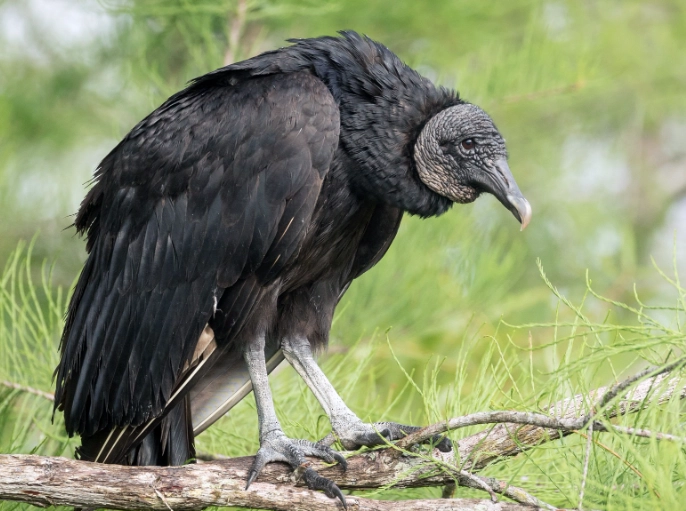
In flight, they have a distinctive profile. Their wings are broad but relatively short, and they hold them fairly flat while soaring, with the wingtips splayed out like fingers. You'll often see bright white patches at the very tips of their wings. These are like built-in name tags. When they're perched, you can see their stout legs and feet, which are a pale grayish-white. Their beak is fairly short and hooked, perfect for tearing, but not as robust as a hawk's.
Size-wise, they're impressive but not monstrous.
They have a wingspan of about 4.5 to 5 feet—imagine a child standing with arms outstretched. Their body is about 2 feet long. They're heavy for their wing size, which is why their flight often includes quick, frantic flaps interspersed with glides. It looks like hard work compared to the effortless soaring of a turkey vulture.
The Great Lookalike Debate: Black Vulture vs. Turkey Vulture
This is the number one question people have. You see a big dark bird circling overhead—which one is it? Mixing them up is a rite of passage for new birders. I've done it plenty of times. Here’s the breakdown that finally helped me get it straight.
| Feature | Black Vulture | Turkey Vulture |
|---|---|---|
| Head Color | Dark gray to black, often looks uniform. | Bright red, similar to a wild turkey's head. |
| In-Flight Silhouette | Wings held flat. Short, square tail. White wingtips visible from below. | Wings held in a shallow "V" (dihedral). Long, rounded tail. Two-toned wings (dark leading edge, silvery flight feathers). |
| Flight Style | More flapping. Quick, choppy wingbeats followed by short glides. | Graceful, effortless soaring. Rarely flaps. Rocks side-to-side in wind. |
| Size & Build | More compact, stockier build. Shorter wings. | Lankier, with longer, more slender wings. |
| Key Behavior | Very social. Often in large, noisy groups. | Often solitary or in loose flocks. Relies on smell to find food. |
The most reliable trick for me is the flight profile. If the wings are in a V and it's rocking unsteadily, it's almost certainly a turkey vulture. If the wings are flat, the tail is short and square, and you see those bright white patches at the tips, you've got a black vulture. Simple, right? It gets easier with practice.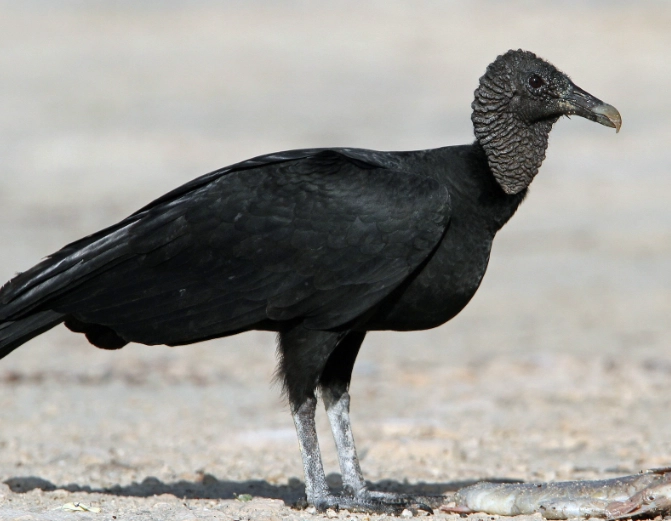
Where Do These Birds Call Home? Habitat and Range
Black vultures are true homebodies of the Americas. They're not big on long-distance migration. While some northern populations might shift south a bit in harsh winters, most stick around their territory year-round. Their stronghold is the southeastern United States, but they've been steadily expanding their range northward and westward over the past few decades. You can now find them regularly as far north as southern Pennsylvania and the Midwest, and their range stretches all the way down through Central America to the very south of South America.
They're not picky about real estate, which is part of the reason for their success. You'll find them in a real mix of places:
- Open Country: Pastures, agricultural fields, and grasslands are prime foraging grounds.
- Forest Edges: They like being near woods for roosting and nesting but need open areas to hunt by sight.
- Suburban and Even Urban Areas: This is a big one. They've adapted incredibly well to human landscapes. Landfills, roadside ditches (unfortunately), and even parks in larger cities can attract them. I've seen them perched on cell phone towers and office building roofs, looking utterly unconcerned by the traffic below.
- Lowland Areas: They generally avoid high mountains, preferring valleys, coastal plains, and deserts.
Best Places to See Them: Look for communal roosts at dawn or dusk. These are often in dense, sheltered stands of trees, sometimes near water. In winter, dozens or even hundreds of black vultures might gather at a single roost. It's an impressive, if slightly eerie, sight. Reliable spots include wildlife management areas, large parks on the edges of cities, and near major river systems.
How Do Black Vultures Live? Behavior and Social Life
If turkey vultures are the solitary, wandering loners, black vultures are the rowdy, tight-knit gang. Their social structure is one of the coolest things about them. They are intensely gregarious. You'll rarely see just one; they feed, fly, and roost in groups. This isn't just for company—it's a survival strategy.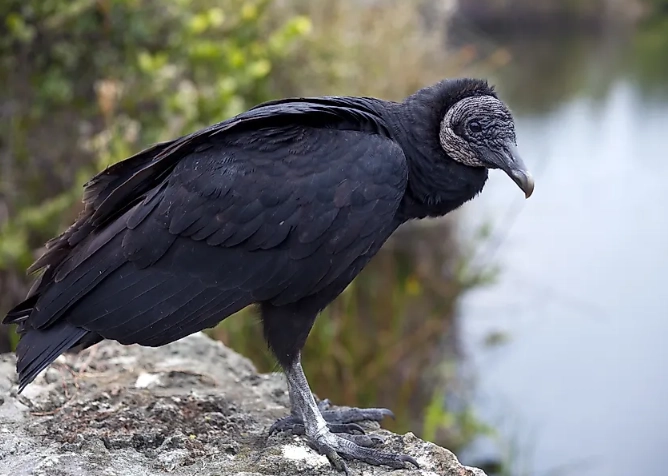
Let's talk about finding dinner. Unlike their turkey vulture cousins who have a super-powered sense of smell (thanks to large olfactory bulbs in their brain, as detailed by researchers at the Cornell Lab of Ornithology), black vultures have a pretty poor sense of smell. They hunt primarily by sight. This is where the gang mentality pays off. They'll often follow turkey vultures to a carcass. The turkey vulture smells it out, and the black vultures, watching from above, see the turkey vulture descend and then swoop in to claim the prize. It sounds sneaky, and it kind of is. They're not afraid to use their numbers to bully a single turkey vulture off a find.
Once at the carcass, their social hierarchy kicks in. Larger, more dominant birds eat first. There's a lot of posturing, hissing, and jostling. It's not a peaceful picnic. But this system works. Their powerful beaks can tear through tough hide that other scavengers can't manage, opening up the meal for a whole host of smaller creatures.
They're also surprisingly intelligent.
I've watched them solve simple problems, like how to get at food placed under a light mesh. Studies have shown they have good cognitive abilities for a bird. Their roosts are centers of social activity—it's where they rest, preen each other (a behavior called allopreening), and probably exchange information about good feeding sites. Think of it as a combination of a dormitory and a community bulletin board.
What's on the Menu? Diet and Feeding Habits
Here's where the "yuck" factor comes in for most people. Yes, black vultures are obligate scavengers. That means almost 100% of their diet is dead stuff (carrion). They are nature's most efficient recycling program. They prefer fresh carcasses but will eat decaying meat if that's what's available. Their stomach acid is incredibly corrosive, allowing them to safely digest bacteria like botulism and cholera that would kill most other animals. This isn't just convenient for them; it's a critical public health service, stopping the spread of disease.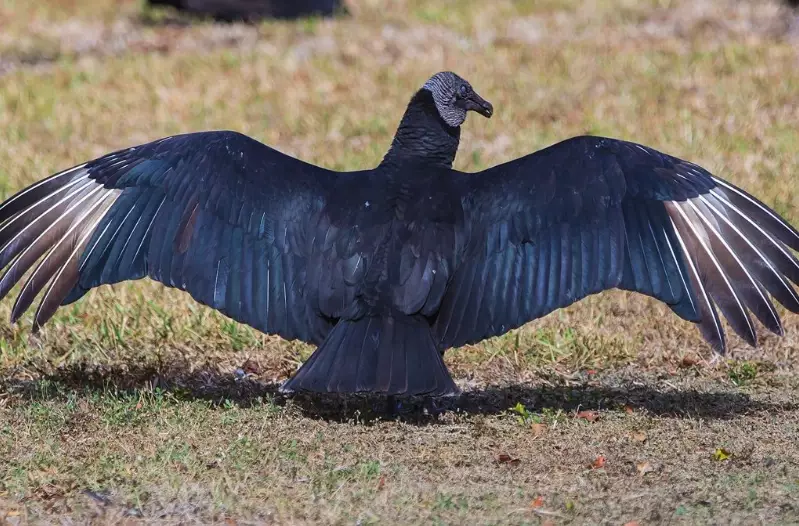
Their menu isn't *only* roadkill deer and opossums, though that's a big part of it. They'll also eat:
- Dead livestock (cows, pigs) in agricultural areas.
- Fish washed up on shorelines.
- Garbage from landfills (an unfortunate modern adaptation).
- Very, very rarely, they might kill and eat newborn or severely weakened mammals, birds, or reptiles. This behavior is exaggerated in folklore. They are not active predators of healthy animals.
A Note on Conflicts: This rare predatory behavior is the source of most conflicts with farmers, particularly those with newborn livestock like calves and lambs. While verified cases exist, they are not the norm. The USDA Wildlife Services provides resources on non-lethal management techniques, as black vultures are federally protected under the Migratory Bird Treaty Act.
They don't have a crop (a storage pouch in the throat) like some birds, so they gorge themselves until they're almost too heavy to fly, then find a quiet perch to digest. You might see them sitting with their wings spread out—this is called the "horaltic pose," and it's thought to help with digestion, dry their wings, or bake off bacteria. Maybe all three.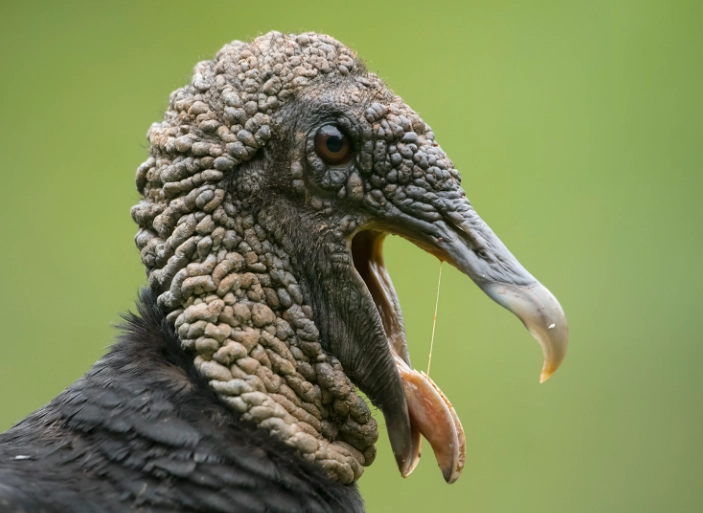
From Egg to Sky: Reproduction and Life Cycle
Black vultures are monogamous and often mate for life, which is a sweet contrast to their grisly dining habits. Their breeding season is loosely tied to spring, but in warmer climates, it can happen almost any time of year. They don't build fancy nests. In fact, they don't build nests at all. They are what's called "ground nesters," but they usually choose very protected spots.
The female will lay her eggs (usually two, sometimes just one) directly on the ground in a sheltered location. This could be inside a hollow log, in a thicket, in an abandoned building, under a rock overhang, or even in a dark crawlspace. The key is concealment and protection from the elements and predators. Both parents take turns incubating the eggs for about 38-39 days.
The chicks, called nestlings, are altricial—meaning they are born helpless, covered in white down, and completely dependent on their parents. This is a vulnerable time. The parents regurgitate partially digested food for them. The chicks grow slowly, staying in or near the nest site for about 10-11 weeks before they make their first clumsy flights, a process called fledging.
Even after fledging, the young birds stick with their parents for many more months, sometimes up to eight, learning how to find food and navigate the social rules of the roost. They don't reach sexual maturity until they are about five years old. In the wild, if they make it past the risky first few years, they can live a surprisingly long time—20 years or more. One of the longest-lived black vultures on record was over 25 years old in captivity.
Why Should We Care? Ecological Importance and Threats
This is the heart of the matter. Black vultures provide an absolutely vital, free ecosystem service. They are the ultimate clean-up crew. By rapidly consuming dead animals, they prevent the spread of dangerous pathogens like anthrax, rabies, and brucellosis. They help cycle nutrients back into the soil. Imagine a landscape without scavengers—it would be littered with decaying carcasses, buzzing with flies, and reeking of disease. They do this dirty work silently and efficiently.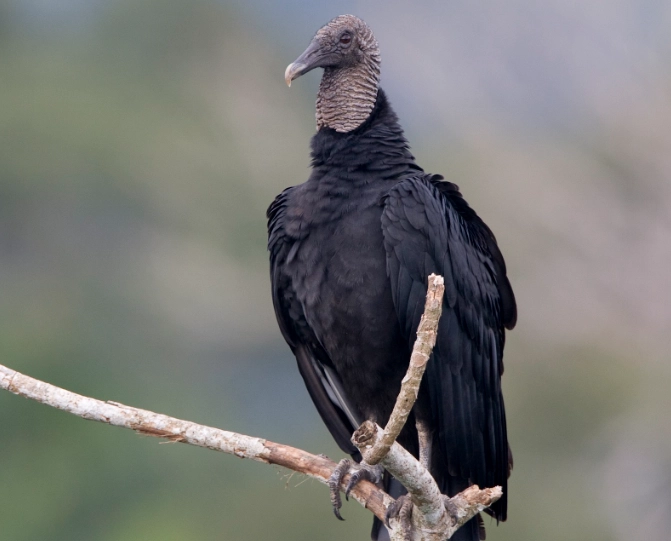
Despite their toughness, they face serious threats, many of them human-caused:
- Poisoning: This is the big one. They can be secondary victims of poison baits left for coyotes or other predators. They also sometimes ingest lead bullet fragments left in gut piles from hunters, suffering from lead poisoning just like eagles and condors.
- Vehicle Collisions: Feeding on roadkill is a dangerous game. Many black vultures are hit by cars while feeding or are killed when they are startled and fly into traffic.
- Habitat Loss: While adaptable, loss of large, undisturbed forest tracts for roosting and nesting can impact local populations.
- Persecution: Due to misunderstandings about their role (and the rare livestock conflicts), they are sometimes illegally shot.
- Wind Turbines and Power Lines: Collisions with energy infrastructure are an emerging threat.
The good news? They are currently listed as Least Concern by the International Union for Conservation of Nature (IUCN) due to their large and expanding population. But that doesn't mean we can be complacent. Their success story is fragile and depends on continued legal protection and public understanding.
How to Responsibly Watch and Appreciate Black Vultures
So you want to see a black vulture? Great! Here's how to do it ethically and get the most out of the experience.
- Timing is Everything: Early morning and late afternoon are best. That's when they are most active—flying out from roosts or heading back to them.
- Look Up: Scan the skies, especially over open fields, near highways (sadly, because of roadkill), and around bodies of water.
- Listen: They are not songbirds, but they do make sounds. At a roost or carcass, you might hear low hisses, grunts, and even barking sounds. It's a unique audio cue.
- Use Binoculars: This lets you see the details—the wrinkled head, the white wingtips—without disturbing them.
- Keep Your Distance: Never approach a roost or feeding site too closely. It stresses the birds and may cause them to abandon a valuable food source or, worse, a nest with eggs or chicks. Use your zoom lens for photos.
- Report Banded Birds:
If you see a black vulture with a colored wing tag or a leg band, you can report it to the USGS Bird Banding Laboratory. This provides crucial data for scientists studying their movements and population health.
Watching them can be genuinely captivating. See if you can spot their social interactions. Who defers to whom? How do they communicate at the carcass? It's a raw, unfiltered look at nature's cycles.
Frequently Asked Questions About Black Vultures
When you start to see them not as ominous symbols but as intelligent, social, and hardworking members of the ecosystem, your whole perspective shifts. They are survivors, adapters, and essential custodians of the environment. The next time you see that dark shape circling, take a moment. Look for the flat wings and the white tips. Watch how it interacts with its flock. You're not just looking at a scavenger; you're looking at a vital thread in the web of life, doing a job none of us would want, but one we all desperately need done.
Reader Comments