Quick Overview
Let's be honest. Spotting a hawk is always a thrill. That powerful silhouette against the sky just screams wilderness. But then you get a closer look through your binoculars, and confusion sets in. Where's the famous red tail? This one is mostly brown, streaky, and looks... kind of messy. Congratulations, you've probably met a juvenile Red-tailed Hawk.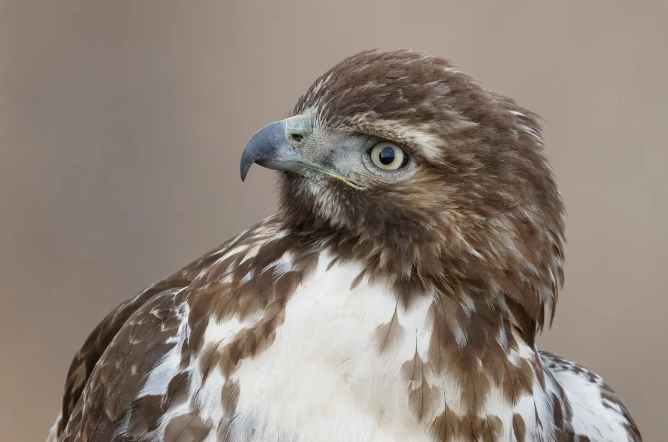
I can't tell you how many times I've been in the field with new birders who get tripped up by these teenagers of the hawk world. Even experienced eyes can pause for a second. They're like the awkward adolescents of the raptor scene—all legs, loud, and dressed in confusing feathers that don't quite match their parents' sleek outfits. This guide is everything I wish I'd known when I started puzzling over them years ago.
We're going to dive deep into what makes a juvenile Red-tailed Hawk tick. It's not just about color. We'll talk about their eyes (a dead giveaway), their behavior (they can be real complainers), and the fascinating, risky journey they take from a downy nestling to an independent hunter. By the end, you'll not only be able to spot one a mile away, but you'll understand the story behind the feathers.
Spotting the Kid: Key Identification Features of a Juvenile Red-Tailed Hawk
Forget the red tail for a minute. That's an adult badge of honor. A juvenile Red-tailed Hawk is playing a different game entirely. Their plumage is designed for camouflage, not communication. Think about it—a clumsy, inexperienced bird needs all the help it can get to avoid trouble.
The overall impression is a brown, streaky, and somewhat "busy" looking hawk. The most consistent feature? A tail that is finely banded with dark brown on a paler brown background. From below, you'll see multiple narrow dark bands. From above, it might just look dark. But that famous rusty-red tail? It won't show up until after their first molt, when they're about a year old.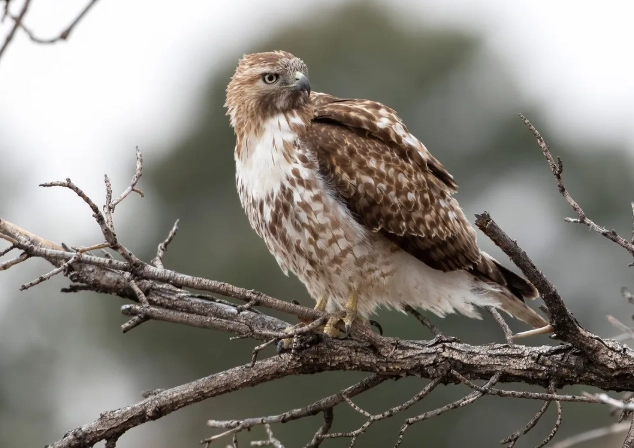
The Eyes Have It
This is my absolute favorite clue, and it's surprisingly reliable. While adult Red-tailed Hawks have those intense, dark brown eyes that seem to look right through you, a juvenile has pale eyes. We're talking a yellowish-hazel color. It gives them a slightly different expression—still fierce, but maybe a touch more curious or naive-looking. It's a stark contrast that you learn to spot quickly.
Their cere (that fleshy bit at the base of the beak) and their legs are also a bright yellow, often a more vivid, fresh yellow compared to the sometimes-duller yellow of some adults.
Quick ID Checklist for a Juvenile Red-tail:
- Tail: Multi-banded brown, NOT red.
- Body: Brown upperparts with white speckles. Whitish underparts with a heavy, messy brown "belly band" of streaks (this is variable, but usually present).
- Head: Often a paler, streaky head. The dark "commas" or patagial marks along the front edge of the underwing are usually present but can be fainter.
- Eyes: Pale yellow or hazel. This is huge.
- Behavior: Often vocal, perched in exposed but not always optimal spots, may look less confident in flight.
In Flight Silhouette
In flight, the shape is classic Buteo—broad, rounded wings and a short, fan-like tail. The lack of the red tail is obvious from above. From below, look for those multiple bands on the tail. The wing linings (the underwing coverts) are often heavily streaked or blotched, making the underwings look less clean-cut than an adult's. Sometimes, you can see a bit of a lighter area on the upper back, between the wings—birders sometimes call this a "backpack."
It's worth noting that plumage can be highly variable across different subspecies and color morphs (like the dark "Harlan's" type). A juvenile Red-tailed Hawk from the western U.S. might look different from one in the east. But the eye color and banded tail remain the foundational clues.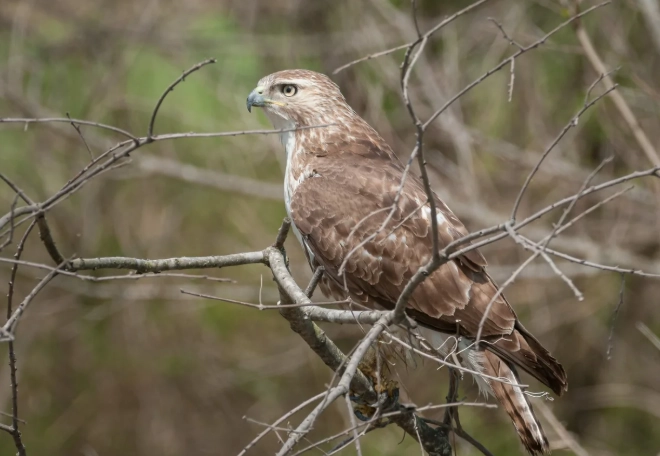
From Squawk to Soar: The Life of a Juvenile Red-Tailed Hawk
Okay, so you can identify one. But what's its life actually like? This period—from leaving the nest to reaching full adulthood—is the most dangerous time in a hawk's life. The mortality rate is high. They're all instinct and very little practice.
The Fledgling Phase (The Noisy Neighbor)
This is when you're most likely to notice them. About 6-7 weeks after hatching, these big, fuzzy chicks take the plunge. They can't fly well at first. They hop along branches, make short, clumsy flights, and end up on low perches or even on the ground. And they are loud.
A persistent, high-pitched, begging whistle—"kleee-eeee-arrr"—is the soundtrack of summer in hawk territory. It's a demand for food. The parents are still hunting for them, and the kids make sure everyone knows where the delivery should go. If you hear this incessant calling, scan nearby trees. You'll often find a plump, streaky juvenile Red-tailed Hawk, wings slightly drooped, yelling at the world.
What to do if you find a fledgling on the ground? Usually, nothing. It's normal. The parents know where it is and will feed it. Only intervene if it's in immediate danger (like on a road) or visibly injured. If you must move it, place it on a safe, elevated branch nearby. Most wildlife rehab centers are flooded with "rescued" healthy fledglings every summer.
Learning the Ropes: Hunting and Survival
This is the tough part. Over the next few weeks, the parents start bringing less food, or bringing live prey that the juvenile has to subdue itself. I've watched comical, almost tragic scenes of a young Red-tailed Hawk juvenile pouncing on a mouse five times, only to have it escape each time. They have the tools—the strong feet, the sharp beak—but not the refined skill.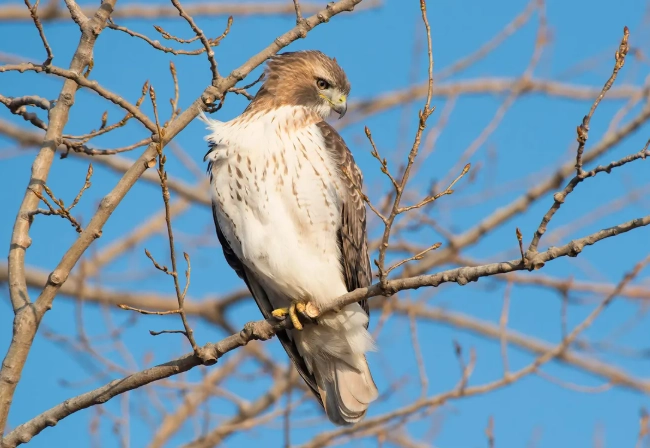
They practice on easy targets: insects, worms, already-dead carrion. Their flight skills improve dramatically. They learn to ride thermals, that rising warm air that lets them soar with minimal effort. But judgment? That takes longer. I once saw one try to land on a thin power line, wobble wildly, and barely recover. You learn by doing, and sometimes doing means almost failing.
Their territory is huge now. They may wander far from their natal area, which is why you might see a juvenile Red-tailed Hawk in a suburban park or over farmland where no nests are obvious. They're dispersing, looking for their own place in the world.
Juvenile vs. Adult Red-Tailed Hawk: A Side-by-Side Comparison
Sometimes, the best way to learn is to see the differences laid out. If you're asking "is that a juvenile vs adult red-tailed hawk?" this table should help clear things up. It's not just one thing; it's a combination of clues.
| Feature | Juvenile Red-Tailed Hawk | Adult Red-Tailed Hawk |
|---|---|---|
| Tail Color | Brown with multiple thin, dark bands. | Rich, rusty-red to cinnamon (upper side). From below, may appear pale with a dark band near the end. |
| Eye Color | Pale yellow or hazel. A key identifier. | Dark brown, often appearing almost black. |
| Plumage | Overall browner and streakier. Messy belly band. White speckles on back. | Cleaner, more defined. Belly band is usually neater. Adults can have a dark "V" on the back formed by the scapular feathers. |
| Breast/Belly | Typically a heavy, diffuse band of brown streaks. | A clearer, often more solid-looking dark band across the belly. |
| Behavior (Summer/Fall) | Often vocal, begging. May be perched in less optimal spots. Flight can seem less assured. | Quiet unless defending territory. Perches with authority. Smooth, confident flight. |
| Primary Purpose of Look | Camouflage and survival. | Display and species recognition. |
See? It's a whole package deal. The pale eyes and banded tail together are the most foolproof combo. After staring at this table, things should start clicking the next time you're out there.
Your Top Questions About Young Red-Tails, Answered
Over the years, I've heard the same questions again and again from people who've just encountered their first young hawk. Let's tackle some of the most common ones head-on.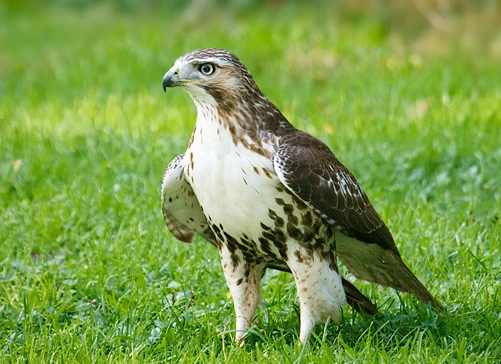
How long do they stay with their parents?
This one surprises people. The intense begging and feeding lasts for about 4-6 weeks after they fledge. After that, the parents become increasingly intolerant. By late summer or early fall, the family unit has usually broken up. The young hawks are driven off to find their own territories. The parents need the space and resources for themselves, especially heading into winter. So that juvenile Red-tailed Hawk you see in October is almost certainly on its own, sink or swim.
When do they get their red tail?
They don't just wake up one day with a red tail. It happens through their first annual molt. This is a gradual process where they replace their juvenile feathers. It usually starts in their first spring (when they're around 10-12 months old) and can continue into the summer. The tail feathers are among the last to be replaced. So, by their second fall, they should be sporting the full, classic red tail of an adult. Until then, they're in a sort of mixed, transitional plumage—you might see some red peeking through the old banded feathers.
Are they more aggressive or more skittish than adults?
Interesting question. In my experience, they're often less skittish around humans, not out of bravery but out of naivety. They haven't learned to be as wary. I've been able to approach a perched juvenile Red-tailed Hawk fledgling much closer than I ever could an adult. They're curious. As for aggression, they're less likely to vigorously defend an area because they don't have a territory yet. But they will defend themselves if cornered, just like any wild animal. Their parents, on the other hand, are fiercely protective of the nest area and will dive-bomb intruders—a behavior the juveniles aren't really part of.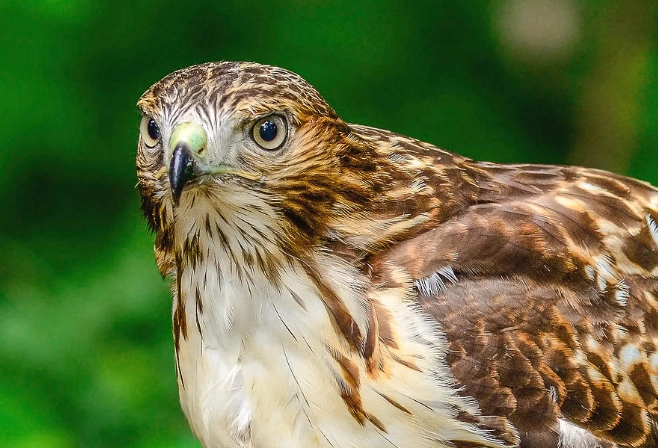
A quick word on feeding: Never, ever try to feed a juvenile hawk (or any wildlife). It does them no favors. They become habituated, which can lead to dangerous encounters with people or cars. It's also illegal in many places to disturb or feed birds of prey. The best thing you can do is observe from a respectful distance and let nature take its course.
What's the biggest threat to a juvenile Red-tailed Hawk?
Starvation is number one. Failing to learn to hunt efficiently is a death sentence. After that, collision—with cars, windows, or power lines—is a major cause of mortality. They're not the best judges of speed or transparent surfaces yet. Predation is less common for a bird this size, but Great Horned Owls won't hesitate to take one, especially at night when the hawk is roosting and vulnerable. Disease and parasites also take a toll.
It's a tough world out there for a rookie.
Going Deeper: Resources and How to Learn More
If this has sparked your curiosity, that's fantastic. The world of raptors is endlessly fascinating. Here are a few ways to build on what you've learned here.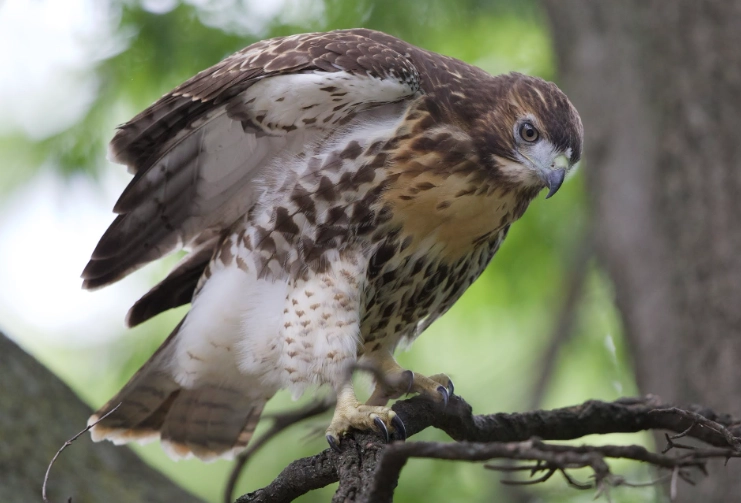
First, nothing beats time in the field. Go to open areas—fields, grasslands, park edges, even along highways (safely!). Scan fence posts, lone trees, and power poles. Fall and winter are great times to look, as the leaves are down and birds are more visible.
For trusted, in-depth information, I always cross-reference with a few key sources. The Cornell Lab of Ornithology's "All About Birds" page for the Red-tailed Hawk is an incredible free resource. Their photos, sounds, and maps are top-notch. For data on distribution and conservation, the U.S. Fish and Wildlife Service's Feather Atlas is a more technical but amazing tool for understanding feathers, including those of juveniles.
Consider keeping a simple journal. Note the date, location, what the bird looked like (tail, eyes, belly), and what it was doing. Over time, you'll train your eye without even realizing it. You'll start to see the subtle differences between a fresh juvenile in July and a more worn, traveling juvenile in November.
Finally, remember that every juvenile Red-tailed Hawk you see is a survivor. It made it out of the nest. It's learning, exploring, and trying to make it to its first birthday. The next time you see that streaky, brown, pale-eyed hawk, you're not just looking at a confusing bird. You're looking at a story of potential, a work in progress against all odds. And that's a pretty special thing to witness.
Reader Comments