Quick Guide
You're walking through a damp forest, maybe near a creek, and you hear it—a loud, piercing "kee-ahh, kee-ahh!" that seems to echo through the trees. If you're like most people, you look up, expecting to see... well, something. Often, you see nothing at all. That distinctive, almost fussy scream is the calling card of one of North America's most vocal and beautiful raptors: the Red-shouldered Hawk (Buteo lineatus).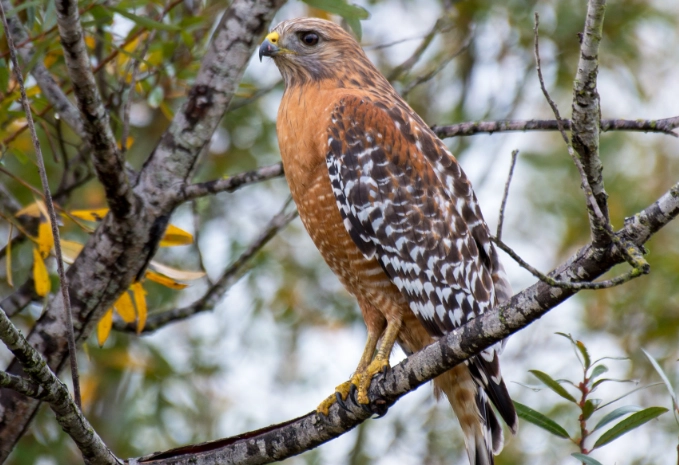
But there's so much more to this bird than its noise. I remember spending a whole afternoon trying to spot one in a local swamp, only to realize it had been watching me the entire time from a branch I'd scanned a dozen times. Their camouflage is that good. They're masters of their environment, and understanding them turns a random bird call into a story.
This guide is for anyone who's heard that scream and wondered "what was that?", for birders trying to tell it apart from its more famous cousin (the Red-tailed Hawk), and for anyone curious about the life of a predator tied to our disappearing wetlands. Let's get into it.
Quick Take: The Red-shouldered Hawk is a medium-sized hawk of eastern North American forests and swamps, known for its barred reddish underparts, black-and-white checked wings, and a very loud, repeated call. It's a year-round resident for many, sticking close to water.
Red-shouldered Hawk 101: The Basics You Need to Know
Before we dive into the nitty-gritty of identification and behavior, let's set the stage. Where does this bird fit in the grand scheme of things?
The Red-shouldered Hawk is a Buteo hawk, which is a group of broad-winged, broad-tailed raptors often seen soaring. They're not the biggest (that's often the Red-tailed), nor the smallest, but they occupy a very specific niche. Their entire life strategy is built around wooded areas, especially those with water. Lose the bottomland hardwoods and forested swamps, and you lose Red-shouldered Hawks. It's that simple.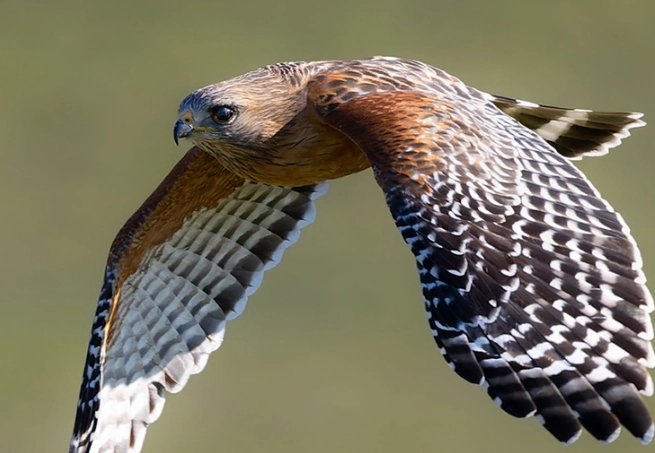
Their range is split: the main eastern population stretches from the Great Lakes down to Florida and over to Texas. Then there's a completely separate, isolated population along the coast of California and Oregon. The western birds look a bit different—richer, more vibrant orange underneath—but they share the same love for riparian corridors and oak woodlands.
How It Stacks Up: Red-shouldered vs. Other Common Hawks
This is where most people get tripped up. You see a big bird on a pole and think "hawk." But which one? Let's clear up the confusion, especially between the two "red" hawks.
| Feature | Red-shouldered Hawk | Red-tailed Hawk | Cooper's Hawk |
|---|---|---|---|
| Primary Habitat | Forests, swamps, wooded streams. Loves water. | Open country, fields, deserts, roadsides. Adaptable. | Woodlands, forests, suburbs (loves bird feeders). |
| Size & Shape | Medium. Head appears larger, tail is long and slender for a Buteo. | Large and bulky. Broad, chunky body, short wide tail. | Medium, crow-sized. Long tail, rounded head, "crossbow" shape. |
| Key ID Mark (Perched) | Belly & chest: strongly barred with orange-red. Shoulders show rusty-red patches. | Belly: usually a pale band with a streaky "belly band." Red tail is adults only. | Adults have blue-gray back, red-barred chest. Juveniles are brown with heavy streaking. |
| Key ID Mark (Flying) | Wings: black-and-white checkered pattern on leading edge. Tail has narrow white bands. | Wings: plain or mottled dark. Pale "patagial" bar on front edge. Broad tail. | Wings: rounded, head projects. Tail is long with broad white tip. |
| The Call (The Clincher) | A loud, repeated, screaming "kee-ahh!" (often described as insistent or complaining). | The classic, hoarse, descending scream: "keeeeer-r-r" (often used in movies for any eagle). | Generally silent outside breeding season. A rapid, harsh "cak-cak-cak." |
| Typical Vantage Point | Perched inside the forest canopy, often halfway up a tree overlooking water. | Prominent, open perch: telephone pole, dead tree in a field, highway sign. | Secretive perch inside cover, or a surprise dash through your backyard. |
See the differences? The habitat is a huge giveaway. If you're in a dense woods and hear that scream, think Red-shouldered. If you're on a highway looking at a bird on a light pole, it's probably a Red-tail. The Red-shouldered Hawk's call is honestly the easiest way to confirm an ID, especially when they're hidden in leaves.
I used to misidentify juvenile Red-shouldered Hawks as Red-tails all the time. The juveniles lack the rusty shoulders and their barring is more streaky. The giveaway for me now is the tail—even on a young bird, the Red-shouldered's tail has many thin, clean white bands, while a young Red-tail's tail has many thinner, messier dark bands.
Okay, But How Do I Actually Spot One? A Step-by-Step Guide
Let's get practical. You're out in the field. What do you look for?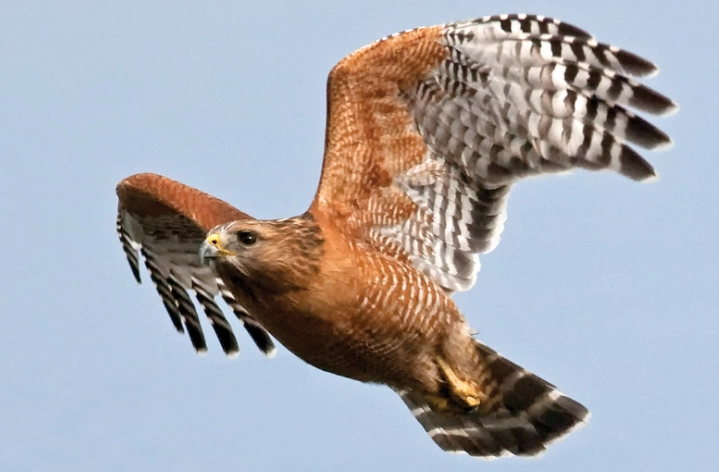
Step 1: Find the Right Place (The Habitat Filter)
Don't waste time scanning open fields. Head where the trees meet the water. Think:
- Floodplain forests (rivers, creeks)
- Cypress swamps and bottomland hardwoods
- Wooded lake edges
- Ravines with small streams
- Even older suburban neighborhoods with mature trees and ponds can host them.
In the West, look in oak woodlands, riparian forests along streams, and eucalyptus groves.
Step 2: Look for the Silhouette and Color Pattern
Once you're in the zone, scan the trees. Don't just look at the tops—they often perch in the middle story.
The Adult's Signature Look:
- Head & Chest: A warm, reddish-orange barring that looks almost painted on. The head is often a pale, streaky color.
- The "Shoulders": Look for the patch of rich, rusty-red feathers on the leading edge of the wing (the "wrist" area). This is the namesake feature, but it can be hard to see unless the bird is perched just right.
- Wings & Back: The back is dark brown. The wings, when folded, show that distinctive black-and-white checkered pattern.
- Tail: Long for a hawk, with several narrow, clean white bands against a dark background.
Juveniles are trickier. They're brown above with heavy streaking on a white chest and belly. They lack the red shoulders and the crisp barring. But check that tail—the multiple thin white bands are a key juvenile Red-shouldered Hawk trait.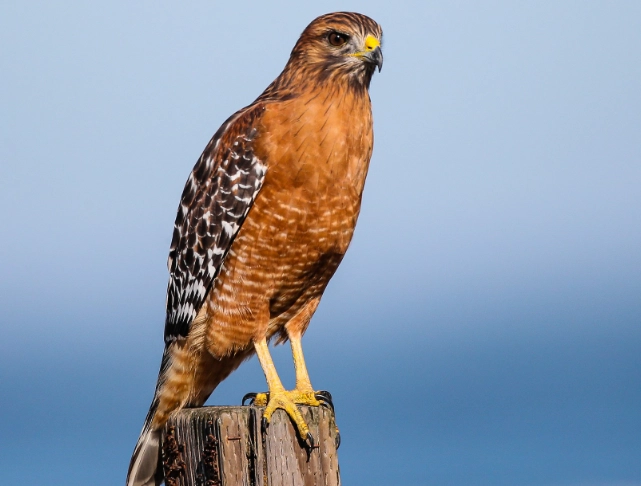
Step 3: Listen (This is the Biggest Hint)
Seriously, your ears are your best tool. Their vocalizations are complex. The Cornell Lab of Ornithology's Macauley Library has an excellent collection. The most common call is that loud, clear, two-part scream: "kee-ahh," with the second note descending. They call year-round, but it peaks during breeding season (late winter/spring). They do it to defend territory, and a pair will often call back and forth.
Sometimes, it's not a scream. They have a softer contact call, a series of "kee" notes. Hearing that can mean you're near a nest or a family group.
Life of a Forest Hunter: Diet, Breeding, and Daily Drama
So you've found one. What's its life like? It's a story of patience, precision, and a lot of screaming.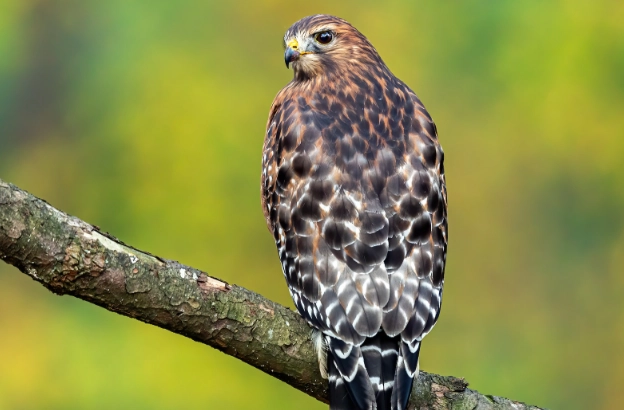
What's on the Menu? (It's Not Just Mice)
The Red-shouldered Hawk is an opportunistic hunter, but its menu is heavily influenced by its watery home. Studies of their diet show a surprising variety. Think of them as the amphibian specialists of the hawk world.
Top Prey Items:
- Small Mammals: Voles, mice, and chipmunks are staples, especially in winter when amphibians are less active.
- Amphibians & Reptiles: This is their niche. Frogs, toads, salamanders, and snakes (even small poisonous ones like copperheads!) make up a huge part of their diet. I've watched one methodically hunt along a pond edge, listening for frogs.
- Large Insects & Crayfish: Grasshoppers, caterpillars, and especially crayfish are important, giving them the nickname "crayfish hawk" in some areas.
- Occasional Birds & Fish: They'll take the odd bird or fish, but they're not the aerial acrobats like Accipiters. This is more of a sit-and-wait or slow-stroll hunter.
Their hunting technique is usually a patient perch, followed by a swift glide or drop to the ground. They also hunt by walking on the forest floor or wading in shallow water—a behavior you'd rarely see in a Red-tail.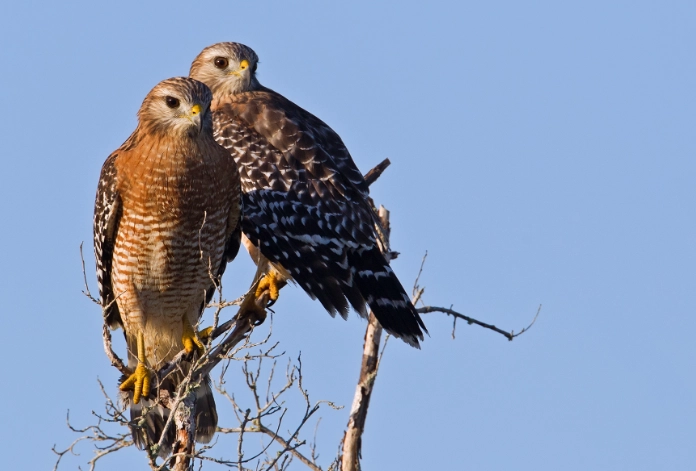
Nesting: A Messy, Noisy Affair in the Treetops
Red-shouldered Hawks are monogamous and often use the same nesting territory for years, sometimes even decades. The nest is a large, bulky platform of sticks, lined with softer material like moss, bark, and greenery. They usually build it in the main crook of a tall tree, often a deciduous tree near water.
The breeding season starts early. Courtship displays with dramatic soaring and calling can begin in late January in the South. By March or April, the female is usually on eggs (typically 3-4). Both parents feed the young, and the nest becomes a constant hub of noise—begging calls from the chicks, food deliveries, and defensive screaming at any intruder (including humans, squirrels, and crows).
The longevity record for a Red-shouldered Hawk is impressive. According to the U.S. Geological Survey's Bird Banding Laboratory, the oldest known wild Red-shouldered Hawk was over 25 years old! That's a lot of seasons defending the same swamp.
The young fledge after about 6 weeks but stick around the parents for another 8-10 weeks, learning to hunt. This family cohesion is strong. You might see three or four hawks soaring together in late summer, which is a great time for observation.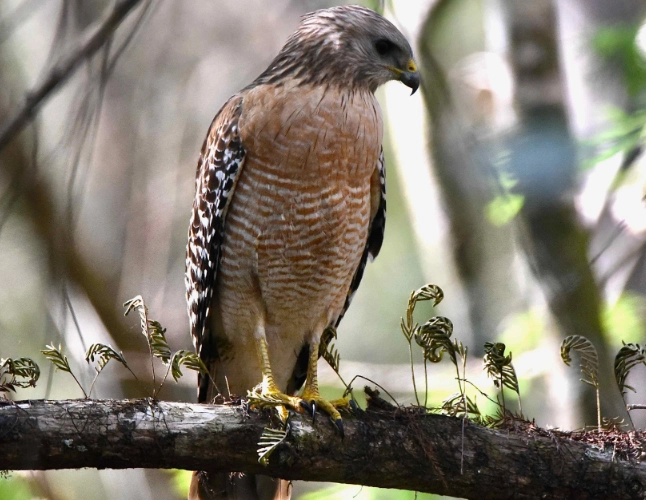
Why Should We Care? Their Role in the Ecosystem
Beyond being beautiful, Red-shouldered Hawks are vital.
First, they're a classic indicator species. Because they require large tracts of intact, mature forest near water, their presence signals a healthy wetland ecosystem. A decline in their numbers is a red flag for the health of that whole forest-swamp community. The U.S. Fish and Wildlife Service considers them a species of conservation concern in some parts of their range due to habitat loss.
Second, they help control populations of rodents and insects. But their specialization on amphibians is particularly interesting. By preying on frogs and snakes, they help regulate those populations and are part of a complex food web. They're not just living in the ecosystem; they're a functional cog that helps it run.
Habitat fragmentation is their biggest threat. Building roads, clearing forests for development, and draining wetlands directly destroy their homes. They're also vulnerable to poisoning from rodenticides (when they eat a poisoned mouse) and to collisions with vehicles, especially when young birds first start flying.
Your Questions, Answered (The Real Stuff People Search For)
Are Red-shouldered Hawks dangerous to pets?
This is a huge concern for people with small dogs or cats. The honest answer? The risk is extremely low for average-sized pets. A Red-shouldered Hawk typically weighs 1-1.5 pounds. Its prey maxes out at about the size of a large squirrel or rabbit. A cat or a small dog is usually too large, too defensive, and too risky for them to consider. They're not built to carry that much weight. Your pet is far more likely to be in danger from cars, other dogs, or disease. That said, it's never a bad idea to supervise very small pets (like toy breeds or kittens) when outside, as a general precaution against all predators.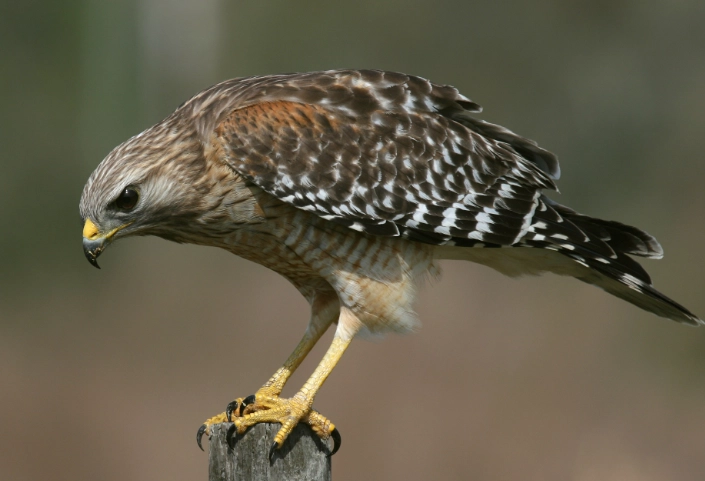
How can I attract a Red-shouldered Hawk to my yard?
You don't so much attract the hawk itself as you attract its prey, creating good habitat. If you live near a wooded area with water, you might already be in their zone. To make your property more appealing:
- Create a Water Feature: A pond, even a small one, will attract frogs, insects, and birds.
- Leave Some Wild Areas: Don't over-manicure. Let leaf litter accumulate—it's home to insects and amphibians. Leave some fallen logs.
- Plant Native Trees & Shrubs: These support the native insect and small mammal populations they eat.
- Put Up a Hunting Perch: A tall, sturdy pole or a dead snag (if safe) gives them a place to survey for prey.
Do NOT put out bait or try to feed them. This is bad for the bird, illegal in many places under the Migratory Bird Treaty Act, and teaches them to associate humans with food, which can lead to conflicts.
What's the difference between the Eastern and Western Red-shouldered Hawks?
Good eye! The western subspecies (Buteo lineatus elegans) is often more vividly colored. Its underparts are a richer, more solid orange-red with less distinct barring. It's also slightly smaller on average. Genetically and geographically, they've been separated from the eastern birds for a long time. Some experts think they could be split into separate species someday. The National Audubon Society's guide shows the visual differences well.
I found a baby/injured Red-shouldered Hawk. What do I do?
First, assess. Is it a fluffy, downy chick on the ground? It might be a nestling that fell. Look for the nest. If you can safely return it, do so (birds have a poor sense of smell, the parents will not reject it). If it's a feathered young bird hopping around, it's likely a fledgling learning to fly. The parents are probably nearby. Leave it alone unless it's in immediate danger (like the middle of a road).
If the bird is clearly injured (wing drooping, can't stand, visible wound), do not try to care for it yourself. Raptors require specialized care. Contact a licensed wildlife rehabilitator immediately. You can find one via your state's wildlife agency website or through national directories.
A final thought. Birding for me changed when I moved from just checking species off a list to understanding their stories. The Red-shouldered Hawk isn't just a bird with red shoulders. It's the voice of the swamp, a patient hunter of frogs, a dedicated parent that screams at crows, and a stubborn holdout in forests that are getting smaller every year. Its persistent call isn't just noise; it's a declaration. "I'm still here." Listen for it. And now, when you hear it, you'll know exactly who's speaking.
So next time you're near a wet woods, stop and listen. That piercing "kee-ahh" is an invitation to look closer, to understand a little piece of the wild that's still hanging on, often right in our backyards.
Reader Comments