So, you're curious about the kings of the mountain skies? You've come to the right place. I remember the first time I saw a shadow glide over a rocky outcrop, moving faster than any cloud. I squinted, trying to make it out, and then there it was—a golden eagle, circling on a thermal with a kind of effortless power that just stops you in your tracks. That moment sparked a years-long fascination for me. Mountain birds of prey, or raptors, are more than just birds; they're the living barometers of a healthy ecosystem, the apex predators of the alpine world. And honestly, telling them apart can be a real headache at first. Is that a hawk or a falcon? What's the difference between an eagle and a vulture soaring way up high?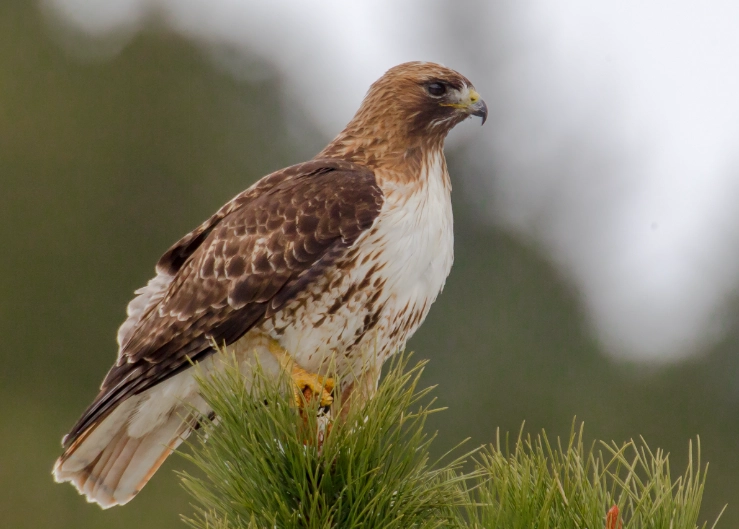
This guide isn't a dry textbook entry. It's the stuff I wish I'd known when I started, mixed with the kind of practical details you only get from spending time looking up. We'll cover who's who, what they do up there, and why their survival is tangled up with ours. Let's get into it.
Quick Guide
The Main Players: Who's Who in the Mountain Raptor World
Not every raptor is cut out for mountain life. It takes a special set of skills. The thin air, fierce winds, and rugged terrain favor the strong, the agile, and the supremely adaptable. Here are the families you're most likely to encounter.
Eagles: The Apex Predators
When you think of mountain birds of prey, the eagle probably comes to mind first. They're the heavyweight champions. In North American mountains, the two you need to know are the Golden Eagle and the Bald Eagle (yes, they frequent mountainous areas too, especially near large lakes and rivers).
The Golden Eagle is the quintessential mountain monarch. I've seen them in the Rockies, just a dark speck against a vast cliff face. They're huge, with wingspans often exceeding 7 feet. Their power is no joke; they can take down prey as large as young deer or mountain goats. What's fascinating is their hunting strategy. They don't just dive at full speed like a falcon. Often, they use a "low contour flight," skimming the ground to use ridges and hills as cover before a surprise attack. Their nests, called eyries, are massive piles of sticks on remote cliffsides, used for generations.
The Bald Eagle, while a national symbol, is a bit more of an opportunist. In mountain regions, they're often found near water. Their diet is heavy on fish, but they won't say no to carrion or stealing a meal from another bird (a behavior called kleptoparasitism). Seeing a bald eagle perched in a tall pine overlooking an alpine lake is a sight you won't forget.
Hawks (Buteos and Accipiters): The Versatile Hunters
This is where it gets interesting, and where a lot of confusion lies. "Hawk" is a broad term. In the mountains, you mainly find two types: Buteos and Accipiters.
Buteos are the "soaring hawks." Think Red-tailed Hawk, Red-shouldered Hawk, or the Rough-legged Hawk in winter. They have broad, rounded wings and a fan-shaped tail. You'll see them circling on thermals over open valleys or perched on a lone tree, scanning for rodents. They're the patient hunters, often sitting and waiting for movement below. The classic, piercing scream you hear in movies? That's usually a Red-tailed Hawk's call (they often dub it over eagle scenes, which is funny if you know birds).
Accipiters are the forest ninjas. Cooper's Hawks and Sharp-shinned Hawks are the main ones. They have short, rounded wings and long tails—perfect for zipping through dense timber at high speed to catch other birds. If you have a bird feeder in a wooded mountain area and suddenly all the songbirds vanish, an accipiter might be lurking nearby. They're built for maneuverability, not soaring.
Here’s a quick table to help untangle the common mountain hawks:
| Species | Type | Typical Mountain Habitat | Key Identification Tip | Primary Prey |
|---|---|---|---|---|
| Red-tailed Hawk | Buteo | Open valleys, canyon rims, grasslands | Broad, rounded wings; adults have a distinctive rusty-red tail. | Rodents (voles, mice), rabbits, snakes |
| Red-shouldered Hawk | Buteo | Mixed forests near streams or wetlands | Checkered wing pattern, strongly banded tail, loud "kee-yar" call. | Small mammals, amphibians, reptiles |
| Cooper's Hawk | Accipiter | Forest interiors, wooded canyons | Long, banded tail with a rounded end; steely blue-gray back (adults). | Medium-sized birds (jays, doves) |
| Northern Goshawk | Accipiter | Dense, mature coniferous forests | Larger, fiercer look; prominent white eyebrow stripe. | Larger birds (grouse), hares, squirrels |
Falcons: The Speed Demons
Falcons are a different breed altogether. Sleek, with long, pointed wings built for sheer speed. The Peregrine Falcon is the superstar here. Its stoop (hunting dive) is the fastest animal movement on the planet, reaching over 240 mph. They nest on sheer cliff faces, the same kind of terrain that attracts climbers, which has historically caused conflict. The American Kestrel, a small, colorful falcon, is also common, often seen hovering over mountain meadows before dropping on a grasshopper or mouse.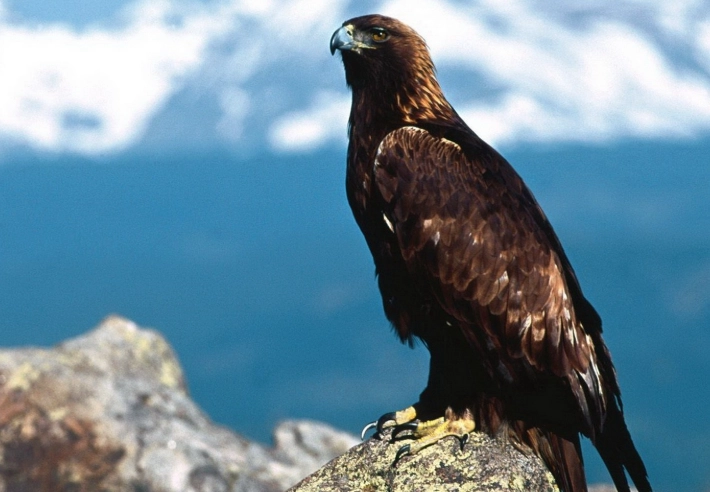
How do you tell a falcon from a hawk mid-flight? Wing shape is the biggest clue. Falcon wings are sleek and pointy like a fighter jet. Buteo wings are broad and rounded like a glider. Falcons also have a distinctive "tooth" on their beak, a notch used to sever the spinal cord of their prey.
Life in the Thin Air: Habitats and Behaviors
So why do these birds choose such a tough neighborhood? Mountains offer unique advantages for raptors.
Thermals and Updrafts: These are free elevators. As the sun heats the mountain slopes and valleys, columns of warm air rise. Raptors, especially buteos and eagles, use these to gain altitude with minimal effort. You'll often see them circling in these invisible pillars. Ridge lines also create powerful updrafts as wind is forced over them—perfect for a falcon needing a launchpad for a high-speed dive.
High-Perch Vantage Points: Cliffs, tall dead trees (snags), and rocky promontories are prime real estate. They provide a 360-degree view for spotting prey and potential rivals. A single golden eagle's territory can span over 50 square miles, and these perches are its surveillance towers.
Nesting Security: Remote cliffsides are natural fortresses. They're difficult for terrestrial predators (like foxes or coyotes) to reach, protecting eggs and chicks. Some species, like the Prairie Falcon, even nest in simple scrapes on sheltered cliff ledges.
Their hunting strategies are as varied as their shapes. You have the sit-and-wait predators (many buteos), the high-speed pursuers (falcons), the stealthy ambushers (accipiters in woods), and the powerful grab-and-crush hunters (eagles). This diversity means different mountain birds of prey can share the same landscape without directly competing all the time. A red-tailed hawk hunts the open meadow for ground squirrels, while a cooper's hawk stalks the forest edge for songbirds.
Spotting Them: A Practical Birdwatcher's Guide
Okay, theory is fine, but how do you actually see these birds? Here's the practical stuff, learned from plenty of trips where I saw more clouds than raptors.
- Timing is Everything: Late morning to mid-afternoon is usually best. Why? The sun has warmed the ground, creating those all-important thermals. Raptors are most active when the "elevators" are running. Also, spring and fall migration seasons are spectacular, as mountain passes become funnels for thousands of traveling birds of prey.
- Look for the Lookouts: Scan the sky along ridge lines. Check the very top of tall, isolated trees or dead snags. Look at rocky outcrops and cliff faces. Your eyes should be constantly moving across these zones.
- Gear Up (But Don't Go Crazy): A decent pair of binoculars is essential. I'd recommend 8x42 or 10x42 as a good all-around choice for brightness and stability. A field guide, either a book like Sibley's or an app like Merlin Bird ID, is your best friend for confirming IDs. Dress in layers—mountain weather changes fast.
- Listen: Sounds can give them away. The shrill "kreee-eeear" of a red-tailed hawk. The rapid "kak-kak-kak" of a peregrine near its nest. The high-pitched whistles of a broad-winged hawk during migration.
The Shadow Over the Peaks: Conservation Challenges
It's not all majestic flights and beautiful views. Life is tough for mountain birds of prey, and human activities have made it tougher.
- Habitat Loss and Fragmentation: Development, logging, and mining break up their vast hunting grounds. A forest that's cut into pieces is less useful to a forest-dwelling goshawk.
- Lead Poisoning: This is a silent killer. When hunters field-dress game and leave lead bullet fragments in the gut pile, scavengers like eagles and condors eat it. The lead poisons them, causing a slow, painful death. Switching to non-lead ammunition is one of the most direct ways hunters can help.
- Collisions: Wind turbines, power lines, and vehicles claim countless birds. New wind farms are often sited on ridges—prime raptor flyways—which requires careful study and mitigation.
- Climate Change: This is the big, overarching threat. It's altering prey populations, causing mismatches in breeding cycles, and even changing the very structure of mountain ecosystems. A study linked on the Audubon Society's Climate website models how the ranges of many birds, including raptors, are projected to shift.
The story of the California Condor, a critically endangered scavenger that inhabits mountainous regions, highlights both the depth of the problem and the potential for solutions. Through captive breeding and intensive management by agencies like the U.S. Fish & Wildlife Service, they were brought back from the very edge. But the fight continues, especially against lead poisoning.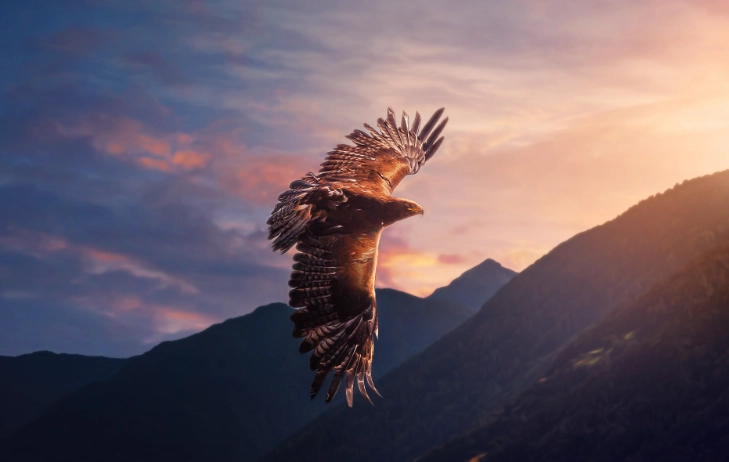
Your Questions, Answered (FAQ)
Wrapping It Up
Spending time learning about mountain birds of prey does something. It changes how you see a landscape. That distant speck in the sky isn't just a bird anymore; it's a golden eagle that may have traveled hundreds of miles, a peregrine falcon that masters physics every time it hunts, or a red-tailed hawk that's been holding a territory for a decade. You start seeing the cliffs not just as rock, but as apartments, and the ridges as highways.
They face real challenges, no sugar-coating it. But the good news is that we understand a lot of the problems, and there are concrete ways to help: supporting habitat conservation groups, choosing non-lead ammunition if you hunt, keeping our cats indoors to protect songbird prey bases, and simply respecting closure areas.
The next time you're in the mountains, take a moment to look up. Scan those ridges. That connection you feel, that spark of wonder—that's what fuels conservation. It starts with seeing, understanding, and caring. The future of these incredible mountain birds of prey depends on it.
Reader Comments