You hear a beautiful, complex song from a dense thicket. You know it's a bird, but which one? Visual identification is impossible. This is where learning to record bird sounds to identify them changes the game. It's not just for scientists anymore. With the phone in your pocket and some basic know-how, you can capture that mystery song, analyze it later, and finally put a name to the voice. I've been doing this for over a decade, and I can tell you, the moment you match a recording to a species feels like solving a personal puzzle.
In This Guide
Why Recording Bird Sounds Beats Just Listening
Our memory for bird sounds is surprisingly bad. A song you hear clearly in the morning can become a fuzzy impression by afternoon. Recording fixes that. It gives you a permanent, objective reference. You can slow it down, visualize it as a spectrogram (a visual graph of the sound), and compare it directly to known recordings in online libraries like the Macaulay Library from the Cornell Lab of Ornithology.
More importantly, it trains your ear. Repeatedly listening to your own recording of, say, a Carolina Wren's "tea-kettle, tea-kettle, tea-kettle," etches that pattern into your brain far more effectively than a fleeting field encounter. It turns passive hearing into active learning.
A quick story: For years, I confused the songs of the Black-throated Green Warbler and the Blackburnian Warbler in early spring. They both had high, buzzy endings in my memory. It wasn't until I recorded both in the same week and played the clips side-by-side that the differences—the rhythm, the pitch contour—became glaringly obvious. I haven't mixed them up since.
The Gear You Actually Need to Start
Let's demystify the equipment. You don't need a $2000 recorder to begin.
Your Smartphone: Better Than You Think
The microphone in modern smartphones is remarkably good for casual bird sound recording. The key is using a dedicated audio recording app, not the standard video camera. Apps like Voice Record Pro (iOS) or RecForge II (Android) let you record in uncompressed formats like WAV, which preserves quality for analysis. The big limitation is the mic's omnidirectional nature—it picks up everything, including wind and your own rustling.
External Microphones: The Game-Changer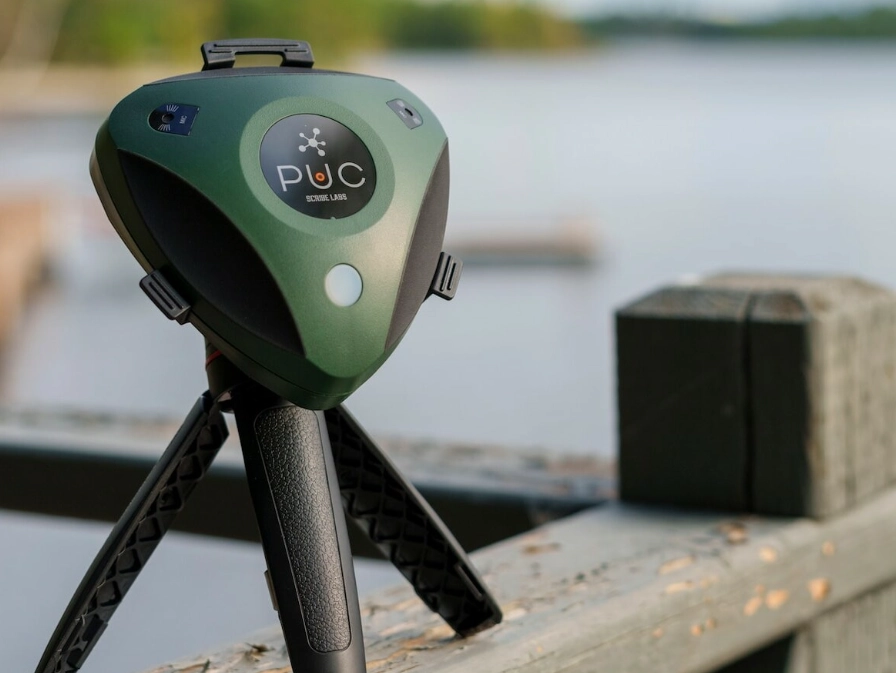
This is the single best upgrade. A simple plug-in shotgun mic (like those from RØDE) dramatically focuses on the sound in front of you and reduces ambient noise. For about $60-$100, it transforms your phone into a legitimate field recorder.
Dedicated Handheld Recorders
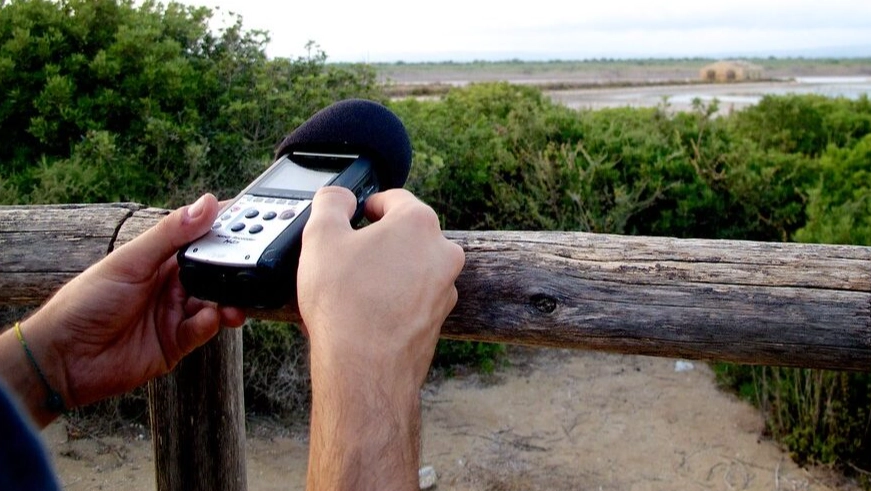
When you're serious, a recorder like the Zoom H1n or Tascam DR-05X is the next step. They have superior preamps (which means less hiss when amplifying quiet sounds), built-in stereo mics in an X/Y pattern for realistic sound staging, and are built for the job. They're tougher, have longer battery life, and don't drain your phone.
| Tool | Best For | Key Advantage | Biggest Limitation |
|---|---|---|---|
| Smartphone Alone | Beginners, casual use, recording loud/close birds. | Always with you, zero extra cost. | Poor in wind, picks up handling noise easily. |
| Smartphone + Shotgun Mic | Most birders getting serious. | Huge quality leap for modest investment, directional pickup. | Requires carrying an extra accessory, can be awkward to hold steady. |
| Dedicated Recorder (e.g., Zoom H1n) | Regular practice, archival quality, learning sound details. | Best audio quality, designed for the task, great battery life. | Extra device to buy and carry, learning curve for settings. |
Field Recording Techniques That Work
Great gear with poor technique gives poor results. Here’s how to get a clean recording.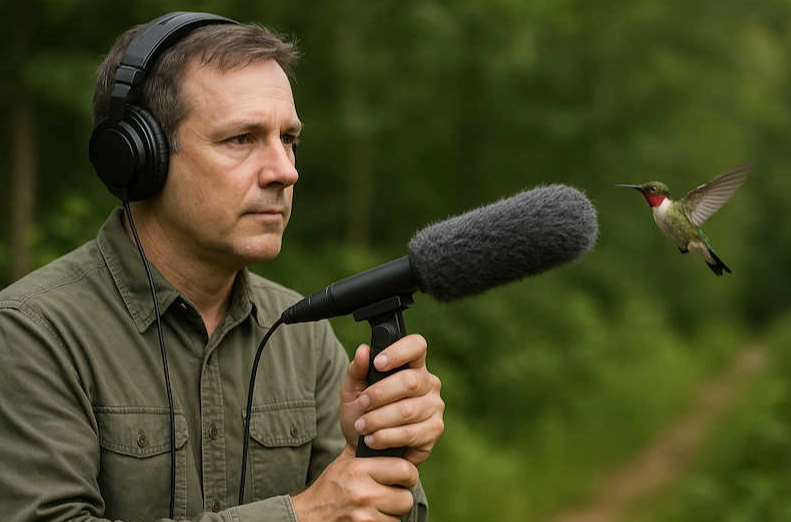
Get Close, But Not Too Close. The number one rule. Distance is the enemy of clarity. Move slowly and quietly toward the sound. But know when to stop—if the bird stops singing or shows signs of stress (alarm calls, fleeing), you've gone too far. Your recording is not worth disturbing the bird.
Manage the Wind. Wind noise ruins more recordings than anything else. Use your body as a shield. Position yourself so your back is to the wind, and the recorder/mic is in the lee of your body. A simple foam windscreen over your mic is essential and costs a few dollars. In a pinch, cup your hand around the mic (without touching it).
Hold Still and Breathe. This sounds obvious, but it's the most common mistake. Rustling clothes, fingers fumbling on the recorder, even heavy breathing are picked up. Hold the recorder steadily with both hands, elbows tucked in. Exhale slowly and quietly during the loudest parts of the song.
Record the Context. Don't just record one burst. Get 30-60 seconds. Capture the full pattern of the song, any call notes before or after, and moments of silence. This context is invaluable for ID. Also, speak a quick note onto the recording after: date, location, habitat (e.g., "May 15, oak-maple forest edge"). You will forget these details.
Pro Tip Most Guides Miss: Record near dawn, but not necessarily at dawn. The very first hour of light is the "dawn chorus," a chaotic orchestra where everyone sings over each other. It's thrilling but terrible for isolating a single bird. Wait an hour or two. The chorus thins out, but individual birds still sing vigorously, giving you a much cleaner, isolated target.
How to Analyze Your Recording Like a Pro
You've got the file. Now what?
First, listen on good headphones, not phone speakers. You'll hear overtones and subtle notes you missed in the field.
Second, use free software to visualize the sound. Audacity is the powerhouse here. Import your recording and generate a spectrogram. This visual representation shows frequency (pitch) on the vertical axis and time on the horizontal axis. Suddenly, you can see the song's shape—the whistles, trills, and buzzes become distinct patterns. A Hermit Thrush's song shows as a series of clear, separated, upward-slurring notes. A Chipping Sparrow's song is a long, dry trill at a steady pitch.
Compare your spectrogram to known examples. The Cornell Lab's All About Birds guide often includes sonograms (another name for spectrograms) with their species accounts. Matching the visual pattern is often easier and more reliable than trusting your memory of the sound.
Top Apps and Tools for Bird Sound ID
This is where technology shines. You don't have to be an expert in spectrograms anymore.
- Merlin Bird ID by Cornell Lab: The absolute best place to start. Its "Sound ID" feature listens in real-time, suggests species, and records and saves the audio clip linked to each suggestion. It's like having an expert whispering in your ear. The accuracy in North America is stunning. It's free.
- BirdNET (by Cornell Lab & Chemnitz University of Technology): This is a research-grade AI tool. You upload a recording file (or analyze live), and it gives you a confidence percentage for each species it detects. It's global and constantly improving. Use it to verify Merlin's suggestions or analyze tricky recordings at home.
- Audacity: As mentioned, the free, desktop workhorse for detailed analysis, cleaning up recordings, and creating spectrograms.
- xeno-canto: The Wikipedia of bird sounds. This vast, community-driven database is where you go to listen to and compare thousands of recordings of a species from across its range. Hearing geographic variation in a song is a masterclass in birding by ear.
A common workflow: Record in the field with your phone/recorder. Use Merlin's Sound ID for instant, in-field clues. Back home, upload the cleanest part of your recording to BirdNET for a second opinion. Then, search xeno-canto for that species to listen to more examples and confirm.
Your Bird Sound Recording Questions Answered
 Merlin Bird ID suggested three species for one recording. How do I know which is right?
The path from hearing an unknown song to confidently naming the singer is incredibly rewarding. It opens up a hidden layer of the natural world. Grab your phone, step outside, and press record. That first clean capture of a bird's voice is the start of a whole new way of seeing—or rather, hearing—the world around you.
Reader Comments