Let's get straight to the point. Capturing clean, detailed bird sounds is less about having the most expensive gear and more about understanding the entire recording chain and the environment you're working in. A common misconception is that a great microphone alone will solve your problems. It won't. Wind, handling noise, poor placement, and incorrect gain settings ruin more recordings than any microphone ever could. I've spent over a decade recording in marshes, rainforests, and backyards, and the gear is just one piece of the puzzle. This guide will walk you through that puzzle, piece by piece, helping you avoid the expensive mistakes I made starting out.
What You'll Find in This Guide
- Why Record Bird Sounds in the First Place?
- Understanding the Recording Chain: It's a System
- Choosing Your Microphone: The Heart of the System
- Picking a Field Recorder: The Brain
- Essential Accessories You Can't Ignore
- Field Recording Techniques That Make a Difference
- Basic Post-Processing: Making Your Recordings Shine
- Your Bird Recording Questions, Answered
Why Record Bird Sounds in the First Place?
It's a fair question. You can identify birds with binoculars, right? Sure. But sound adds a dimension visual observation misses. Many warblers, sparrows, and flycatchers are far easier to identify by ear than by sight. Recording allows you to study complex songs, analyze subtle variations between individuals or populations, and contribute to citizen science projects like eBird or the Macaulay Library. For me, it's about preservation. Capturing the dawn chorus in a local woodland creates an acoustic snapshot that might be invaluable in 20 years.
Understanding the Recording Chain: It's a System
Think of your recording setup as a chain: Bird > Environment > Microphone > Recorder > File. The weakest link defines your final quality. A $2000 microphone in a windy spot with a cheap recorder will sound worse than a $500 microphone used skillfully on a calm day with a decent recorder. Your job is to manage every link.
Choosing Your Microphone: The Heart of the System
This is where most people start, and for good reason. The microphone converts sound waves into an electrical signal. Get this wrong, and you're fighting an uphill battle.
Microphone Types: Shotgun vs. Parabolic vs. Stereo
Each has a specific job. Using the wrong one is like using a telephoto lens for a landscape shot.
| Type | Best For | How It Works | Typical Price Range | Biggest Drawback |
|---|---|---|---|---|
| Shotgun Microphone | Targeting specific, distant birds; reducing ambient noise. | Highly directional, picks up sound from a narrow area in front of it. | $150 - $2000+ | Can sound "hollow" or "phasey" if not aimed perfectly; very susceptible to wind. |
| Parabolic Reflector | Extreme distance recording (e.g., canopy birds). | A dish focuses sound waves onto a small microphone at its focal point. | $300 (DIY) - $3000+ | Bulky, awkward to carry; has a distinct, slightly "tinny" sound colorization. |
| Stereo Pair (XY/ORTF) | Capturing the soundscape: a chorus, forest ambiance, wetland sounds. | Two microphones arranged to create a realistic stereo image. | $300 - $1500+ for a matched pair | Not for isolating a single bird; picks up everything, including unwanted noise. |
My first serious mic was a mid-range shotgun. I thought it would let me record anything. It didn't. Trying to record a forest soundscape with it was frustrating—it just grabbed one narrow slice of the audio, missing the immersive feeling. Now I carry a small stereo pair and a shotgun, choosing based on the scene.
Picking a Field Recorder: The Brain
The recorder takes the microphone's signal, amplifies it, and saves it as a digital file. Key features matter more than bells and whistles.
Preamplifier Noise (Self-Noise): This is the single most important spec for bird recording, measured in dB. Lower is better. Look for recorders with self-noise below 20 dB-A, ideally in the mid-teens. The Zoom H5 (around $280) is a popular starter, but its preamps get noisy at higher gains. Stepping up to a Zoom F3 or a Sound Devices MixPre-3 II (around $650) gives you dramatically cleaner, more professional preamps.
Inputs: Ensure it has XLR inputs with phantom power (48V) for professional microphones.
Form Factor: A bulky recorder is a pain on a long hike. I prefer compact, battery-efficient models.
I made the jump from a Zoom H4n to a MixPre-3 after a trip to Costa Rica. Listening back, the difference in the clarity of quiet insect sounds behind the bird songs was staggering. The investment was worth it.
Essential Accessories You Can't Ignore
This is where recordings go from amateur to pro. Skipping these is the #1 mistake beginners make.
Wind Protection: Not a fuzzy sock. A proper, multi-layer blimp (zeppelin) windscreen is non-negotiable for shotgun mics. It creates a buffer of still air around the microphone. A deadcat (windjammer) fur cover goes over the blimp for heavy wind. For parabolic dishes, a full foam cover is essential. Without these, even a light breeze sounds like a hurricane on your recording.
Shock Mount: Isolates the microphone from handling noise. Every footstep, every adjustment of your grip will be transmitted through the mic stand or your hands into the microphone if it's hard-mounted. A good shock mount suspends the mic on elastic bands.
Quality Cables: Cheap cables fail and can introduce noise. Get solid, neutrik-ended XLR cables. Keep them short for handheld work to reduce cable movement noise.
Headphones: Closed-back, monitoring headphones. You must listen while you record to catch problems—wind you didn't feel, a distant generator, your own breathing. I use the Sony MDR-7506.
Field Recording Techniques That Make a Difference
Gear in hand, now you have to use it. Technique separates the hobbyist from the contributor.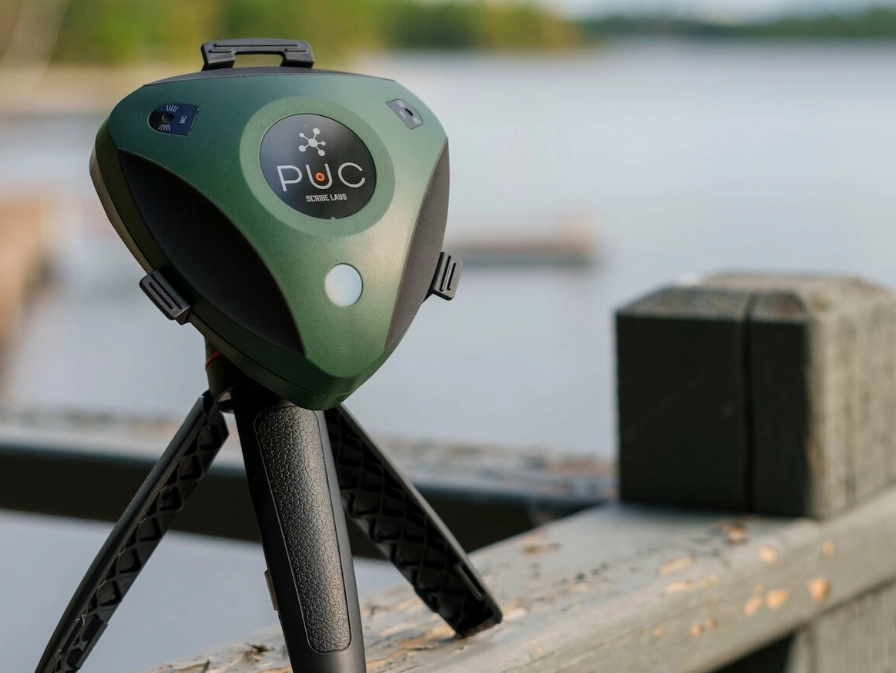
Scout and Listen: Arrive early. Spend 15 minutes just listening. Identify your target sound and all the noise pollution (roads, streams, airplanes). Position yourself with the bird upwind of you, so the wind carries its sound to you, not your noise to it.
Gain Staging: Set your recorder's input gain so your loudest expected sound (the bird's song) peaks around -12 dB to -6 dB on the meters. This leaves headroom for unexpected loud sounds and keeps you away from the noisy upper range of the preamp. Never let it hit 0 dB (clipping).
The Stand vs. Handheld Debate: A tripod is king for stability and eliminating handling noise, especially for long recordings. But birds move. I often start on a tripod for ambient soundscapes, then go handheld with a pistol grip and shock mount to track a specific moving bird. The key is moving slowly and smoothly.
Record in High Resolution: Always record in at least 24-bit, 48kHz WAV format. This captures more dynamic range and higher frequencies than MP3 or lower settings. Storage is cheap; lost audio quality is forever.
Basic Post-Processing: Making Your Recordings Shine
Raw field recordings almost always need a little polish. Don't overdo it. The goal is to clarify, not to create something artificial.
- Import and Backup: Get your files off the SD card and backed up immediately. I use free software like Audacity or Ocenaudio for quick edits, and Reaper or Adobe Audition for more advanced work.
- Normalize: This raises the overall volume of your file to a standard level without clipping. It's like turning up the volume knob evenly on the whole recording.
- Gentle EQ (Equalization): Use a high-pass filter (low-cut) to roll off rumble below 80-100 Hz. This removes wind noise, footstep thumps, and traffic rumble you didn't hear in the field. You can sometimes gently boost frequencies around 2.5-5 kHz to enhance bird song clarity, but be subtle.
- Noise Reduction (Sparingly): If there's a constant noise like a distant highway, use a spectral noise reduction tool. Capture a "noise profile" from a silent part, then apply it lightly. Overuse makes your audio sound watery and artificial.
- Fade In/Out: Add very short fades at the start and end of your clip to avoid abrupt cuts.
- Export: Save your final, processed version as a 320kbps MP3 for sharing online, but always keep the original, untouched WAV file as your master.
Your Bird Recording Questions, Answered
 The journey into bird sound recording is incredibly rewarding. It trains your ear, deepens your connection to nature, and creates a library of moments you can revisit forever. Start with a focused setup—a decent recorder and a microphone suited to your primary goal—master the accessories, and practice your field craft. The birds are waiting.
Reader Comments