Finding the right bird tracking device feels like searching for a needle in a haystack. You've got GPS tags, satellite transmitters, geolocators—all promising to unlock the secrets of avian movement. But which one actually works for your bird, your budget, and your research goals? I've spent over a decade strapping these gadgets onto everything from tiny warblers to soaring eagles, and I can tell you that the "best" device is the one you never have to worry about after deployment. This guide cuts through the marketing jargon to show you what really matters.
What You'll Find in This Guide
Understanding the Types of Bird Tracking Devices
It all starts with knowing your tools. Picking the wrong type is the most common and costly mistake beginners make. Here’s the breakdown, stripped of the fluff.
GPS Tags (The Modern Standard)
These are the workhorses for detailed, local-to-regional movement studies. They connect to satellite networks (like GPS) to get a precise location, but they usually store that data on board. You need to retrieve the tag or be within range (via UHF/VHF or cellular networks) to download the data. The resolution is fantastic—you can see a bird hopping between branches—but the logistics of data retrieval are the main hurdle.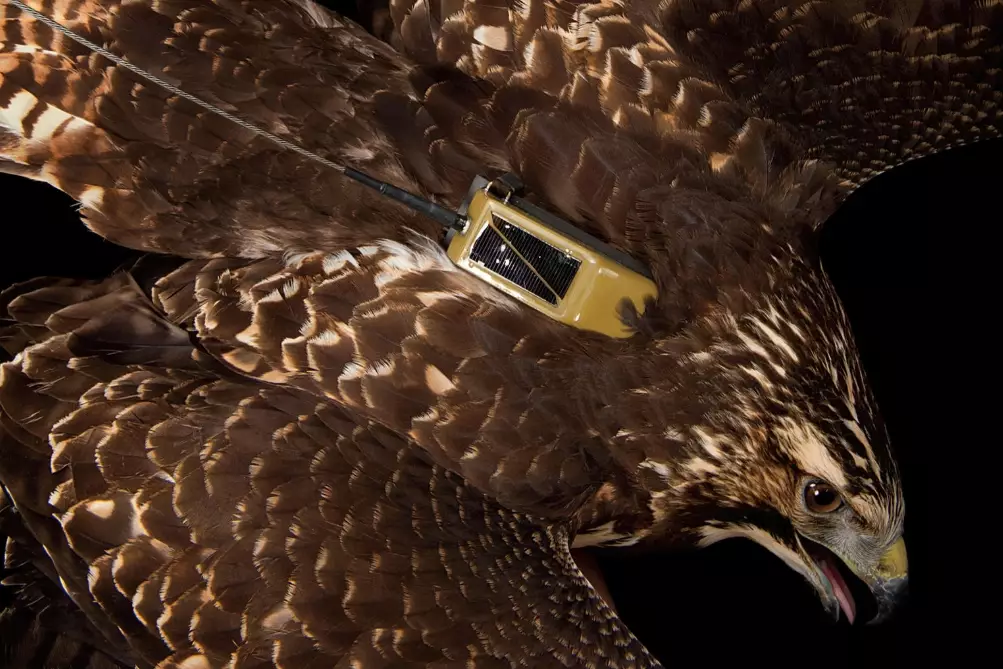
Satellite Transmitters (For the Big Journeys)
Think albatrosses crossing oceans or cranes migrating continents. These devices use constellations like Argos or Iridium to ping their location directly to satellites, sending the data to your computer in near real-time. The trade-off? They're heavier, more expensive, and the location accuracy is often lower (within a few hundred meters) compared to fine-scale GPS. Battery life is the ultimate constraint here.
Geolocators (The Lightweight Historians)
Also called GLS or light-level loggers, these are tiny, cheap, and have incredible battery life. They don't give you a GPS point. Instead, they record sunrise and sunset times. Later, you use complex algorithms to estimate a location, often with an accuracy of 100-200 km. They're perfect for mapping year-long migration routes of small birds where retrieval the following year is possible. The data is historical, not live, and processing it requires specific software skills.
| Feature | GPS Tags | Satellite Transmitters | Geolocators |
|---|---|---|---|
| Best For | Detailed home range, habitat use, local movement | Long-distance migration, remote species, real-time tracking | Annual migration cycles of small birds, low-budget projects |
| Data Retrieval | Physical recovery or local download (UHF/Cellular) | Direct via satellite (Argos/Iridium) | Physical recovery only |
| Accuracy | High ( | Medium (100m - 1km+) | Low (100-200km) |
| Weight & Size | Medium | Largest & Heaviest | Smallest & Lightest |
| Cost | $$ | $$$ | $ |
How to Choose the Best Bird Tracking Device: A Practical Checklist
Forget the spec sheet for a second. Ask yourself these questions in order.
What species are you tracking? This dictates everything. The golden rule is the device should not exceed 3-5% of the bird's body weight. A 20g songbird can only carry a 1g device, which immediately rules out most satellite transmitters and limits you to tiny GPS tags or geolocators. For a 4kg eagle, you have far more options.
What's your core research question? Be brutally specific. "Where does it go?" is too vague. Is it "What is the daily foraging radius of this owl?" (needs high-accuracy GPS) or "What is the wintering ground of this shorebird population?" (could use geolocators or satellite tags). Your question defines the needed location accuracy and fix schedule.
What's your real budget? Include everything: unit cost, data plans (satellite subscriptions can be $15-$30/month per tag!), replacement costs for lost devices, and the time/fuel for retrieval efforts. A $200 geolocator project becomes expensive if you spend $2000 traveling to recapture birds.
How will you get the data back? This is the make-or-break detail everyone glosses over. If you're studying a resident, site-faithful species, a retrieve-once GPS tag is fine. Tracking a nomadic seabird? Satellite is your only option. For migratory songbirds, you're gambling on a geolocator's return migration. Have a solid, honest plan for data recovery.
What battery life do you actually need? Manufacturers love to tout "up to 2 years!" but that's usually at one fix per day in perfect conditions. If you need an hourly fix schedule for three months, the battery will die much faster. Calculate your needs: (Battery Capacity in mAh) / (Current Draw per Fix Cycle in mA). Add a 30% safety margin.
A Common Mistake I See
Researchers often choose the highest possible fix rate (e.g., a location every 5 minutes) because the technology allows it. This drains the battery in weeks, creating a massive dataset for a tiny slice of the animal's life. Often, a fix every hour or two provides all the ecological insight you need and extends the study duration by months. More data isn't always better data.
Top Bird Tracking Devices on the Market: A Detailed Look
Based on reliability, support, and field performance, here are devices that consistently deliver. Remember, the "best" depends on your checklist above.
For Medium to Large Birds (GPS/Satellite Hybrids)
Ornitela Nano: This is a game-changer for studies needing detailed GPS data without satellite real-time. It stores high-accuracy GPS fixes and can download them via a global cellular (LTE-M) network when the bird flies near a tower. No need to recapture. I've used these on raptors, and the relief of seeing data appear automatically is priceless. Downsides: requires a cellular subscription and is useless in truly remote areas with no coverage. Weight: ~20g.
Cellular Tracking Technologies (CTT) PinPoint: A stalwart in the field. Primarily a GPS/VHF tag, meaning you track the bird with a radio receiver to download data. Incredibly robust and customizable. Their customer support is exceptional—they'll help you design a duty cycle. I've had them survive on birds for over two years. The learning curve is higher, and you must be proficient with VHF telemetry. Weight starts around 5g and goes up.
For Small Birds (Under 50g)
Migrate Technology Lifetag: A fantastic lightweight GPS tag for small birds like swallows or thrushes. It uses a unique base-station network for data retrieval. You set up a small, cheap base station in the study area, and when the tagged bird flies near it, data is offloaded automatically. Brilliant for colony-based studies. You're not getting continent-wide data, but you get incredible detail on local movements without recapture. Weight: as low as 1g.
Lotek Pinpoint GPS-Argos: For small birds that make huge journeys (think shorebirds). This is a miniaturized marvel that collects GPS data and transmits the summarized data via the Argos satellite system. You don't get every raw GPS point in real-time, but you get regular location updates across oceans. It's expensive, but it's one of the few tools that can do this for a 100g bird. Weight: ~5g.
The Geolocator Workhorse
BAS/Biotrack Mk Series: The industry standard. Dirt simple, reliable, and comes in various sizes down to 0.9g. There's no internal battery; it's powered by a hearing-aid cell. I've had them last 18 months on a warbler. The challenge, of course, is getting it back. You need a high-recapture rate study species. The British Antarctic Survey provides the analysis software (BASTrak), which has a steep learning curve but is incredibly powerful.
Expert Tips for Deployment and Data Management
Buying the device is only half the battle. Here's how to not mess it up in the field.
Test Everything. Twice. Before it goes on a bird, test the full deployment cycle. Charge it, activate it, program it, and let it collect dummy data for a week in a known location. Then practice downloading and processing that data. I once deployed ten tags only to find a programming error meant they were all set to GMT+8 instead of local time. A week of testing would have caught that.
Attachment is Everything. A poorly attached tag fails the entire project. For backpacks (harnesses), the fit is critical—snug but not constricting, with soft tubing over any knots. Leg-loop designs for waders are popular but practice on a model first. Some researchers, like those at the USGS Bird Banding Laboratory, have excellent guidelines. Always prioritize the bird's welfare over data.
Data Management Starts Day 1. Create a spreadsheet log for each device: ID, deployment date, bird ID, settings, retrieval date. Back up your raw data files in three places (laptop, external drive, cloud) immediately after download. Use clear, consistent file naming: "Species_DeviceID_YYYYMMDD.csv". Trust me, in two years you will not remember what "Track_Final_v2_new.csv" contains.
Assume You Will Lose Devices. It happens. Birds die, tags fall off, batteries fail. Never design a study where the thesis depends on every single tag working perfectly. Have a sample size that accounts for attrition. View each dataset as a valuable piece of a puzzle, not the entire picture.
Frequently Asked Questions (Answered by a Field Researcher)
How heavy is too heavy for a bird tracking device?
The 3-5% of body weight rule is a good ethical starting point, but it's not just about weight. Aerodynamics matter more for some species. A 5g tag on a sleek falcon may cause more drag than the same tag on a chunky pigeon. Watch the bird after release. If it's struggling to gain height, making labored wingbeats, or can't perch properly, the tag is likely too heavy or poorly balanced, regardless of the percentage.
Can I use a consumer-grade GPS tracker (like a Cat Tracker) for birds?
Almost never. These are designed for pets on the ground, not animals flying at 30 mph. They're too heavy, bulky, and have antennas that are dangerous and create immense drag. Their location algorithms often fail during fast movement. The battery life is terrible for scientific purposes. You'll waste money and potentially harm the bird. Purpose-built wildlife tags are engineered for a reason.
What's the single biggest cause of bird tracking device failure?
Water ingress. Not battery failure, not software glitches. A tiny amount of moisture inside the housing will corrode the circuit board. Even devices rated as "waterproof" can fail at attachment points or antenna seals. Before every deployment, conduct a simple vacuum test (manufacturers can advise how) or at the very least, carefully inspect the housing and seals under a magnifying glass for any hairline cracks or gaps in the epoxy.
Is real-time satellite tracking worth the high cost?
Only if your question demands it. The value isn't just in watching a dot move on a map. It's in the ability to respond. If you need to find the bird on the ground (e.g., to study feeding ecology at a remote location), locate mortality events quickly, or adjust field efforts based on an animal's movement, then yes, it's worth every penny. For simply mapping a migration route after the fact, a cheaper geolocator or store-on-board GPS tag is often sufficient.
How do I deal with the massive datasets these devices create?
Start simple. Don't jump straight into complex movement modeling. First, clean the data: filter out obvious 2D fixes or fixes with high error estimates. Plot the points on a map and look for obvious patterns and outliers. Use free, powerful tools like R with the `sf` and `move` packages. The Movebank data repository isn't just for sharing; its tools are excellent for visualizing and managing tracking data. Plan your analysis workflow before you collect the first data point.
Reader Comments