Quick Navigation
So you're out on a hike, maybe in some open fields or along a woodland edge, and you spot it. A feather, larger than most, lying in the grass or caught on a branch. It's striking. Your first thought might be, "Is that from a hawk?" And if you're in North America, chances are pretty good you're looking at a Red-tailed hawk feather. I remember the first one I ever properly identified. I was so sure it was from an eagle, I was practically ready to call the local news. A quick reality check with a birding friend brought me back down to earth—it was a classic red-tail tail feather. A bit embarrassing, but hey, we all start somewhere.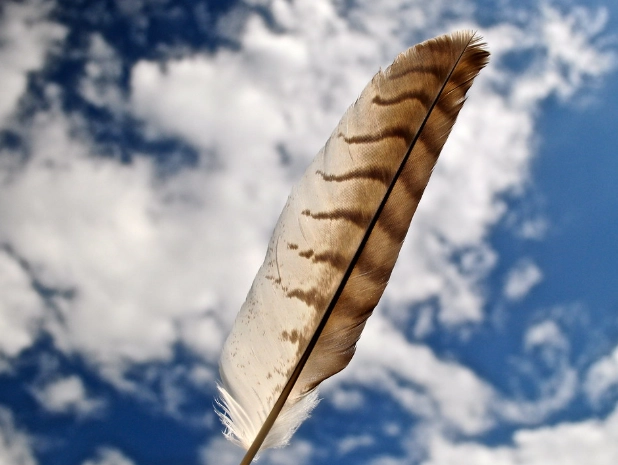
These feathers are incredibly common finds, but the story behind them is anything but simple. They're wrapped up in layers of biology, symbolism, and surprisingly strict legal red tape. This isn't just a guide to spotting one; it's about understanding the whole picture of what it means to find, own, or be inspired by a feather from one of this continent's most iconic raptors.
Spotting the Difference: A Practical Guide to Identification
You can't talk about a Red-tailed hawk feather without knowing how to tell it apart from the crowd. They're often confused with eagles, other hawks, and even turkeys. The sheer variety in a single bird's plumage doesn't help—a feather from its back looks totally different from one on its belly or its famous tail.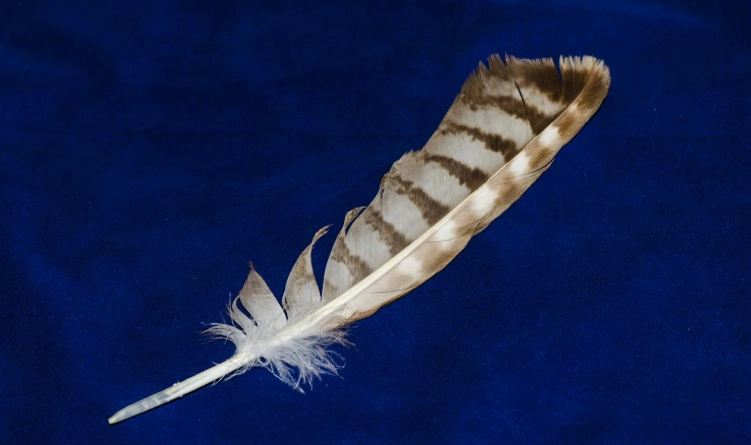
The Tell-Tale Signs of a Red-tail Feather
Forget complicated charts for a second. When I'm trying to ID a feather, I run through a quick mental checklist. First, size. If it's longer than your hand (roughly 7 inches/18 cm and up), you're likely in hawk or eagle territory. A primary wing feather from a Red-tailed Hawk can be a foot long or more. Next, color pattern. The most common pattern you'll see is a dark brown or gray background with distinct, alternating bands of darker brown. These bands are usually cleaner and more defined than, say, the mottling on a turkey feather.
But here's the kicker—the namesake "red tail" is only visible on the upper side of the tail feathers of adult birds. The underside, which is what you usually see when the bird is soaring, is actually a pale pinkish-beige. If you find a tail feather, look for a faint rufous (reddish) wash near the tip on one side. Juveniles don't have this at all; their tails are brown with many narrow bands. It's a common point of confusion.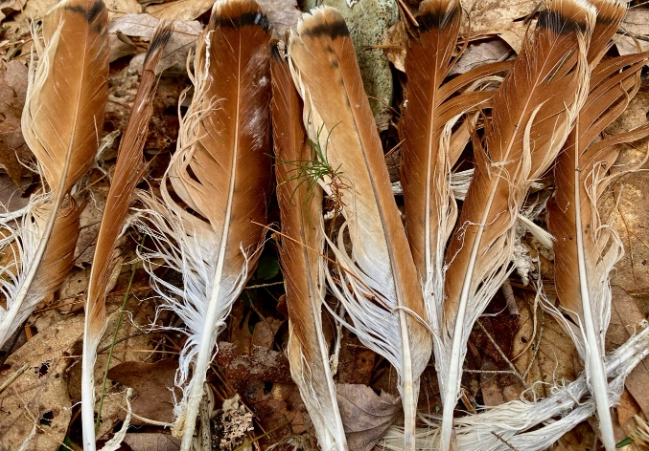
Pro Tip: Feel the texture. A red tailed hawk feather has a strong, firm central shaft (the rachis). The vanes (the fluffy parts) should zip together neatly if you gently run your fingers along them—that's the barbules locking, which the bird preens to maintain for flight. A downy feather, like from an owl, will feel completely different—soft and loose.
Red-tailed Hawk Feather vs. The Look-Alikes
This is where people get tripped up. I made a simple table because it's easier to see the differences side-by-side.
| Bird Species | Feather Key Characteristics | Common Confusion Point |
|---|---|---|
| Red-tailed Hawk | Broad, sturdy feathers. Tail feathers: pale underside with a subtle rufous tip on adults; heavily banded on juveniles. Body feathers: often have a distinct "notch" or rounded shape with dark & light barring. | The "red" tail is often not visible on found feathers. Juveniles look completely different from adults. |
| Bald Eagle | Larger overall (can be massive). Tail feathers are pure, dark chocolate brown or blackish in adults. Juveniles have mottled white and brown tails. Feathers feel exceptionally broad and robust. | Eagle feathers are much bigger and lack the fine, even banding of a red-tail. The sheer size is the biggest giveaway. |
| Turkey Vulture | Primaries are long, fingered, and often silvery-gray on the underside with very dark tips. They look more ragged and less "structured" than hawk feathers. | The two-tone silvery/dark pattern on the wing feathers is unique to vultures in flight. |
| Wild Turkey | Body feathers are iridescent with bronze, copper, and green sheens. They are broader, softer, and lack the sharp banding. Tail feathers have bold, irregular barring. | From a distance, a turkey's barred tail fan can look hawk-like, but up close the texture and sheen are totally different. |
See? It's not so mysterious once you break it down. The best resource I've ever used for tricky IDs is the U.S. Fish & Wildlife Service's Feather Atlas. It's an incredible, free online tool where you can search by species, feather type, and color pattern. It's saved me from misidentifying more feathers than I care to admit. You can spend hours on there. Check it out for yourself: The Feather Atlas by USFWS.
I'll be honest, the first time I used the Feather Atlas, I was overwhelmed. So many options! My advice? Start by just looking at the Red-tailed Hawk page to get a feel for the sheer variety in one species. Then, when you find a mystery feather, narrow it down by size and shape first (tail? wing? body?) before diving into color.
The Law is the Law: Why You (Probably) Can't Keep That Feather
This is the part that disappoints almost everyone, and I get it. You find this beautiful, natural object, and your instinct is to take it home, put it in a vase, or use it in an art project. I've felt that pull too. But here's the non-negotiable reality.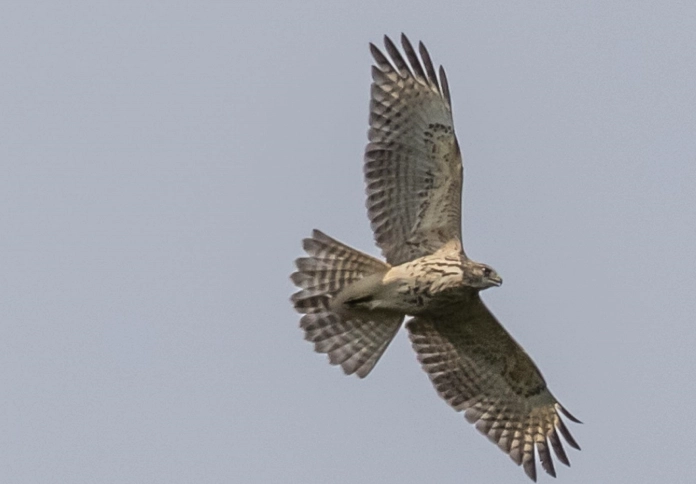
In the United States, the Migratory Bird Treaty Act (MBTA) of 1918 makes it illegal to possess, sell, purchase, or transport any part of a migratory bird—including feathers, nests, or eggs—without a permit. The Red-tailed Hawk is firmly on that list. This isn't some obscure regulation; it's a cornerstone of American wildlife conservation. The law doesn't distinguish between a feather you found on the ground and one you plucked from a bird. Possession is the issue.
Let's be crystal clear: There is no "finders keepers" clause. It doesn't matter if the bird died naturally, if the feather was molted, or if you found it miles from any nest. If you are not a member of a federally recognized Native American tribe (who can use them for religious and cultural practices under permit), or a scientist/educator with specific permits, possessing a Red-tailed hawk feather is a federal violation. Penalties can include hefty fines and even jail time, though enforcement for a single feather is typically an educational warning—but why risk it?
Why such a draconian law for a feather? The intent is brilliant in its simplicity: to eliminate any market or demand for bird parts. If it's illegal to possess any feather from any migratory bird, it becomes impossible for hunters, collectors, or the millinery trade (which once devastated bird populations for hat plumes) to claim they found their stock legally. It's a blanket protection that works. According to the U.S. Fish & Wildlife Service, the law is a primary reason many species, including raptors, recovered from historic lows. You can read the official overview and the list of protected species here: USFWS MBTA Page.
So What Should You Actually DO If You Find One?
Don't just leave it in a panic! Here's a sane, step-by-step approach I follow and recommend:
- Admire and Photograph. This is your moment. Take as many pictures as you want from different angles. Get a shot with your hand or a coin for scale. These photos become your keepsake and can be used for ID later.
- Leave It Where It Lies. Gently place it back where you found it. That feather is part of the ecosystem. Small birds might use it for nesting material, or it will simply decompose and return its nutrients to the soil.
- Report It (Optional but Cool). Consider logging your find on a citizen science app like iNaturalist. Your observation, tagged with the location and photos, contributes valuable data about bird molting patterns and distribution. It turns your find into science.
- Never Buy Feathers Online. Any website selling "real" Red-tailed Hawk feathers is almost certainly operating illegally, unless they are selling pre-MBTA antiques (which require provenance) or are a licensed repository supplying permitted users. Buying fuels the illegal market.
It's a bummer, I know. The desire to connect with nature by keeping a piece of it is strong. But understanding and respecting this law is a deeper form of connection—it's an acknowledgment of our role in protecting these creatures.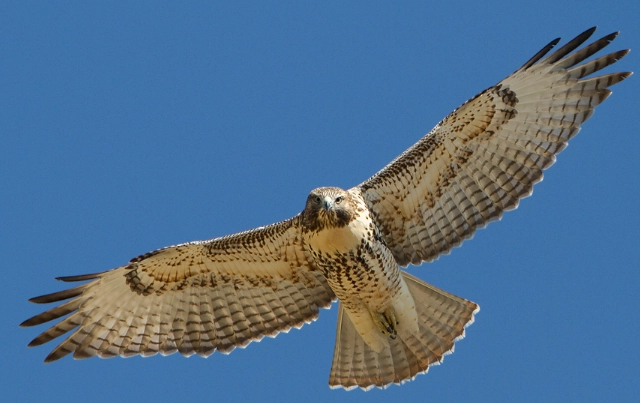
Beyond Biology: What Does a Red-tailed Hawk Feather Symbolize?
Okay, so you can't own one legally. But the power of a red-tailed hawk feather isn't diminished. Its meaning has been crafted by cultures long before any wildlife law was written.
In many Native American traditions, the Red-tailed Hawk is a powerful messenger, a visionary. Its feathers are considered sacred, used in ceremonies, regalia, and healing practices to represent strength, clarity, and a connection to the spirit world. The bird's incredible eyesight translates symbolically to the ability to "see the bigger picture" or perceive truths that are hidden. Because of this deep cultural and religious significance, the legal exception for enrolled members of federally recognized tribes to possess and use these feathers under permit is not just a loophole; it's a vital protection of religious freedom and cultural heritage.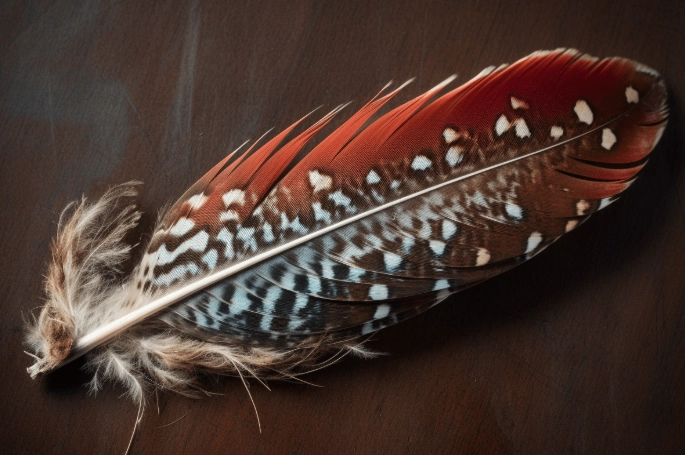
In more modern, eclectic spiritual circles, finding a hawk feather is often seen as a sign. A nudge from the universe. It might be interpreted as a call to rise above your current situation (like the hawk soaring), to focus your vision on your goals, or as a message that a guardian spirit is nearby. Whether you subscribe to this or think it's a bit of lovely nonsense, there's no denying the visceral feeling of significance when you stumble upon one.
From a purely biological standpoint, a single Red-tailed hawk feather is a marvel of engineering. The interlocking barbules that keep the vane intact are a microscopic hook-and-eye system. The slight asymmetry of the flight feathers is what creates lift. Holding one, you're holding a piece of technology refined over millions of years for the sole purpose of mastering the sky.
Your Questions, Answered (The Stuff People Really Want to Know)
After talking to countless hikers, birders, and curious folks online, I've heard the same questions pop up again and again. Let's tackle them head-on.
Is it *really* illegal to pick up a feather I found in my backyard?
Yes. I wish I had a different answer, but legally, yes. The MBTA makes no exception for where you find it. Your backyard, a national park, a city sidewalk—it's all the same in the eyes of the law. The purpose is to remove all doubt and all potential excuses.
What about using feathers for fly tying in fishing?
This is a huge gray area that gets fishermen in trouble. You cannot use feathers from protected birds like hawks, eagles, or owls for fly tying. Full stop. The fly-tying community largely uses feathers from legally farmed birds (like pheasants, chickens, ducks) or from non-native, non-protected species. Always know your source. If a fly-tying material bag just says "hawk," it's safest to assume it's illegal unless specifically labeled as from a legal, farmed source like a Harris's Hawk (but even that is tricky).
Can I get a permit to own one?
For the average person, almost certainly not. Permits are generally issued for specific purposes: scientific research, education (like a museum or nature center), rehabilitation (for injured birds), or religious/cultural use by Native Americans. The permit process is rigorous and intended for these professional or traditional uses, not for personal collectors. The U.S. Fish & Wildlife Service's Migratory Bird Permit program outlines this in detail: USFWS Migratory Bird Permits.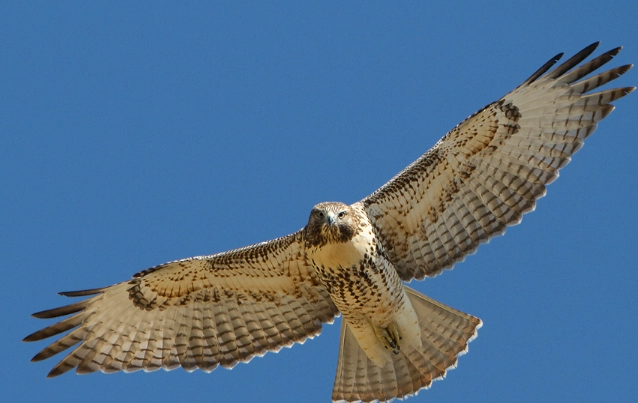
How can I enjoy hawk feathers without breaking the law?
Great question! This is where creativity comes in.
- Photography: Build a portfolio of macro shots of feathers in nature.
- Artistic Inspiration: Sketch them, paint them, use the patterns and colors in your designs.
- Replica Feathers: Some amazing artists create hyper-realistic replicas from paper, resin, or ethically sourced legal feathers. You get the beauty without the legal or ethical baggage.
- Support Rehabilitation Centers: Many raptor centers have "non-releasable" education birds. Visiting them, donating, or volunteering lets you get up close and learn directly from the experts who care for these animals.
The Bigger Picture: Hawks, Feathers, and Our Role
Getting hung up on the legality can make us miss the forest for the trees—or the ecosystem for the feather. The fact that we have laws protecting Red-tailed Hawks and their feathers is a sign of conservation success. A century ago, many birds of prey were shot on sight, seen as vermin. DDT later pushed them to the brink. The MBTA and laws like the Endangered Species Act helped pull them back.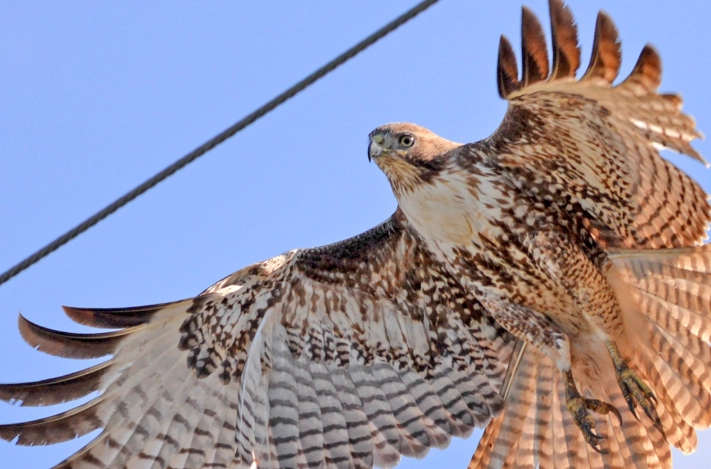
Today, seeing a Red-tail circling over a highway or perched on a lamp post is a common sight. That's a victory. Their feathers on the ground are a sign of a healthy, molting population. When we understand the law, we become participants in that ongoing story of recovery, not just bystanders who want a souvenir.
So next time you're out there and you see that distinctive shape against the sky, or maybe even spot a feather on the trail, you'll know so much more. You'll see the master flier, the legal protected entity, the cultural icon, and the biological wonder. You can appreciate all of it, deeply and fully, without needing to put a single thing in your pocket. And honestly, that feels even better.
If your curiosity is now fully ignited (it happens to the best of us), I can't recommend the Cornell Lab of Ornithology's resources enough. Their All About Birds page for the Red-tailed Hawk is packed with sounds, videos, range maps, and even more detailed ID tips. It's the next best thing to having a guide in the field with you. Dive in here: Cornell Lab - Red-tailed Hawk Guide.
Writing this took me back to all my own moments of confusion and wonder with feathers. The laws felt restrictive at first, but now I see them as a framework for respect. My advice? Let the finding be the gift, not the keeping. Snap that photo, log that observation, and walk away with a fuller understanding and a cleaner conscience. The hawks will thank you for it, even if they never show it.
Reader Comments