
What’s in this field guide
- What Really Matters When You’re Buying Birding Binoculars?
- The Magnification Trap: Why Bigger Isn’t Better
- Where Your Money Should Go: The Optics Hierarchy
- Ergonomics and the ‘One-Handed Test’ You Won’t Find Online
- What You Actually Get at Each Price Point
- Three Beginner Mistakes I See Every Season
- Quick Answers to Real Birding Questions
Figuring out how to choose birding binoculars feels like a rabbit hole of numbers: 8x42, 10x50, ED glass, phase coating. I’ve been birding for over a decade, and I still see experienced folks with glass that’s too heavy or too dim. Here’s the short version: buy for the habitat you actually bird in, not the spec sheet that looks impressive online. Below is the field-tested logic I wish someone had handed me at the start.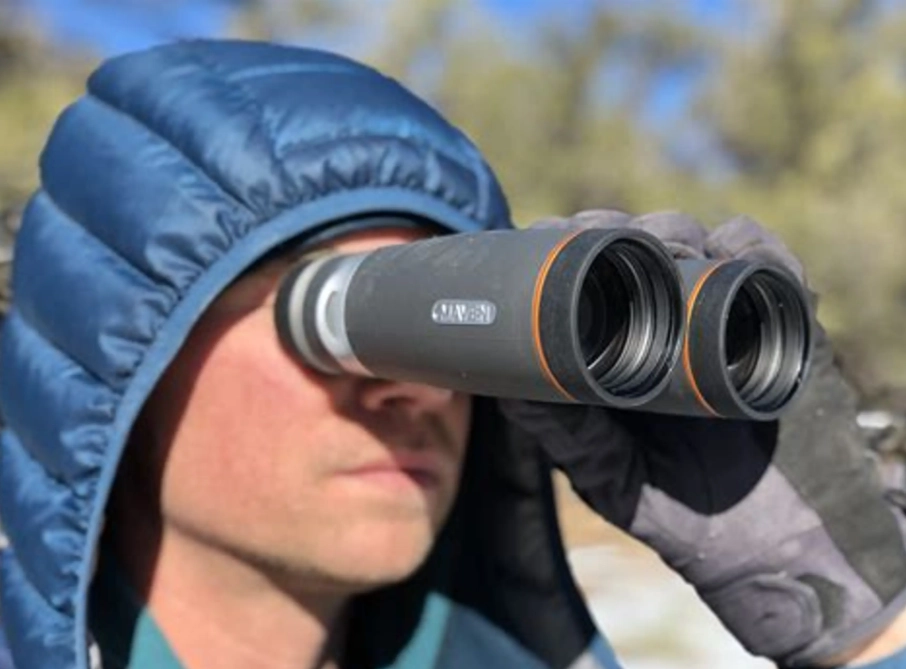
What Really Matters When You’re Buying Birding Binoculars?
Forget the flashy numbers for a second. Three things affect your daily birding more than anything else: brightness in dim light, weight on your shoulders, and the speed of getting a shaky bird into focus. I’ve watched people miss a Blackburnian warbler because their binoculars took two seconds too long to focus. That’s not a gear problem you fix in post.
I remember a misty morning at Point Pelee when a friend’s bargain 10x42s fogged up from the inside. He spent the rest of the walk squinting. That’s why I always tell newcomers: waterproof and fogproof aren’t upsells, they’re survival gear for birders.
The Magnification Trap: Why Bigger Isn’t Better
Walk into any store and the salesperson might nudge you toward 12x or even 15x. Don’t. Higher magnification magnifies hand-shake and narrows your field of view. Try tracking a warbler flitting through a bush with a 12x—you’ll feel like you’re looking through a paper towel tube while riding a bus.
The sweet spot for birding is 8x or 10x. I keep an 8x42 for deep woods and a 10x42 for open fields and shorelines. The 8x gives me a wider field—crucial for catching movement—and a steadier image. The 10x helps resolve feather details on a distant hawk.
When should you pick 8x over 10x?
If you mostly bird in forests or you have slightly shaky hands, take the 8x. If you’re often at wetlands or coastlines, the extra reach of a 10x is worth the narrower view. There’s no universal “best”—only what matches your patch.
Where Your Money Should Go: The Optics Hierarchy
Spend on glass and coatings before you spend on bells and whistles. ED (extra-low dispersion) glass cuts color fringing on backlit birds. Phase coating on roof-prism binoculars makes a huge difference in contrast. I’d rather have a $300 pair with phase coating than a $500 pair without it. Dielectric coatings are the next step up, but honestly, most birders can’t tell the difference until they’re in low light.
Here’s a real-world test: look at a bird against a bright sky. If you see a purple-green halo around the edge, that’s chromatic aberration. ED glass helps reduce it. Not a dealbreaker for a beginner, but once you’ve used a pair with good ED glass, it’s hard to go back.
| Price Range (USD) | What You Get | Best For | Compromise |
|---|---|---|---|
| $100–200 | Decent roof prism, basic multicoating, waterproof | Backyard and casual walks | Dim edges, slower focus, plastic feel |
| $200–400 | Phase coating, better glass, smoother focus | Regular local birding | Some color fringing, heavier |
| $400–800 | ED glass, dielectric coating, argon purging | Serious birders and travel | Price jump, need to handle before buying |
| $800+ | Alpha glass, flat-field, near-perfect color | Pros and obsessive listers | Diminishing returns for most |
Ergonomics and the ‘One-Handed Test’ You Won’t Find Online
You’ll hold these things for hours. Before you buy, close your eyes and lift them to your face with one hand. If your fingers naturally land on the focus wheel, that’s a good sign. I once tried a pair that felt fine in the store but gave me a hot spot on my thumb after an hour of warbler watching. Field time exposes things a showroom never will.
Also, check the eyecups. Twist-up eyecups are non-negotiable if you wear glasses. Rubber fold-down cups work, but they crack after a couple of seasons. I learned that the hard way.
What You Actually Get at Each Price Point
I’m not going to promise that a $150 pair performs like an $800 pair. It doesn’t. But the gap has closed a lot. At the $200–300 mark, you can find phase-coated 8x42s that will serve you for years. Above $500, you’re paying for better glass, lighter materials, and tighter quality control—not magic.
My advice: set a budget, then try two or three models in person. Sometimes a $350 pair fits your face better than a $600 pair. Field of view matters more than brand loyalty. A 330-foot field of view at 1,000 yards is decent; 400+ feet is great for warblers.
Three Beginner Mistakes I See Every Season
1. Chasing magnification. I touched on this earlier, but it’s worth repeating. A 12x42 is heavier, harder to hold steady, and dimmer in the understory. You’ll miss more birds than you spot.
2. Ignoring eye relief. If you wear glasses, you need at least 15mm of eye relief. I’ve seen folks buy a pair with 11mm and then wonder why they can’t see the full field. They end up taking their glasses off and losing peripheral vision.
3. Skimping on a harness. The stock strap that comes with most binoculars is a neck killer. A simple binocular harness distributes weight across your shoulders. Best $20 I ever spent.
Quick Answers to Real Birding Questions
Can I use hunting binoculars for birding?
You can, but watch out. Many hunting binoculars prioritize low-light performance at the expense of weight and close focus. Birding often happens at close range—think 10 feet or less. Check that the close focus distance is under 10 feet. Hunting bins might focus at 20 feet and leave warblers blurry.
How do I test binoculars in a store without birds?
Find a dim corner and look at the fine print on a sign or a leaf across the aisle. If the edges of the print are mushy, that’s a sign of poor edge sharpness. Also, try focusing from a near object to a far object and back. Count how many turns it takes—fewer is better for fast birds.
Is a monocular a good alternative for a birder on a budget?
Only if you have one good eye. Binoculars give depth perception and a wider field. A monocular forces you to squint. The money you save isn’t worth the eye strain for long outings.
One last thing: spend a few extra bucks on a lens pen and a microfiber cloth. Dirty lenses turn great optics into mediocre ones. Carry them, use them, and your view stays crisp.
This field guide was fact-checked against manufacturer specs and my own notes from a decade of birding across North America.
Reader Comments