In This Guide
- First Things First: Is That REALLY a Barred Owl Feather?
- The Big, Uncomfortable Question: Is It Illegal to Have One?
- If You Can't Keep It, Why Learn About It? The Real Value.
- Okay, Let's Talk About "Meaning" (Beyond the Clichés)
- Ethical & Legal Alternatives for Feather Enthusiasts
- Handling and Care (If You're in a Permitted Scenario)
- Your Barred Owl Feather Questions, Answered
- Wrapping It Up: Appreciation Over Possession
So you found a feather. A really cool one, with these intricate bars and a soft, almost silent texture. You're pretty sure it's from a Barred owl. Now what? Can you keep it? What does it mean? And how can you even be sure it's from that specific owl?
I've been fascinated by feathers for years, and Barred owl feathers are some of the most commonly stumbled upon—and most misunderstood—in North America. Let's clear the air. This isn't just a dry identification manual. We're going to talk about the real stuff: the law (which is a huge shock to most people), the true meaning behind these feathers beyond the Pinterest quotes, and how to ethically enjoy them without getting on the wrong side of the Feds. Seriously, the legal part is no joke.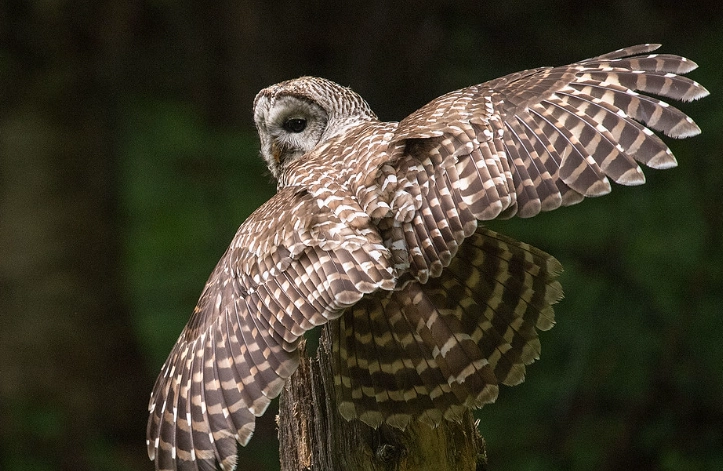
First Things First: Is That REALLY a Barred Owl Feather?
Barred owls have a pretty distinct look, and their feathers follow suit. But it's easy to mix them up with other common owls, especially Great Horned or Barn owls. The devil's in the details.
Here’s the breakdown. A typical Barred owl feather is a masterclass in camouflage. The overall color is a warm brownish-grey. The namesake "bars" are horizontal bands—dark brown alternating with lighter tan or white. These run across the width of the feather. It’s not just one or two bars; it’s a consistent, zebra-like pattern from the base to near the tip on the contour feathers (the ones that shape the body).
The fluffier down feathers near their skin are softer, a mottled grey and white, without the strong bars. But it's the flight feathers—the primaries and secondaries from the wing—and the tail feathers you're most likely to find intact.
Key Features to Look For (The Detective Work)
- The Pattern: Consistent, crisp, horizontal brown and tan bars. Not spots, not streaks. Horizontal bars.
- The Color Palette: Think muted forest floor. Browns, tans, greys. Nothing overly reddish (that might be a Red-tailed Hawk) or stark black and white (like a magpie).
- The Texture & Sound: This is the cool part. Owl feathers, including Barred owl feathers, have special fringes on the leading edge that break up turbulence. Run your finger along the edge. It should feel serrated, almost like a very fine comb. This is what makes their flight silent. A stiff, noisy feather is probably from a different bird.
- The Size: Barred owls are big birds. A primary wing feather can be 8 to 12 inches long. A small, dainty feather is likely from a songbird.
How to Tell It Apart from Other Common Owl Feathers
This is where a table helps more than a paragraph. Let's compare.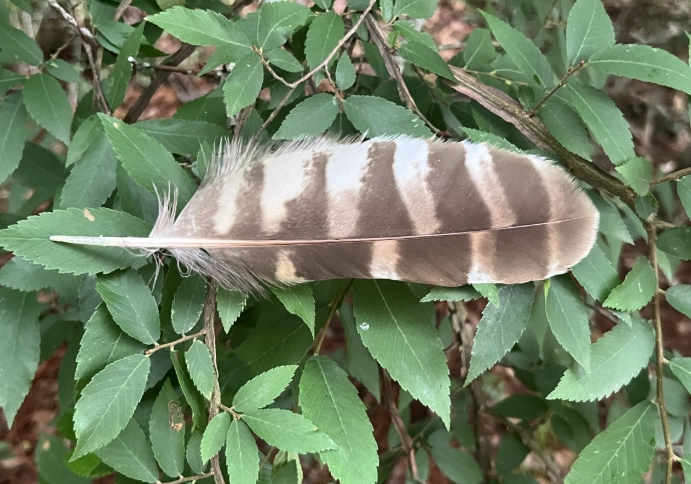
| Owl Species | Feather Pattern | Key Color Notes | Texture Clue |
|---|---|---|---|
| Barred Owl | Clear, horizontal brown/tan bars across the feather. | Muted brown-grey base. Bars are distinct. | Leading edge feels finely serrated (for silent flight). |
| Great Horned Owl | Mottled or blotchy pattern, not clean bars. More irregular. | Often has more orange or rusty tones mixed in. | Also has fringed edges for silence. |
| Barn Owl | Very light base with small, delicate dark spots or speckles. | Creamy white, beige, or light tan background. | Extremely soft and fluffy, even on flight feathers. |
| Screech Owl (Eastern) | Fine, vertical streaking or a intricate grey/brown pattern. | Can be grey or reddish morph. Feathers are much smaller. | Small size (3-6 inches for a primary). |
See the difference? The barred pattern is their signature. Once you've seen a few, it becomes much easier. A genuine Barred owl feather has a specific, utilitarian beauty. It's not flashy, but it's perfectly designed.
The Big, Uncomfortable Question: Is It Illegal to Have One?
Alright, here's the part nobody wants to hear but everyone needs to know. In the United States, for almost everyone reading this, it is illegal to possess a Barred owl feather, or any part of a Barred owl, without a special permit.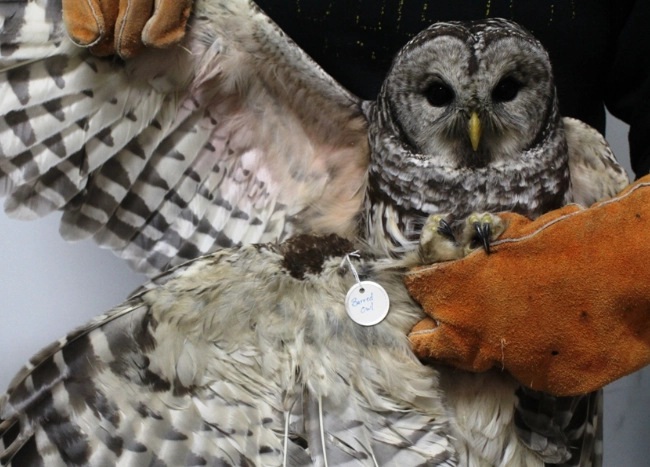
I know. It feels crazy. You found it on the ground! The owl doesn't need it anymore! What's the harm?
The law isn't about that single feather. It's about a principle of protection. The law in question is the Migratory Bird Treaty Act of 1918 (MBTA). The Barred owl is one of over 1,000 species protected under this act. The MBTA makes it illegal to "take, possess, import, export, transport, sell, purchase, barter, or offer for sale... any migratory bird, or the parts, nests, or eggs of such a bird" without authorization from the U.S. Fish and Wildlife Service.
Why such a broad law? Back in the early 1900s, birds were being hunted to extinction for their feathers (for hats), meat, and plumes. The law was a blanket protection to stop the trade and killing. It works by removing the market entirely—if no one can legally possess the feathers, it's harder to sell them, which protects the birds from being killed for their parts. You can read the official summary from the U.S. Fish and Wildlife Service here.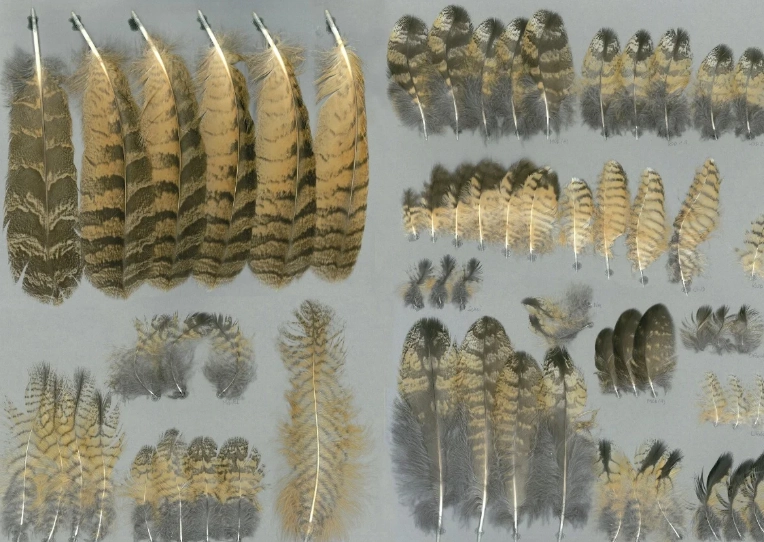
Who CAN Legally Have Barred Owl Feathers?
There are exceptions, but they're narrow:
- Native Americans enrolled in federally recognized tribes for religious and cultural use. This is a crucial protected right.
- Scientists, educators, and museums with specific permits (like a Salvage Permit).
- Licensed wildlife rehabilitators who might need feathers for imping (a feather-replacement technique for injured birds).
If you don't fall into one of those categories, the letter of the law says you cannot legally put that Barred owl feather in your pocket and take it home. The enforcement priority is incredibly low for a single finder—they're not raiding homes over one feather—but the law exists, and it's important to know the risk, however small.
If You Can't Keep It, Why Learn About It? The Real Value.
This is where we move from legality to appreciation. Knowing you can't own it sometimes makes you look closer. The value of a Barred owl feather isn't in possessing it; it's in what it tells you.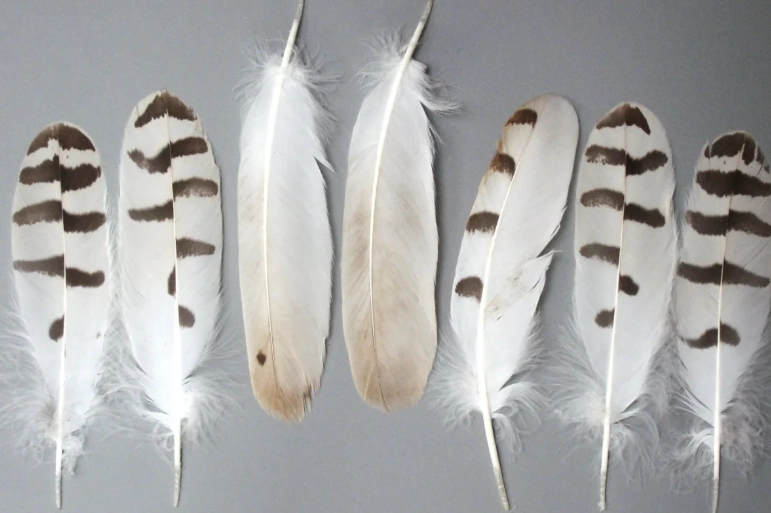
Finding one is a tangible sign. It tells you, very clearly, that a Barred owl lives right there. You might never see the owl itself—they're masters of camouflage and mostly nocturnal—but its feather is its calling card. It's evidence of a healthy, functioning forest ecosystem. They need mature trees with cavities for nesting, and a good mix of prey like mice, voles, and amphibians.
Each type of feather has a specific job. The long, sturdy primaries propel the owl. The softer contour feathers insulate and streamline. The downy feathers underneath are all about warmth. Studying a found Barred owl feather teaches you about avian biology and adaptation in a way a textbook never could.
Okay, Let's Talk About "Meaning" (Beyond the Clichés)
Search for "Barred owl feather meaning" and you'll get a flood of generic spiritualism: wisdom, intuition, transition. It's often copied and pasted from one site to another.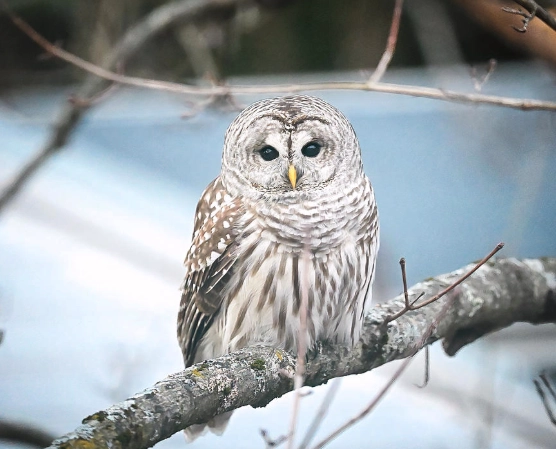
I think the real meaning is more personal and grounded. In many Native American traditions, owls are complex figures, often associated with messengers, foresight, or protection of sacred knowledge, but views vary greatly between tribes. It's not a one-size-fits-all symbol.
For me, a Barred owl feather signifies quiet observation. The owl sees in the dark, moves without a sound, and understands its territory intimately. Finding a feather can be a nudge to slow down, watch more, listen more, and make your moves with purpose rather than noise. It's a reminder that the most interesting things in nature (and life) aren't always the loudest or most colorful. They're the ones that have mastered the art of blending in and seeing what others miss.
Maybe its meaning for you is simply the thrill of the find, a connection to a wild creature. That's perfectly valid, too.
Ethical & Legal Alternatives for Feather Enthusiasts
You love feathers. I get it. Here are ways to enjoy them without legal or ethical worries.
- Photography & Art: This is the best alternative. Macro photos of a Barred owl feather reveal an incredible world of texture and pattern you'd never see with the naked eye. Use it as a model for drawing, painting, or digital art.
- Feathers from Legal Sources: Many feathers in crafts come from non-native, non-protected birds like domestic fowl (chickens, turkeys, peacocks), ostriches, or pheasants raised for this purpose. Always buy from reputable sources who can verify the species.
- Replica Feathers: Amazingly realistic replica feathers are made from materials like dyed turkey feathers or synthetics. For costuming, art, or decoration, these are perfect and guilt-free.
- Support Rehabilitation Centers: Some permits allow rehab centers to use naturally molted feathers from educational birds for teaching. Donating to or volunteering at a local wildlife center supports the real owls.
Handling and Care (If You're in a Permitted Scenario)
Let's say you are a permitted researcher, or you're photographing it in the field and want to handle it carefully. Here's how.
Feathers are surprisingly durable but also delicate. The barbs (the individual strands that zip together to form the vane) can separate. Always handle a Barred owl feather gently by the shaft (the central quill). Avoid touching the vane too much, as oils from your skin can degrade it over time.
If you need to clean dust off, a soft, dry paintbrush (like a makeup brush) works wonders. Never use water or chemicals—it can strip away natural oils and damage the structure.
For long-term preservation in a permitted collection, they are stored in acid-free paper in a dark, dry, pest-free environment. Moths and beetles love to eat keratin (what feathers are made of).
Your Barred Owl Feather Questions, Answered
Let's tackle the stuff people are actually typing into Google.
Admire it, study it, take pictures. From a strict legal standpoint in the U.S., you should leave it where you found it. It's the safest and most lawful course of action. It also leaves it for others to discover and for nature to recycle.
Absolutely not. Selling any part of a MBTA-protected bird, including a single feather, is a violation of federal law with potentially significant penalties. This is the kind of activity that actually does attract enforcement attention.
For the average person, it's very difficult. You could obtain a special permit from the U.S. Fish and Wildlife Service for a specific educational or scientific purpose, but these are not granted for personal collection. Your best legal bet is to acquire a high-quality replica or focus on feathers from unregulated species.
Two main reasons: the signature silent-flight fringe (a trait of most owls) and their distinct, beautiful barred patterning which is perfect for disappearing against tree bark. They are a perfect example of form meeting function in evolution.
Yes, like all birds, they molt. They replace their feathers in a gradual, symmetrical pattern so they never lose the ability to fly. You're most likely to find feathers during and after the molting season, which is typically in the late summer or early fall.
Wrapping It Up: Appreciation Over Possession
The journey of a Barred owl feather—from a crucial part of a living predator to a found treasure on the forest floor—is a whole story. We get hung up on the "can I keep it" part, and I understand that desire completely. I've felt it.
But sometimes, the deeper connection comes from letting go. From knowing that by leaving it, you're respecting a law designed to protect the bird it came from, and you're leaving no trace for the next wanderer. Your knowledge, your photos, and the memory of that moment of discovery are your true takeaways. A Barred owl feather is a brief, beautiful intersection between your world and the owl's. You don't need to own the intersection to have been changed by crossing it.
Next time you're in the woods, listen for the "Who cooks for you? Who cooks for you-all?" call. And look down. You might just find a perfectly barred, silent reminder that the wild is right there with you.
Reader Comments