
I’ve been birding for over a decade, and I still see it every spring: a well-meaning photographer crashing through a thicket to get “the shot,” or a group of listers playing a mobbing tape on repeat at a nest site. Birdwatching etiquette isn’t about being polite for the sake of it — it’s about whether that bird survives the week. And honestly, most beginners break the unwritten codes without even knowing. I did too, early on. So here’s what I wish someone had told me.
- The One Rule Everyone Forgets
- How Close Is Too Close? Distance and Approach
- Playback Ethics: When a Tape Becomes Harassment
- Nesting Season: Nest Photography and Ethical Boundaries
- Group Etiquette: When You’re Birding with Others
- Food and Feeding Birds: Are You Actually Helping?
- Quick Reference: What to Do and What Not to Do
- FAQ: Real Scenarios Experienced Birders Face
The One Rule Everyone Forgets
Ask ten birders about birdwatching etiquette and you’ll get ten variations of “don’t disturb the bird.” That’s fine as a summary, but it’s useless when you’re in the field. The missing piece is the welfare of the bird always outranks the observation. Always. That means you walk away from a rare bird if your presence is causing it to flush, change its feeding behavior, or vocalize in alarm. I’ve done it more than once, and it stings. But a snowy owl that’s already starving doesn’t need you pushing it into flight for a Facebook like.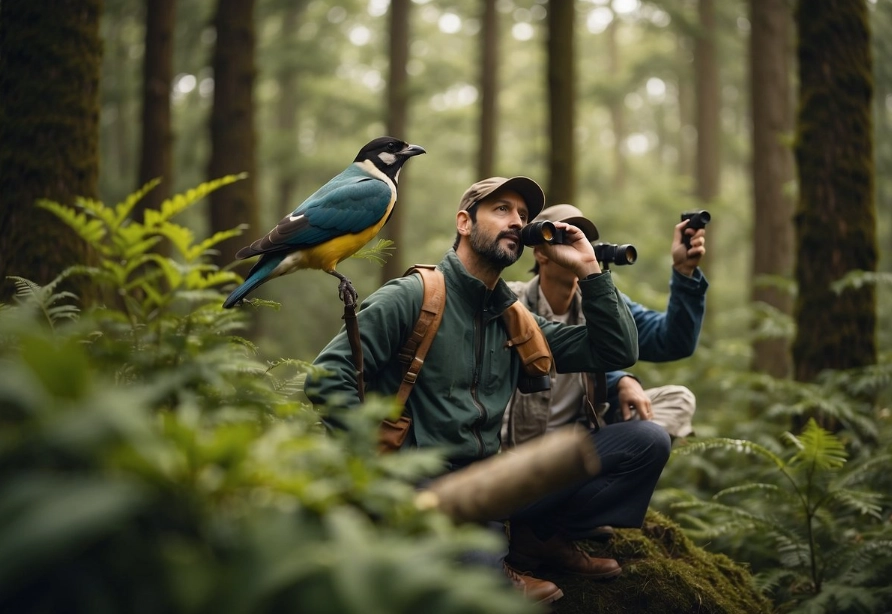
Here’s a concrete example. Last winter I drove two hours to see a reported hawk owl. When I arrived, three people were positioned about fifteen feet from its perch. The owl was visibly tense — neck extended, body leaning away. I watched for two minutes, then left. The next day, the owl was gone. Did it leave because of the pressure? Maybe not. But I’d rather wonder than know I contributed.
The non-consensus view: Many ethical guidelines list “flush distance” as a fixed number (e.g., “don’t approach within 100 feet”). This is misleading. Some species tolerate closer approach if you’re still and quiet; others flush at 300 feet. The bird tells you — watch its body language, not a tape measure.
How Close Is Too Close? Distance and Approach
Birdwatching etiquette around distance is actually simpler than most guides make it. Stop moving the moment the bird stops what it’s doing. If a warbler was preening and now it’s frozen with its head swiveled toward you, that’s your cue to back off. I use a simple habit: approach in a zigzag, not a straight line, and pause every few steps. Predators move in straight lines. Birders who walk directly at a bird look like cats.
Also, stay on trails. This is less about trampling (though that matters) and more about predictability. Birds acclimate to humans on designated paths. The moment you step off, you become a random variable.
Playback Ethics: When a Tape Becomes Harassment
Playback is the third rail of birding etiquette. Use it on a territorial male during breeding season? You can draw him away from his nest and expose his young to predators. Play a mobbing tape of a screech-owl? You’ll tank every small bird in the area for an hour. I’ve seen a birder play a pygmy-owl call for twenty minutes straight while a group of ten people jostled for photos. That’s not birding; that’s a stress test.
My personal rule: no playback on federally listed species, no playback within 100 meters of a nest, and no more than 30 seconds of audio, followed by ten minutes of silence. If the bird doesn’t show, it doesn’t show. The American Birding Association’s Code of Birding Ethics puts it plainly: “Limit the use of recordings and other audio methods of attracting birds.” Note “limit” — not “never.” Intent and restraint matter.
Nesting Season: Nest Photography and Ethical Boundaries
Nest photography is the one area where even experienced birders slip. I’ve done it: a quick phone snapshot of a robin’s nest from eight feet away, no flash. Then I realized I’d just marked the location by creating a faint trail in the grass. Two days later, a jay found the nest. Was it my fault? Maybe not directly. But I’ve never taken another nest photo without a telephoto lens and a long lens hood.
You don’t need to avoid nests entirely. Just follow these practical boundaries:
- Use a long lens (at least 300mm) and stay at least 20 feet away. If you can’t get the shot, you didn’t need it.
- Never use flash on a nesting bird. It can cause eye damage in some species and always causes stress.
- Avoid posting nest locations on social media. Crowds create pressure. I know a local pair of great horned owls that failed three years straight because of Instagram crowds.
Group Etiquette: When You’re Birding with Others
Birdwatching etiquette within groups gets messy. The loud person who spots the bird first and shouts “GOT IT!” — they’ve just flushed it. The person who walks ahead and scares off the flock. I’ve learned to speak up gently but firmly: “Hey, let’s hold back and let the bird settle.” Most people respond well. The ones who don’t are the ones you don’t want in your birding circle anyway.
If you’re leading a group, set ground rules before you start: no playback without asking, stay together, no pointing with a laser (it spooks birds), and respect the closest person’s distance. I once had to ask a group member to leave after he played a tape of a rare flycatcher four times. Awkward, but the alternative was worse.
Food and Feeding Birds: Are You Actually Helping?
Feeding birds is a gray area. Birdwatching etiquette here boils down to one question: does your feeding change natural behavior? For backyard feeders, clean them every two weeks with a 10% bleach solution (I use a dedicated scrub brush — don’t use the same one for dishes). For wild birds in parks, don’t feed bread or crackers. It’s junk food, and it can cause angel wing in waterfowl.
A real example: a local pond had a “duck feeding” sign for years. Then the ducks started developing deformed wings. The city removed the sign, but people still feed them. The ducks don’t need your sandwich. They need clean water and natural forage.
Quick Reference: What to Do and What Not to Do
| Situation | Do | Don’t |
|---|---|---|
| Rare bird found | Observe from a distance, share location only with trusted birders | Post exact GPS coordinates publicly |
| Nesting season | Use a long lens, stay on trail | Use flash or approach the nest |
| Playback use | Limit to 30 seconds once per visit | Play mobbing tapes repeatedly |
| Group birding | Set rules before starting | Shout or point frantically |
| Feeding birds | Clean feeders regularly, use appropriate food | Feed bread or human snacks |
FAQ: Real Scenarios Experienced Birders Face
This article was fact-checked against the American Birding Association’s Code of Birding Ethics and the Cornell Lab of Ornithology’s guidelines for ethical birding.
Reader Comments